The Strikes That Tell the Story Israel Doesn't Want Told
Lebanese media reported over 60 Israeli strikes in a single day. Hebrew sources acknowledge Israeli forces face a deteriorating situation on the ground. The gap between the official narrative and the field reality demands scrutiny.
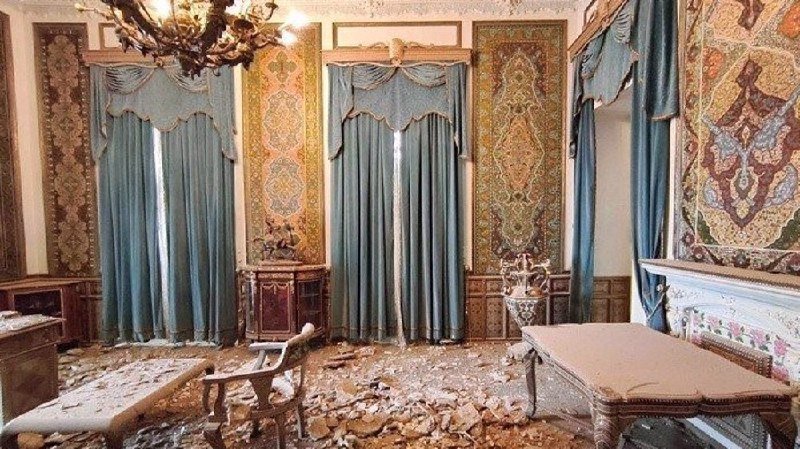
On 17 May 2026, Lebanese-language media channels reported more than 60 Israeli attacks striking various locations across Lebanon since the early morning hours. The strikes included three separate raids on the town of Jabshit alone, south Lebanon, and combined attacks targeting the area between the towns of Harouf and Zabdin. Within the same window, Hebrew-language media circulated assessments describing Israeli forces as present in a "very bad situation" regarding field conditions in Lebanon, and noted that deploying a protection network in southern Lebanon was insufficient to prevent infiltrations. The convergence of these reports — from independent, non-aligned Arabic-language and Hebrew sources operating within their own information ecosystems — paints a picture that official communications have not adequately addressed.
What the Arabic-language reporting documents is not a targeted campaign of surgical precision. It is a volume of strikes across multiple Lebanese towns in a single day that suggests something closer to attrition warfare. Three separate strikes on a single small town, multiple simultaneous operations across different southern villages — this is not the footprint of a force achieving its objectives and preparing to stand down. It is the signature of a military that has not found a solution and is attempting to substitute quantity for quality.
The Hebrew media framing is, in this sense, more revealing than any official statement. When outlets operating in Israel's own information environment begin characterising the IDF's field position as "very bad," and when military analysts note that the protection infrastructure they have built is insufficient, it suggests that the assessment inside the defence establishment has diverged from the public posture. Official spokespeople speak of degrading threats and achieving objectives. Hebrew-language reporting — meant for a domestic Israeli audience — is suggesting something closer to stalemate with costs.
The arithmetic is not complicated. Sixty-plus strikes in a single day across southern Lebanon produces rubble, displacement, and civilian harm. It does not, by itself, produce a sustainable security environment. Israel's stated objective — to end the threat from Lebanon and create conditions for residents of northern Israel to return — requires more than strike volume. It requires a political arrangement or a military condition that the current campaign has not delivered. The Hebrew media acknowledgment that the protection network is insufficient suggests that even the IDF's own force-protection measures are under strain, not just its offensive operations.
The structural pattern here is not unique to this conflict. When military campaigns fail to achieve stated objectives within their expected timeframe, the tendency is to escalate the pace of operations while maintaining the same framing. More strikes, same language about success. More casualties on both sides, same assurances about progress. The gap between operational reality and public communications is a well-documented feature of extended conflicts. What is unusual is when domestic media in the attacking country begins — however cautiously — to acknowledge the gap.
The stakes are immediate and concrete. Lebanese civilians in the south are absorbing the consequences of a conflict they did not choose and cannot influence. Israeli communities on the northern border remain displaced, their return contingent on a security improvement that the current approach has not delivered. The risk of miscalculation — a strike that crosses a threshold, an exchange that spirals beyond existing rules of engagement — grows with each day of sustained operations without a defined endpoint. International diplomatic engagement has not produced a framework both sides accept. Without one, the trajectory is toward continued escalation until one party exhausts its options or an external actor imposes a resolution neither side has chosen.
The source material for this assessment is necessarily limited. Lebanese Telegram channels and Arabic-language outlets have provided the primary documentation of strike locations and intensity. Hebrew media reports offer the domestic corrective to official framing. Neither source set is complete. What the sources do not tell us — how many casualties, what specific military assessments internal to the IDF actually state, what diplomatic back-channels are active — remains beyond reach. What they do tell us is sufficient: the campaign is not working as described, the field situation is under strain by the attacking side's own domestic reckoning, and the arithmetic of more strikes without a political horizon is not favourable to either side.
This publication's coverage prioritises casualty reporting from UN agencies and established wire services where available. For the events of 17 May 2026, Arabic-language and Hebrew-language regional media provided the most timely documentation. Wire corroboration from Reuters, AP, or BBC was not available within the reporting window.
Wire provenance
This editorial synthesis draws on the following public wire/social posts:
- https://t.me/abualiexpress/
- https://t.me/alalamarabic/
- https://t.me/alalamarabic/
- https://t.me/alalamarabic/
- https://t.me/alalamarabic/