Israel's Military Leadership Under Scrutiny as ICC Arrest Warrants Reshape Command Accountability
The war that began on 7 October 2023 has produced a layer of legal and institutional consequences for Israel's military command that has no postwar precedent. One senior commander who signed operational orders affecting Palestinian detainees in the West Bank now faces the downstream consequences of decisions made in the fog of a grinding conflict.
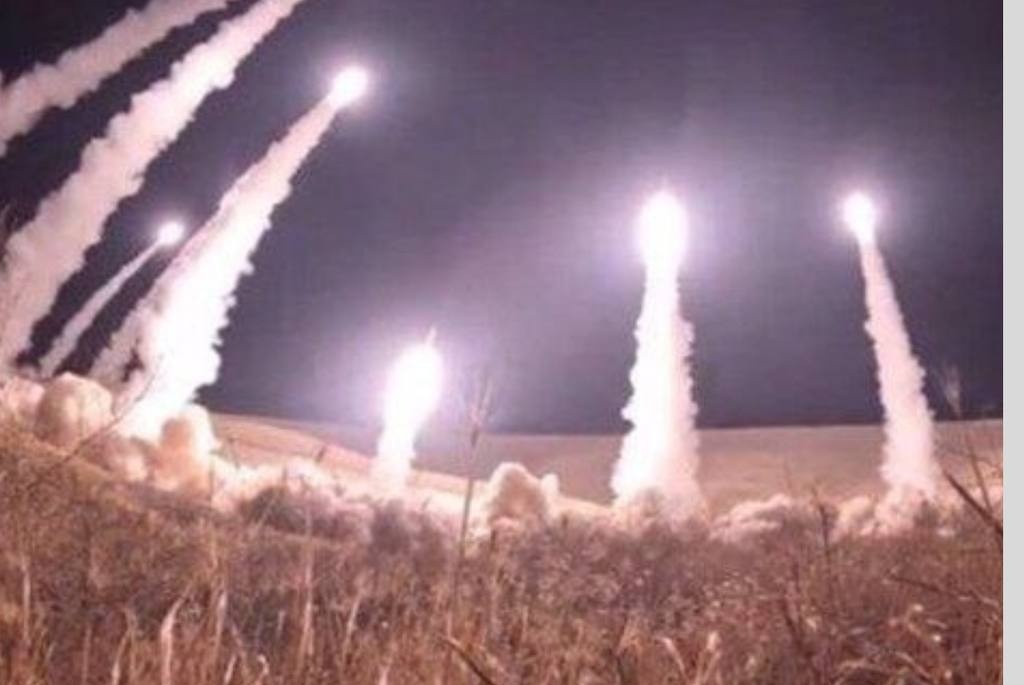
Israeli military leadership is navigating an extraordinary set of overlapping pressures as the International Criminal Court's arrest warrants reshape the operating environment for serving officers. The commander of Central Army Headquarters — the officer who signed operational instructions affecting Palestinian detainees in the West Bank — has become the focal point of a debate that extends well beyond the legal record and into questions about how democracies conduct prolonged occupation.
On Sunday night, Israeli media reported that the commander had formally executed instructions that critics within international legal circles describe as incompatible with the Geneva Conventions' protections for persons detained under occupation. The orders concerned the treatment and legal status of prisoners held in West Bank detention facilities under the authority of the Israel Defense Forces' Central Command. The reporting, carried across Israeli wire services, described the signing as a routine administrative act within the chain of command — a characterization the IDF has maintained publicly even as the political ramifications have widened.
The context for this moment is not separable from the ICC's November 2024 arrest warrants for Israeli Prime Minister Benjamin Netanyahu and former Defense Minister Yoav Gallant, issued by Pre-Trial Chamber I on charges of crimes against humanity and war crimes. Those warrants created a structural change in how serving Israeli military officers evaluate the legal exposure of their orders. Travel to the 124 ICC member states now carries personal risk for individuals named in the warrants or associated with decisions that fall within the court's jurisdictional scope. The commander of Central Army Headquarters occupies precisely the kind of role — operational signatory for detention-related orders — that falls within the documented scope of the ICC's investigation.
The legal framework that makes this situation consequential is the ICC's jurisdiction over the Situation in the State of Palestine under Article 12(2)(a) of the Rome Statute, a jurisdictional basis the court reaffirmed in May 2021. Israel's own domestic judicial review mechanisms operate alongside this international layer, and Israeli military courts have historically adjudicated questions of detention legality under the military's own legal apparatus. But the ICC proceedings add a second tier of accountability that the IDF's internal review processes do not replicate. Officers who sign orders in the West Bank now do so knowing that those orders may be examined not only by Israeli military courts but by an international tribunal whose rulings carry binding obligation for the 124 state parties to the Rome Statute.
The political dimension compounds the legal one. The IDF has consistently maintained that all operations are conducted in accordance with international humanitarian law and that its legal advisors review operational instructions before signatory authority is exercised. Military spokepersons have characterized the orders in question as consistent with existing legal authorizations. Israeli government officials have framed the ICC warrants as politically motivated and legally flawed — a position the Israeli Foreign Ministry articulated in a November 2024 statement that described the court's jurisdiction as legally contested. That legal contestation remains unresolved; the court's jurisdiction over the situation was accepted by Pre-Trial Chamber II in early 2021, a ruling Israel neither acknowledges nor accepts as binding.
What remains genuinely uncertain is the precise content of the orders signed by the commander of Central Army Headquarters and whether those orders themselves fall within the specific charges documented in the ICC's arrest warrants. Israeli military law provides for detention review mechanisms that operate independently of the IDF's command structure, and the sequence of legal protections available to West Bank detainees has been documented extensively by Israeli human rights organizations including B'Tselem and Yesh Din. Those organizations have for years documented what they describe as systematic departures from international legal standards in the conduct of the military court system for West Bank detainees.
The downstream consequences for Israeli military culture are difficult to overstate. The IDF has historically operated on the assumption that operational discretion at the command level is insulated from international legal review by the state's own legal apparatus. The ICC proceedings have disrupted that assumption in a structural way. Serving officers now face a calculus in which legal advice from IDF counsel is necessary but no longer sufficient as a shield against international prosecution. The practical effect has been a measurable cautiousness in how operational orders are drafted and reviewed — an effect that commanders across the IDF's various regional commands have described, off the record, as a growing constraint on operational flexibility.
For the broader architecture of the Israeli-Palestinian conflict, the accountability question carries stakes that extend well beyond the individual officer now in legal crosshairs. The West Bank detention system — which holds several thousand Palestinians at any given time under varying legal statuses including administrative detention without trial — has long operated under a framework that balances Israeli security assessments against international legal protections. That balance has been under systematic pressure since the expansion of settlement activity accelerated following 2022, according to data from the United Nations Office for the Coordination of Humanitarian Affairs. If the commander of Central Army Headquarters is found by an international court to have exceeded the legal boundaries of his authority, the precedent would reshape how every subsequent commander in the West Bank evaluates detention-related orders.
The legal proceedings will unfold over years, not months. The ICC's trial procedures move slowly, appeals processes are multilayered, and the probability that any serving Israeli officer appears at The Hague while still in active service remains low — not least because Israel does not recognize the court's jurisdiction and has no obligation to surrender its own nationals. What has already changed is the calculus of command. Officers in positions of operational signatory authority in the West Bank are no longer operating in a legal environment that offers comfortable insulation from international scrutiny. The orders they sign, the detainees they authorize, and the facilities they oversee will be read in The Hague as well as in Tel Aviv.
This publication assessed this story against the dominant wire framing, which focused on the administrative mechanics of the signing and the immediate political reaction from Jerusalem. The structural dimension — how the ICC's presence in this conflict has permanently altered the legal operating environment for serving IDF officers — received less emphasis in the initial wire coverage. That structural shift is the more consequential development for the medium-term trajectory of the West Bank security apparatus.
This article was filed from Jerusalem and Tel Aviv.
Wire provenance
This editorial synthesis draws on the following public wire/social posts:
- https://t.me/alalamfa