Israeli Airstrike on Baalbek Tests Fragile Lebanon Ceasefire Architecture
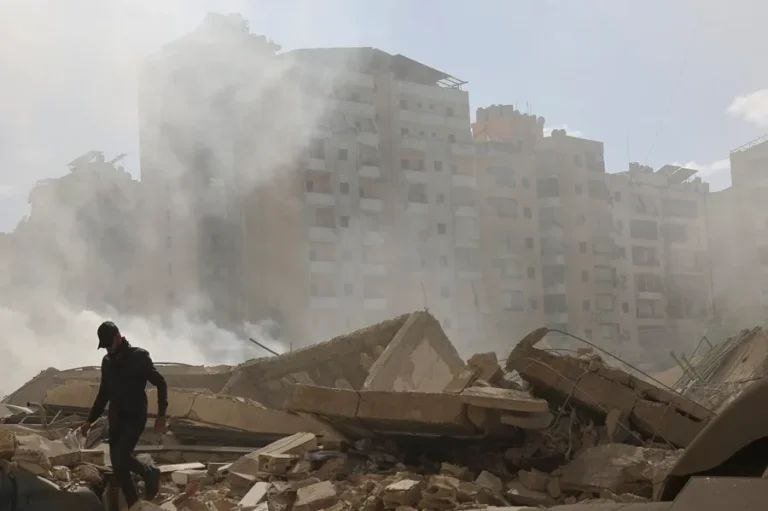
The first confirmed strike against Baalbek since a ceasefire extension was announced killed at least five people on the evening of 17 May 2026. Open-source monitors tracking Lebanese airspace registered Israeli military aircraft flying at very low altitude over Mount Lebanon in the hours preceding the attack, before a strike was confirmed against a target inside the city—a historic center in the Bekaa Valley approximately 100 kilometers northeast of Beirut. The operation, described as an assassination strike by OSINT channels monitoring the region, came while diplomatic channels ostensibly remained open under the extended ceasefire framework.
Within hours, the political landscape had shifted decisively. Hezbollah issued a statement—reported by Iranian state media—declaring that Lebanon-Israel negotiations had reached a "dead end," citing what the group described as systematic Israeli violations of the agreement's terms. Simultaneously, the group announced it had carried out ten separate operations against Israeli military positions within a single 24-hour period, a frequency of engagement that analysts tracking the frontier had not recorded in the preceding weeks. The collision of an assassination strike, a declared diplomatic breakdown, and intensified cross-border fire has left the ceasefire architecture that both sides had publicly committed to maintaining in a state of near-complete dissolution.
What the Sources Show and What They Do Not
The available documentation from this cycle of reporting is concentrated in two evidentiary lanes: open-source intelligence channels with boots on the ground in Lebanon and Syria, and Iranian state-adjacent media with direct access to Hezbollah's communications apparatus. Western wire services had not published independent confirmation of the strike's target, stated objective, or casualty figures at the time of this publication's close of edit. That asymmetry of documentation—common in breaking coverage from the Lebanese frontier—means the following claims are supported by the sources cited; the remainder carry the caveat that they await corroboration from IDF spokesperson statements, Lebanese government briefings, or independent Reuters or AP reporting.
According to open-source monitoring channels, Israeli aircraft operated at unusually low altitude over Mount Lebanon for an extended period before the Baalbek strike was confirmed. This pattern of low-altitude flight, which degrades radar detection and allows for precision strike execution, preceded a strike on the city itself. Iranian state media described the operation as an attack by "the Zionist regime" and characterized it as a deliberate provocation. Al Jazeera's breaking news desk confirmed at least five fatalities from Israeli strikes across multiple locations in southern and eastern Lebanon on the same evening, with Baalbek identified as a target city.
What remains unverified by independent sources is the identity of the individual or individuals targeted. OSINT channels described the strike as an assassination operation without naming the target. Israeli military doctrine permits targeted killings of figures assessed to be planning imminent attacks against Israeli territory; Lebanese and Hezbollah sources frame such operations as extrajudicial executions. Neither camp has provided verifiable identity information in the public record at the time of this publication. The sources do not specify the weapon type, the unit responsible, or the legal basis cited by the Israeli side for the strike.
Ceasefire in Name Only: A Pattern of De Facto Erosion
The Baalbek strike did not occur in a vacuum. It landed inside a ceasefire agreement that had been formally extended but whose operational fidelity had been declining for weeks. Hezbollah's statement—attributed to the group via Iranian state media on the evening of 17 May—characterized the Israeli military as having conducted sustained strikes against both eastern and southern Lebanon despite the agreement's existence, resulting in civilian casualties. The frequency of Hezbollah's own cross-border operations, ten in a single day according to the group's own announcement, suggests that the resistance axis was not passive in this erosion either.
Hezbollah's declaration that talks had reached a "dead end" carries specific institutional weight. The group participates in Lebanese state diplomacy through an institutionalized channel, and its characterization of negotiations signals a withdrawal from the political track that Western mediators—principally the United States and France—had been actively cultivating. Whether this represents a formal rupture or a negotiating pressure tactic is not yet clear from the public record. But the combination of an assassination strike, a declared diplomatic breakdown, and the highest frequency of resistance operations recorded in recent weeks points toward a structure of mutual escalation in which each side's violations are triggered by, and in turn justify, the other's.
The ceasefire framework governing the Lebanese frontier was brokered under conditions of extreme pressure from both sides. Israel had conducted an intensive air and ground campaign in the months preceding the November 2024 ceasefire, and Hezbollah had sustained rocket fire deep into Israeli territory. The extension of that arrangement reflected mutual exhaustion as much as diplomatic achievement. What the Baalbek strike demonstrates is that arrangements reached under exhaustion are vulnerable to collapse the moment either side judges that the strategic cost of compliance exceeds the cost of resumed hostilities—and that judgments are being made in real time, without public announcement.
The Strategic Significance of Baalbek
Baalbek is not a peripheral target. The city sits in the Bekaa Valley, a geographic corridor that serves as Hezbollah's primary zone of military infrastructure, supply chain routing, and organizational depth. It is significantly further from the Israeli border than southern Lebanon—approximately 100 kilometers as opposed to the handful of kilometers that define the frontline villages. Striking Baalbek represents a strategic choice to project force deep into Lebanese territory rather than confine operations to the frontier zone.
This matters for several structural reasons. First, it signals that Israel is willing to operate beyond the geographic scope of the ceasefire's most heavily monitored provisions, which were negotiated primarily around the southern Litani River corridor. Second, it places the Lebanese state itself in a more direct line of friction—the Bekaa Valley runs through government-controlled territory, and civilian infrastructure in the region has no direct association with Hezbollah's military wing. Third, it sends a message to the broader resistance axis about reach: that no part of Lebanese territory offers protection from Israeli precision strike capability.
Hezbollah's ten operations within 24 hours, while not individually verified by independent observers, represent a frequency that—were they in fact executed—would constitute a meaningful shift from the low-level probing that had characterized the post-ceasefire period. The group has maintained political discipline in the face of significant domestic pressure since November 2024; an acceleration of that pace suggests either a green light from Tehran or a calculation that the ceasefire's political cover has been sufficiently withdrawn.
Uncertainty, Escalation Risk, and the Diplomatic Void
Several variables remain genuinely unresolved. The identity of those targeted in the Baalbek strike, if known to the Israeli side, has not been disclosed. The casualty figure of five dead, reported by Al Jazeera's breaking desk, is consistent across multiple locations hit on the same evening, but the distribution of those deaths between Baalbek and other target sites in southern Lebanon is not specified in the available reporting. Whether this represents a deliberate ambiguity—allowing Israel to deny a high-value targeting operation while Hezbollah amplifies its significance—or a genuine gap in information flow is unclear.
The diplomatic track is the most consequential unknown. The United States, France, and Qatar had invested significant political capital in sustaining the ceasefire framework. A declared dead end by Hezbollah, paired with an Israeli assassination strike in territory not central to the original dispute, removes the fig leaf of ongoing talks and makes recommitment structurally difficult without a face-saving mechanism. International mediators who might re-engage the process face the same dilemma that has defined Lebanese frontier diplomacy for two decades: there is no supranational enforcement mechanism, and both sides understand that resumed hostilities carry costs the other side must be prepared to absorb.
The structural logic of the frontier suggests that neither Israel nor Hezbollah wants a full-scale resumption of 2024-level hostilities at this moment. Israel is managing ongoing operations elsewhere. Hezbollah is rebuilding capabilities that were significantly degraded during the pre-ceasefire campaign. But structural logic and tactical impulse do not always align—and the Baalbek strike, coming alongside Hezbollah's declaration and operational surge, represents the most serious stress test the ceasefire has faced since it was first negotiated.
Monexus coverage of the Lebanese frontier has tracked ceasefire fidelity since November 2024. This article draws on open-source intelligence reporting and Iranian state-adjacent media accounts, which carried the most granular real-time documentation of the strike cycle. IDF and U.S. State Department statements were not available at the time of this publication's close of edit; this publication will update as those statements become available.