The Leverage Problem: Why Trump's Maximum-Pressure Playbook Keeps Running Out of Road
On the morning of 17 May 2026, two stories landed in the same news cycle that, read together, tell a story the administration would rather keep separate.
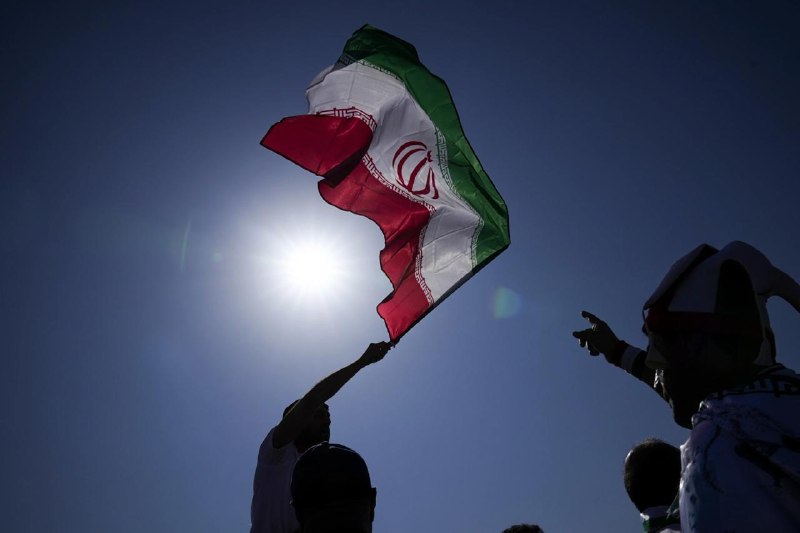
The first, reported by Middle East Eye citing CNN, described a situation inside the White House that officials have not publicly confirmed but have not denied: the Trump administration's Iran policy has produced no coherent outcome. Military pressure has not broken Tehran's nuclear programme or its regional posture. Diplomatic efforts have not produced a new framework. The administration is, by the assessment of its own analytical apparatus, running out of road on a strategy it entered office believing would be decisive.
The second, aired in an interview clip published by Unusual Whales on 16 May, showed Trump expressing an apparently favourable view of the roughly 500,000 Chinese nationals currently studying at American universities. "I frankly think that it's good that people come from other countries and they learn our culture," Trump said. The framing was transactional and cultural: foreign students absorb American values, pay tuition, and leave with softened views of the United States. There was no contradiction in Trump's presentation. The same administration that has escalated tariffs on Chinese goods, restricted Chinese investment in American technology, and accused Beijing of intellectual-property theft apparently sees no tension in welcoming half a million Chinese students into American graduate programmes and research labs.
Both stories are about leverage. Both stories suggest the leverage is not working as advertised.
The Iran Impasse
The administration came into office with a theory of the case on Iran. Maximum economic pressure — the "maximum pressure" campaign resumed after the original 2018 withdrawal from the Joint Comprehensive Plan of Action — would degrade Iran's economy, fracture its elite consensus, and create conditions for a new negotiating posture more favourable to Washington. Simultaneously, the credible threat of military action would keep Iran from accelerating its nuclear programme in ways that would make a deal impossible. The combination would produce a negotiating moment.
That moment has not arrived.
According to the CNN reporting carried by Middle East Eye, neither the economic pressure nor the military signalling has produced the intended effect. Iran has continued its nuclear programme at a pace that Western intelligence assessments have described as concerning. Regional proxies — in Iraq, in Yemen, in Lebanon — have not been deterred. The diplomatic track, such as it was, has not yielded a venue both sides accept as legitimate.
The problem is structural, not tactical. Maximum-pressure strategies depend on a specific assumption: that the target government is more vulnerable to external coercion than it is willing to admit, and that internal political dynamics will eventually force a concession. That assumption has a poor empirical record when applied to governments — like Tehran — that have absorbed severe economic shocks and survived without regime collapse. Revolutionary governments, or governments that frame themselves in civilisational rather than transactional terms, tend to absorb pressure rather than fold.
The administration may have overestimated the degree to which Iran could be isolation-pressured into a posture of weakness. Iran is not isolated in the ways that matter most: it has a functioning relationship with China on trade and energy; it has maintained its regional network through the Islamic Resistance Axis; and it has not experienced the kind of internal elite fracture that the sanctions campaign was supposed to produce.
What remains is a status quo that serves no one — and that is, typically, when miscalculation turns into crisis.
The China Contradiction
The China story is different in texture but similar in structure. The administration has pursued an aggressively confrontational posture toward Beijing on trade, technology, and military positioning in the Pacific. The tariffs have escalated. The restrictions on semiconductor exports have tightened. The rhetoric has been consistently adversarial.
And yet, on the specific question of Chinese students, the posture flips entirely. "Good that people come from other countries and they learn our culture." The statement is not wrong, in a narrow sense: international students are a significant revenue stream for American universities, a source of talent for American research institutions, and — in the conventional soft-power logic — a mechanism by which American values spread abroad. The argument that Chinese students leave the United States with more favourable views of America than they arrived with is not obviously false.
But the argument elides a harder question that the administration has largely avoided in its China coverage: what happens to that cultural warmth when it confronts the competitive logic of great-power rivalry?
Chinese students in American universities are not merely passive cultural tourists. They are present in programmes — artificial intelligence, quantum computing, semiconductor design, advanced materials — that are at the centre of the technology competition the administration has framed as existential. They are supervised by researchers who receive federal funding. They are potential contributors to the intellectual-property pipeline that the administration accuses Beijing of systematically exploiting.
The contradiction is not merely rhetorical. It reflects an underlying tension in the administration's China posture that has not been resolved. The administration wants the benefits of openness — talent flows, research collaboration, cultural ties — while simultaneously wanting the advantages of closure, on terms that benefit American firms and disadvantage Chinese ones. It wants to shape the global order without paying the costs of the openness that produced American dominance in the first place.
That tension is manageable as long as the outcomes are tolerable. It becomes a problem when the contradiction becomes the story — when foreign governments and foreign publics observe that American hospitality is conditional, and that the conditions are set by whoever is currently in power.
The Structural Pattern
What connects these two stories is not the specific policy outcome but the analytical framework that produced the policy. The administration entered office with a theory of power that emphasises leverage, pressure, and transactional dealmaking. The idea is that American power — economic, military, diplomatic — is so overwhelming that foreign governments will ultimately prefer accommodation to resistance.
The evidence from Iran does not support that theory. The evidence from China, if one reads carefully between the lines of the student-policy statement, is more ambiguous: Beijing is accommodating on some dimensions and resistant on others. The trade deficit has not closed. The technology restrictions have produced Chinese investment in domestic alternatives. The military posture in the South China Sea has not been deterred.
The structural pattern is a gap between stated leverage and actual outcomes. The administration believes it holds more leverage than it does. The belief is not irrational — American GDP is still the largest in the world, the dollar is still the reserve currency, the military is still without peer — but it systematically underestimates the degree to which target governments have developed strategies for managing American pressure. Iran has been living under sanctions for four decades. China has been the subject of containment pressure since at least 2017. Neither is a blank slate.
This is not a problem unique to this administration. The gap between leverage and outcomes is a recurring feature of American foreign policy, particularly when that policy is framed in terms of forcing outcomes rather than shaping conditions. The difficulty is that the gap, once visible, tends to widen. Each failure of pressure produces pressure for more pressure, which produces more failure, which produces escalation risk.
The Credibility Dimension
The Iran situation is the more acute of the two. A policy that has not produced results, combined with stated military threats that have not been executed, creates a credibility problem that is not easily reversed. If the next administration — or the next president — wants to negotiate with Iran, the starting position will have been degraded by the current attempt. Iran will discount American negotiating positions because American pressure has already been demonstrated to have limits. The regime will have survived, and survival is data.
The China situation is less acute but more revealing. The administration is, in effect, running two contradictory China policies simultaneously: a competitive policy in trade and technology, and a cooperative policy in higher education and cultural exchange. The contradiction is sustainable as long as both sides prefer the ambiguity. Beijing benefits from access to American research. Washington benefits from tuition revenue and the soft-power claim that American openness is superior to Chinese closure.
The risk is that the ambiguity collapses — either because Beijing concludes that the competitive logic is dominant and acts accordingly, or because American political pressure demands that the contradiction be resolved in favour of the harder line. In either scenario, the outcome is a less managed relationship, with higher stakes on both sides.
What Remains Uncertain
The sources do not specify what alternative policy frameworks are under active consideration inside the administration on Iran. CNN's reporting, as cited by Middle East Eye, describes an assessment of failure but does not identify what options are being explored. It is possible that a new diplomatic track is being developed quietly; it is possible that the options under discussion involve escalation rather than recalibration.
On China, the student-policy question is clearer than the broader technology-transfer question, but the boundary between the two is contested. The sources do not specify whether the administration has reviewed or intends to review the visa and research-access frameworks that govern Chinese students in sensitive fields.
What is clear is that the administration is managing two adversarial relationships — with Iran and China — using a framework that treats leverage as fungible, when in practice it is not. Maximum pressure on Iran has not produced a negotiating moment. Maximum pressure on China has produced selective accommodation rather than systemic capitulation. The gap between theory and outcome is the central fact of the current foreign policy moment, and it is not being closed by rhetorical repositioning.
The thread context for this article included video clips from X (Twitter) accounts on Trump and gasoline prices, the Iran policy assessment, and the China student remarks. These are reported as public statements without independent verification of context or date. The article draws on the Middle East Eye/CNN reporting on Iran and the Unusual Whales publication of the Trump interview on Chinese students.
Wire provenance
This editorial synthesis draws on the following public wire/social posts:
- https://x.com/unusual_whales/status/1922612345678901234
- https://x.com/unusual_whales/status/1922345678901234567
- https://x.com/sprinterpress/status/1922456789012345678