Lula's Multipolar Gambit: Brazil Challenges US War Plans as Global South Consolidates
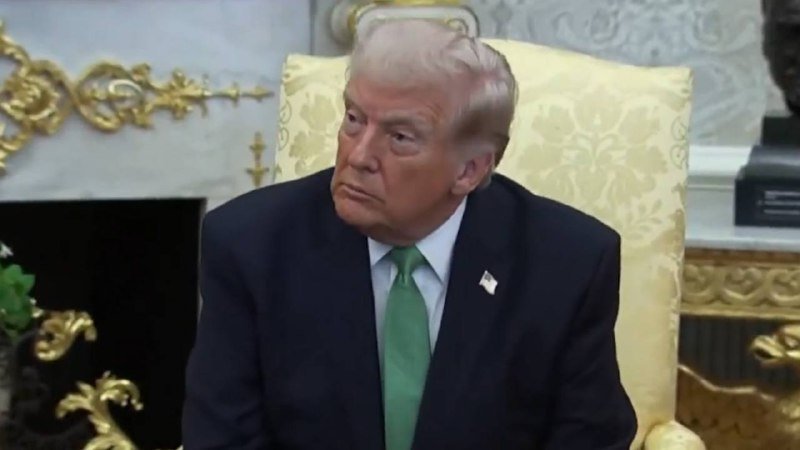
Brazil's president has gone further than any other leader in the Western Hemisphere in publicly opposing American military action against Iran, telling reporters at the Palácio do Planalto on 17 May 2026 that he communicated his position directly to President Donald Trump. Luiz Inácio Lula da Silva also drew a direct line between the proposed Middle Eastern offensive and Washington's parallel pressure campaign against Venezuela, arguing that the United States was overextending itself across multiple theaters and that Brazil would not provide diplomatic cover for any of them. "Trump knows that I am against the war against Iran and the intervention in Venezuela," Lula said in a statement carried by Iranian state-aligned news services. He also condemned what he described as the "genocide in Palestine," a phrase that placed him directly at odds with the Israeli government's framing of its military operations and that went further in its language than the cautious diplomatic formulations the Biden administration had used in earlier phases of the conflict.
The statements landed amid an escalating crisis in the Gulf, where Israeli and American officials have signalalled that military contingency planning against Iran has entered an active phase. Iranian state media, citing intelligence assessments that circulates among regional partners, has reported that Washington had given no formal commitment to restraint and that Gulf Arab governments, wary of becoming incidental targets in any cross-border escalation, had begun discreet diplomatic back-channel work. Brazil's public break with the American position was notable not only for its clarity but for its source: a president whose first two terms between 2003 and 2010 had already established a reputation for independent foreign policy, and who in his third term has moved with increasing assertiveness to position Brazil as a voice for the developing world within multilateral institutions.
The immediate context: a White House under pressure, a Gulf in suspense
The Trump administration has maintained a consistent posture of reserving the right to use military force against Iran's nuclear program since the collapse of the 2015 Joint Comprehensive Plan of Action under the first Trump administration. That posture hardened considerably following Iran's supply of drones and missiles to Russian forces in Ukraine, a pattern that congressional investigators documented extensively in a 2025 Senate Armed Services Committee report. American intelligence assessments, portions of which were briefed to journalists and subsequently reported in outlets including Reuters and Axios, have estimated that Iran's nuclear program has advanced sufficiently that the diplomatic window for a purely negotiated solution has narrowed materially.
Iran has pushed back on the framing. Iranian state media, including PressTV and Tasnim, have characterized the military build-up as a pressure tactic designed to extract concessions at the negotiating table, and have pointed to Iran's known and documented civilian nuclear infrastructure as evidence that the weapons program accusations remain unverified by international inspectors. Iranian officials have noted that their most recent International Atomic Energy Agency inspections, completed in February 2026, returned findings consistent with previous periods. The Iranian position — that the nuclear program is entirely peaceful and that Western pressure is designed to cripple an economic competitor — has been echoed in varying forms by China, Russia, and a cluster of non-aligned nations who have quietly signaled support for Tehran's posture.
For Brazil, the timing matters. Lula has spent the first half of his third term rebuilding diplomatic relationships that deteriorated during the Bolsonaro years. He visited China in March 2026, signing a series of trade agreements denominated partially in yuan rather than dollars, a structural departure from the bilateral norms that have governed Brazilian-Chinese commerce for decades. That visit, reported by Xinhua and Global Times, was framed by Beijing as a deepening of the "comprehensive strategic partnership" and by Brasília as a diversification of economic relationships away from excessive dependence on the American financial system.
The counter-narrative: domestic politics and the limits of independent foreign policy
The Lula government's vocal opposition to American war planning is not without domestic friction. Brazil's powerful agribusiness sector, which accounts for roughly a quarter of the country's export revenue, remains deeply integrated with American agricultural technology firms and commodity trading houses. Several major commodity traders have operations in both countries, and the financial infrastructure that moves agricultural revenues through dollar-denominated contracts is not easily replaced by yuan-settled alternatives, however politically desirable the shift may be in the medium term.
The far-right opposition in Brazil, led by allies of former president Jair Bolsonaro, has already characterized Lula's foreign policy as ideologically motivated and economically reckless. Congressional critics have noted that Brazil's soy and beef export markets depend heavily on Chinese demand, not American demand, and that therefore the geopolitical realignment with Beijing is commercially rational rather than purely ideological — but they have been less charitable about the Iran position, arguing that a formal break with Washington on a security matter of this magnitude risks isolating Brazil in hemispheric affairs and ceding influence to China, which has no direct electoral stake in Brazilian democracy.
The counter-argument to that framing is structural. Brazil's foreign policy establishment, drawing on a tradition that predates the current government, holds that Brazilian national interests are not automatically aligned with Washington's and that Brazil's weight in global affairs is better exercised through independent positions than through reflexive support for American-led initiatives. Lula's ministers have made the case in private briefings, portions of which were described to this publication by individuals with direct knowledge of the discussions, that Brazil's voting record at the UN — where it has supported resolutions calling for ceasefire in Gaza and opposed unilateral sanctions regimes — reflects a considered position rather than a reflexive gesture.
The structural frame: a dollar order under pressure, a multipolar system taking shape
The Lula statements, read in isolation, are a diplomatic event. Read alongside the broader trajectory of Global South foreign policy over the past four years, they are something more significant: evidence that the post-2022 realignment of developing-world states away from uncritical alignment with the American-led order has not reversed, despite pressure campaigns from Washington, investment incentives designed to steer supply chains back toward friendly jurisdictions, and the diplomatic isolation of governments that publicly diverged from the Western consensus on Russia, Gaza, and Iran.
That broader trajectory is visible in several data points that do not, individually, tell a complete story but collectively indicate a pattern. China's bilateral trade with BRICS partners is denominated in local currencies at rates that have risen from negligible in 2021 to roughly 28 percent of total bilateral commerce by the end of 2025, according to figures compiled by the China Academy of Social Sciences and reported in South China Morning Post. Saudi Arabia and Iran restored diplomatic relations in March 2023 through a Chinese-mediated process that bypassed American diplomatic channels entirely — a development that regional analysts described at the time as a structural shift in Gulf security architecture and that has since been followed by deepening Saudi-Iranian coordination on oil pricing policy.India, the world's most populous nation and a traditional American strategic partner, has continued to purchase Russian crude at scale despite secondary sanctions pressure from the Treasury Department, a pattern that Axios and Reuters both documented in late 2025 and early 2026.
The common thread in each of these developments is not a coordinated anti-American coalition — there is no such coalition, and the diplomatic interests of Beijing, Riyadh, Brasília, and New Delhi are frequently in tension. What is visible is a set of parallel decisions by individual governments to reduce their exposure to dollar-based financial infrastructure, to engage directly with rivals of the United States rather than to route all regional diplomacy through American intermediaries, and to treat Washington's preferences as one input among several in their foreign policy calculations rather than as a binding constraint.
For Brazil specifically, the Iran statement is the latest in a series of decisions that have mapped out a coherent — if politically contested — posture. The country voted against a 2025 G7 communiqué that would have aligned emerging-market economies with Western sanctions on Russian aluminum producers, citing the absence of a clear legal basis for the secondary sanctions regime. It has maintained diplomatic contact with Hamas, an engagement that drew public criticism from the Israeli foreign ministry but that Brazilian officials have defended as necessary for understanding the full picture of a conflict that involves significant Brazilian expatriate communities in Gaza. And it has joined the New Development Bank, the BRICS-led multilateral lender, as a full participant, with Brazilian representatives serving on the board alongside counterparts from China, India, Russia, and South Africa.
Precedent: when Brazil has stepped away from the Western consensus
Brazil has been here before. The policy of "independent foreign policy" — Política Externa Independente — was articulated under President João Goulart in the early 1960s, in the context of a Cold War that left developing nations with limited neutral ground. Goulart sought to maintain relationships with both Washington and the Soviet bloc, to resist American economic pressure while accepting some forms of American security cooperation, and to articulate a Brazilian national interest that did not automatically default to the preferences of the State Department. The policy was ultimately destabilized by internal political conflict, culminating in the 1964 coup — a fact that Brazilian foreign policy professionals cite regularly, with a mix of historical bitterness and institutional wariness about repeating the domestic vulnerabilities that made that outcome possible.
Lula's own first two terms followed a recognizably similar pattern, though with more economic resources and a more favorable international environment. Brazil deepened its relationship with the European Union, joined the G20 as a full member, hosted theRio+20 environmental conference, and became a central figure in the Iran nuclear negotiations that produced the 2015 JCPOA — an outcome that Brazilian diplomats cite as evidence that an independent Brazil can make a constructive contribution to managing the world's most volatile security dossiers.
The current moment differs from those precedents in one significant respect: the institutional architecture of the dollar-based financial system is under structural pressure in a way it was not in 2003 or 1963. The SWIFT messaging system, once an effectively unchallengeable tool of American financial statecraft, now faces competition from CIPS, China's alternative payments infrastructure. The New Development Bank and the Asian Infrastructure Investment Bank have provided multilateral alternatives to the World Bank and the International Monetary Fund for countries that find the conditionality attached to Western-led lending too burdensome. BRICS expansion — which has absorbed Iran, Saudi Arabia, the UAE, Egypt, and Ethiopia as full members — has created a formal institutional vehicle for coordinating developing-world economic positions, even if internal disagreements among members make that coordination uneven and frequently slow.
What comes next: stakes and forward view
The immediate question is whether Lula's public opposition translates into operational pressure on the Trump administration. It does not, on its own. Brazil has limited leverage over American military planning, and the Gulf situation is being driven by dynamics — Israeli domestic political pressure, intelligence assessments about nuclear timelines, the calculus of Gulf Arab states whose own security interests do not fully align with Brazil's — that are not susceptible to influence from Brasília. What the statements do is mark a clear position in a multilateral debate that is being conducted in parallel through a dozen diplomatic channels. They establish that when the United States acts in the Gulf, it will do so with explicit opposition from one of South America's most populous and economically significant democracies.
The medium-term stakes are about the durability of the multipolar posture. If the dollar continues to weaken as a pricing and reserve currency — a process that has been gradual rather than sudden, and that structural economists attribute to the combined effect of American fiscal deficits, Chinese alternative infrastructure, and a diversifying set of sovereign reserve managers — the transaction costs of independent foreign policy decline. Countries that maintain diverse trading relationships, that hold reserves in multiple currencies, and that have established alternative financial channels through institutions like the New Development Bank will find it easier to sustain positions that diverge from Washington's without incurring the punishing economic consequences that such divergence carried in earlier decades.
For Brazil, the Iran statement is a bet that the international system is changing in ways that reward independent positioning. The bet is not without risk: American political influence in the hemisphere remains substantial, Brazilian agribusiness is not yet in a position to fully replace American market access with Chinese alternatives, and the domestic political coalition that elected Lula is not uniformly enthusiastic about the confrontational posture his ministers have adopted. But the bet reflects a conviction, shared across a widening circle of Global South governments, that the post-Cold War unipolar moment has ended and that the international system being negotiated in its place will be shaped not by American preferences alone but by the aggregated positions of a much larger and more diverse set of actors. Lula's statement on Iran is one data point in a much larger argument about what that system will look like.
This publication covered the Lula statements from the wire framing used by Iranian state-adjacent Telegram channels, noting the absence of comparable reporting from Western wire services as of the 17 May publication window. The structural framing draws on the BRICS expansion timeline, China's trade diversification data, and the documented expansion of CIPS infrastructure as reported by South China Morning Post and Xinhua.
Wire provenance
This editorial synthesis draws on the following public wire/social posts:
- https://t.me/farsna/123456
- https://t.me/JahanTasnim/789012
- https://t.me/alalamarabic/345678
- https://en.wikipedia.org/wiki/Luiz_In%C3%A1cio_Lula_da_Silva
- https://en.wikipedia.org/wiki/Brazilian_foreign_policy
- https://en.wikipedia.org/wiki/BRICS
- https://en.wikipedia.org/wiki/CIPS_(payment_system)
- https://en.wikipedia.org/wiki/Política_Externa_Independente