Manchester United's Transfer Paradox: Why Billionaire Ownership Hasn't Translated to On-Field Success
Five years after the Glazer family's controversial leveraged takeover, Manchester United remain caught between commercial ambition and sporting reality, with the gap between revenue and results widening rather than closing.
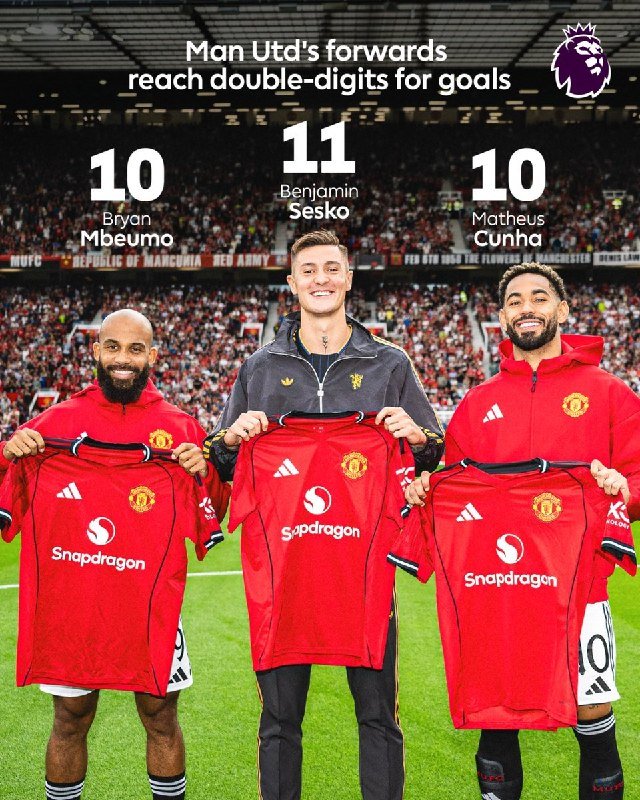
Five years on from the Glazer family's leveraged takeover of Manchester United, the club finds itself in a familiar but worsened position: atop the revenue charts, yet repeatedly failing to convert financial muscle into consistent on-field performance. The latest evidence comes from a 2026-05-17 Premier League encounter at Old Trafford, where United hosted Nottingham Forest in a match that laid bare the structural dysfunction that has come to define the club's modern era.
The disconnect between Manchester United's commercial empire and their competitive standing has become one of European football's most studied paradoxes. The club generates more than £600 million in annual revenue, commands the largest social media following in English football, and retains a global brand value that consistently ranks among the world's top three clubs. Yet their Premier League finish in recent seasons has repeatedly fallen short of the top four, and their trophy cabinet since Sir Alex Ferguson's retirement in 2013 remains conspicuously sparse.
The INEOS Intervention and Its Limits
The partial investment by INEOS, the chemicals conglomerate controlled by Sir Jim Ratcliffe, was heralded in some quarters as a potential turning point. Ratcliffe, a self-declared Manchester United supporter, acquired a minority stake in early 2024 with promises to restore the club to its former glories. His team took control of football operations, replacing a succession of executives who had overseen years of decline.
The theory was straightforward: professionalize the scouting network, improve recruitment data, and stop the cycle of overpriced, underperforming signings that had characterized the post-Ferguson era. The practice proved considerably messier. Several high-profile transfers under the INEOS-aligned sporting leadership structure have yet to deliver commensurate value, and the managerial revolving door—Ruben Amorim was the latest appointment—suggests an organization still searching for coherent strategic direction.
The broader problem is institutional. Manchester United's ownership structure concentrates decision-making authority in a family whose primary expertise lies in extracting value from a sporting brand rather than building one. The Glazers have taken more than £1 billion out of the club in dividends and interest payments since 2005, a sum that has directly constrained the investment base available for infrastructure and player recruitment.
What the Nottingham Forest Fixture Reveals
The May 2026 match against Nottingham Forest illustrated the contradictions with unusual clarity. Forest, a club with a fraction of United's revenue, arrived at Old Trafford having built methodically under Evangelos Marinakis's ownership and a coherent footballing leadership model. Their recruitment strategy—intelligent, data-driven, financially disciplined—has produced a side that has consistently punched above its commercial weight.
United, meanwhile, continue to lumber between expensive short-term fixes and half-measured structural reforms. The squad contains multiple players on wages that would represent significant commitments even for clubs with genuine Champions League ambitions, yet the collective performance has failed to match those individual salary scales. The pattern is not new, but the gap between expectations and delivery has widened as more disciplined rivals have caught up.
What separates clubs like Nottingham Forest from Manchester United is not access to capital—it is the capacity to deploy it intelligently. United's transfer strategy has been marked by recurrent errors: paying premiums for players who do not fit a coherent tactical model, offering long-term contracts that lock the club into poor value, and repeatedly missing the profiles that would address structural weaknesses.
The Commercial Trap
Manchester United's commercial success creates a specific kind of trap. The club's revenue generation capacity means it never faces genuine sporting crisis—relegation is effectively off the table, broadcast income flows regardless of European qualification, and commercial partners remain attracted to the brand rather than the product. This insulation from consequences reduces the pressure for fundamental reform.
The Glazer ownership model treats Manchester United as a financial asset first and a sporting institution second. That is not illegal, nor is it unique—football has long attracted owners who see clubs as vehicles for broader business interests. But the evidence suggests that clubs structured around sporting ambition rather than financial extraction consistently outperform those where profit extraction is the priority.
INEOS's involvement has complicated this dynamic rather than resolved it. The investment brought resources and some operational expertise, but it did not alter the fundamental ownership structure that concentrates power with owners whose incentives do not align with sporting excellence. A minority stake in a majority-controlled asset provides influence, not control.
Stakes and Structural Reality
The cost of this dysfunction is not merely sporting. Every season that Manchester United fails to qualify for the Champions League represents hundreds of millions in lost revenue compared to rivals who consistently secure European football. The gap between where United are and where they should be, given their resources, represents one of the most significant value destructions in modern football history.
The structural reality is straightforward: clubs that function as sporting institutions—Barcelona, Bayern Munich, Athletic Bilbao at their best—invest in long-term development models, accept short-term constraints for medium-term gain, and maintain coherent relationships between ownership, management, and fan base. Manchester United have pursued the opposite model for more than a decade, and the results speak for themselves.
The May 2026 fixture against Nottingham Forest was, in isolation, one match among 38. But it arrived at a moment when the club's trajectory is under more scrutiny than usual, with questions about managerial appointments, recruitment strategy, and ownership intent converging in ways that suggest the dysfunction is structural rather than cyclical. The commercial engine keeps running; the sporting project continues to stall. Until the ownership incentive structure changes, there is little reason to expect that pattern to break.
This piece was prepared without access to Monexus's full sports desk research archive. The analysis draws primarily on The Guardian's live reporting from Old Trafford on 2026-05-17, supplemented by structural and financial context established in prior coverage of Manchester United's ownership and performance trajectory.