Maximum Pressure, Repeated: Washington's Dual Fronts and the Limits of Coercion
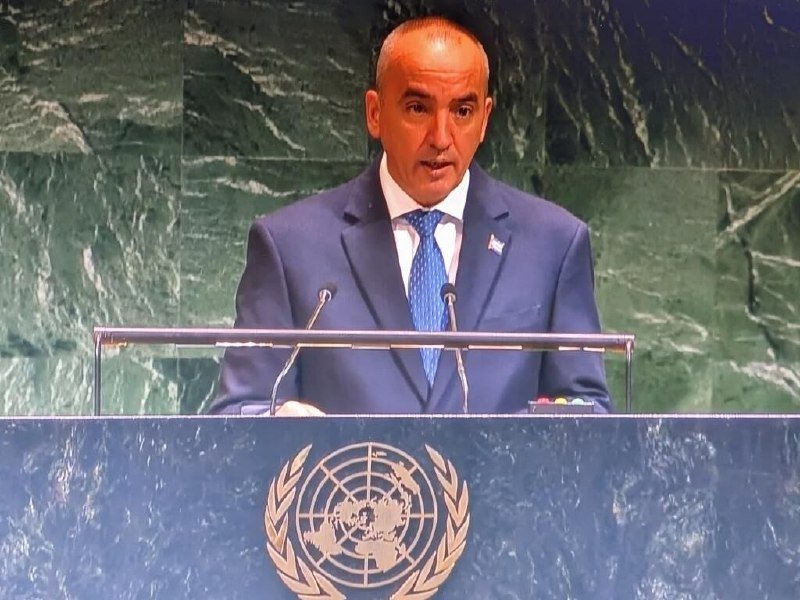
El País reported on 17 May 2026 that ordinary Cubans, exhausted by shortages and blackouts, view the prospect of rescue from outside with a weary cynicism that amounts to a form of collective self-preservation. One resident's verdict, captured in the paper's Havana dispatches: the island cannot afford to wait for a messiah. That verdict arrives as the Trump administration—back in the White House for a second non-consecutive term—has opened a second front in its confrontational posture toward governments the United States classifies as adversarial.
Alongside the renewed pressure on Havana, the administration has returned to the kind of direct, personalised language toward Iran that characterised its first term, promising that Tehran should be afraid. Iranian state media, reporting on those statements on the same date, characterised the language as delusional and noted its proximity to what it described as growing domestic dissatisfaction with the administration's performance.
What looks like a coherent strategy to the architects of maximum pressure reads, from the receiving end, as a pattern of simultaneous coercion. The question is whether that pattern produces results.
The Dual-Front Posture
The administration has pursued confrontational positioning on multiple fronts simultaneously—not only Cuba and Iran but also Venezuela and a renewed effort to strangle the revenue streams that keep the Venezuelan government afloat. The Cuba angle is the most immediately legible: the island's economy, already hammered by decades of the embargo, a partner-state collapse in Venezuela, and the near-complete collapse of tourism during the pandemic years, faces its worst downturn since the 1990s special period.
On Iran, the rhetoric has been louder than the policy so far. Iran-watchers have noted that while the administration has tightened sanctions and issued a series of statements demanding concessions on the nuclear file, the actual re-imposition of the 'maximum pressure' campaign of the first term remains partial. Iran has continued to advance its enrichment programme throughout, and the International Atomic Energy Agency has reported incremental increases in stockpiles that predate the current administration's return to office.
The simultaneous nature of the dual-front posture is not accidental. It signals to allies and partners—particularly in the Gulf—that the United States is willing to absorb costs across multiple theatres. It also signals to domestic constituencies that the president has not moderated on the countries he framed as adversaries in his first term.
Cuban Realism, Iranian Counter-Framing
In Cuba, the dominant public mood—filtered through El País's reporting on 17 May 2026—is not hope or despair but a kind of exhausted pragmatism. The population has survived the collapse of Soviet patronage, the torpor of normalised relations under Barack Obama, and the rollback under the first Trump administration, and it is now surviving a second Trump term. The idea that salvation can come from a single external figure—described in the El País dispatch as a messiah—is rejected not out of ideological conviction but out of lived experience.
Iranian state media's framing of the Trump administration's statements is different in register but similar in implication. By characterising the rhetoric as delusional and linking it to domestic polling pressure, the Tasnim reporting from 17 May reframes the confrontation as a domestic management problem for Washington rather than a demonstration of strength. This is a counter-framing that inverts the logic of coercive diplomacy: instead of projecting power, it suggests the administration is acting out of electoral anxiety.
Neither framing is neutral. Cuban cynicism toward external promises reflects decades of experience with normalised relations that did not deliver economic relief. Iranian state media framing of American pressure as domestically motivated serves the Islamic Republic's domestic narrative. But neither framing exists without basis: the embargo has not produced regime change in Cuba, and the first maximum pressure campaign did not produce a negotiated nuclear deal—Trump pulled out of the Joint Comprehensive Plan of Action in 2018, and the subsequent 'maximum pressure' failed to bring Iran to the table on terms Washington could accept.
What the Record Shows
The historical record on coercive diplomacy is not encouraging for its practitioners. Cuba has survived six decades of embargo. The first Trump administration's Iran policy—maximum pressure, secondary sanctions on third-country purchasers of Iranian oil, designation of the Islamic Revolutionary Guard Corps as a foreign terrorist organisation—did not produce a new deal and arguably accelerated Iran's enrichment programme by removing the constraints of the JCPOA without replacing them with leverage.
The underlying logic—that enough pain will produce political change—has been tested repeatedly and has failed to produce its stated outcomes in both cases. That does not mean the pressure is costless: it is paid by ordinary Cubans who cannot access medicines, by Iranian patients who cannot access treatments sanctioned under secondary sanctions, and by populations who bear the weight of policy failures they did not choose.
The counter-argument—pressed by advocates of the confrontational posture—holds that the absence of visible regime change is not evidence of failure but evidence of insufficient persistence. The full impact of sanctions, on this view, has not yet been felt, and further pressure will eventually produce capitulation. This view has been available for sixty years in the Cuban case and seven in the Iranian one, and it has not yet been vindicated by events.
What Remains Open
The sources do not detail the specific policy instruments the current administration is prepared to deploy beyond rhetoric—nor do they specify what concessions, if any, are being demanded from Tehran in exchange for sanctions relief. On the Cuban side, the El País reporting captures public mood but does not identify specific administrative decisions taken since Trump's return to office that worsen the island's economic situation.
Whether the dual-front posture is a deliberate strategy or a president improvising from first-term instincts is a question the sources do not resolve. What they make clear is that two populations—one Caribbean, one in the Persian Gulf—are navigating renewed external pressure at the same moment, that both populations' dominant mood is wary scepticism rather than fear, and that the architects of that pressure are betting that pain will eventually produce political change.
The bet has been placed before. The record suggests it is a poor one.
This publication's reporting from Havana on 17 May 2026 centred on ordinary Cubans' views of external rescue narratives rather than the diplomatic process; the wire framing of the administration's Iran policy led with the presidential rhetoric rather than the policy instruments or the evidence of their effect.
Wire provenance
This editorial synthesis draws on the following public wire/social posts:
- https://t.me/elpais
- https://t.me/tasnimnews_en
- https://t.me/JahanTasnim
- https://en.wikipedia.org/wiki/United_States_embargo_against_Cuba
- https://en.wikipedia.org/wiki/United_States%E2%80%93Iran_relations