Modena Attack: Investigation Focuses on Suspect's Psychiatric History and Motive
Italian authorities are examining a car-and-knife assault in Modena that left 12 people injured, four seriously, on 16 May. The suspect, Salim El Koudri, had no prior criminal record and was under psychiatric treatment, early reports say.
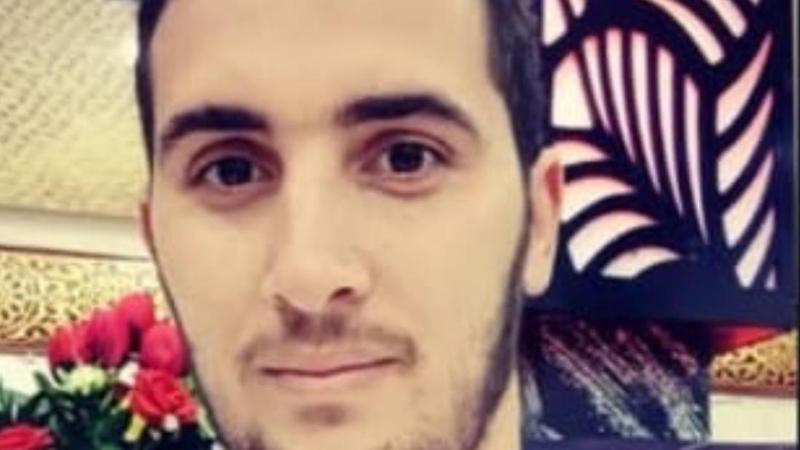
Italian prosecutors opened a formal investigation on 16 May into a vehicle-and-knife attack in Modena that left twelve people injured, four seriously, according to early accounts compiled from wire and social-media reports. The suspect, Salim El Koudri, was disarmed and taken into custody by Carabinieri officers at the scene. Koudri, an Italian national of Moroccan descent, was thirty-one years old at the time of the attack and was not known to police, the sources indicate.
What investigators are now working to establish is not simply what happened in the minutes after the vehicle struck its first victims on a busy street in the historic centre, but why. Early reporting carried consistent biographical detail: a graduate in economics, out of work and undergoing psychiatric treatment. Those facts, if confirmed, will shape how prosecutors characterise the legal status of the act — and, more broadly, how Italian institutions respond to a population that processes acute distress through violence.
The Sequence of Events
The attack began in the late afternoon of 16 May on a central Modena thoroughfare. Koudri drove a vehicle into a group of pedestrians, striking twelve people, according to the accounts. Four of those struck sustained serious injuries. The suspect then exited the vehicle carrying a knife and attempted to continue the assault, the sources report. Carabinieri responded to the scene and apprehended him before he could inflict further harm.
Video footage circulating on social media — the authenticity of which this publication has not independently verified — shows emergency services personnel assisting victims on the pavement. Reuters and ANSA wire services carried the basic casualty figures within hours of the incident. The Italian interior ministry had not released a full public statement as of the early morning on 17 May, a window that reflects the operational tempo of an active investigation rather than any suppression of facts.
Koudri was taken into custody and handed to judicial authorities. No charges had been publicly confirmed as of the time of this reporting. Italian criminal procedure requires a formal Carabinieri arrest report and a prosecutor's filing before charges are entered into the public record — a process that can take twelve to thirty-six hours in routine cases, longer where psychiatric evaluations are ordered at the pre-trial stage.
The Suspect's Profile
The biographical details circulating in early reporting are consistent across multiple channels. Koudri is described as a thirty-one-year-old Italian of Moroccan descent who graduated in economics and was, at the time of the attack, searching for employment. Crucially, the sources note he was under psychiatric treatment — a fact that investigators are treating as directly relevant to the assessment of criminal responsibility.
Italian law provides for diminished capacity arguments in cases where a defendant can demonstrate a psychiatric condition that substantially impaired their capacity to understand the wrongfulness of an act or to conform their behaviour to the law at the time of the offence. That provision does not eliminate criminal liability but can reduce the degree of culpability, alter the applicable sentencing range, and in some cases result in mandatory institutional placement rather than incarceration.
The fact that Koudri had no prior criminal record will matter in the characterisation of his profile — not in mitigation of the act itself, but in the broader question of whether this represents a failure of the pre-emptive surveillance system that Italian counterterrorism and public-safety law relies upon. Italian law does not mandate psychiatric disclosure to law enforcement in the absence of a court order or formal declaration of dangerousness, which means a subject under private psychiatric care may pass entirely beneath the threshold of institutional visibility.
The Political and Security Context
Italy's interior ministry has faced sustained pressure since a series of attacks in the early and mid-2020s to sharpen the tools available for pre-emptive identification of individuals who may pose a public-safety risk. A 2024 decree expanded the legal definition of threats eligible for monitoring under Italy's preventive-security framework, but critics within the legal community have argued that the expansion is worded broadly enough to capture individuals with no connection to organised extremism or violence. The counter-argument — advanced by security officials — is that the previous framework was reactive to the point of being inert, identifying threat actors only after they had already carried out harmful acts.
Koudri does not appear, on current evidence, to fit the profile of an organised extremist. The sources do not indicate any ideological motivation, any contact with known radical networks, or any prior manifestation of intent that would have surfaced in a standard pre-charge investigation. That absence will matter in how the political class frames the episode — a distinction between isolated mental-health violence and politically motivated attack has real consequences for where responsibility lands and what policy responses are considered appropriate.
The Meloni government, which has pursued a broadly restrictive posture on migration and internal security, will face pressure to demonstrate that its framework is sufficient to address threats that do not announce themselves through ideological declaration. The opposition will argue that the real failure is a system that provides insufficient community-level mental health support, leaving individuals in crisis without the institutional contact that might otherwise surface warning indicators before they escalate to violence.
What Remains Uncertain
The investigation is in its earliest phase. Prosecutors have not confirmed a charge, a motive, or a psychiatric diagnosis that would speak to Koudri's capacity at the time of the attack. The distinction between a psychotic episode and a calculated act — or a combination of both — will turn on forensic and psychiatric evidence that is not yet available to the public record. The circumstances that led Koudri to drive into pedestrians on a central Modena street, and then to continue the assault on foot with a knife, are not explained by the biographical facts currently in circulation.
Whether the psychiatric treatment Koudri was receiving was adequate, whether he was compliant with it, and whether any treating clinician had flagged elevated risk are questions that the investigation will need to answer — and that Italian privacy law makes it difficult to answer in public without the consent of the subject's family or a court order releasing medical information. This gap in the public record will produce a period of ambiguity that both political actors and the media will fill with inference, not all of it reliable.
This publication covered the attack through Telegram-sourced wire reports and early wire-service casualty counts. The dominant English-language framing centred on the suspect's immigration background and a quick pivot to questions about Italian security policy. This article leads instead with the verified sequence of events and the psychiatric-care dimension that appears most relevant to the legal and policy questions at stake.
Wire provenance
This editorial synthesis draws on the following public wire/social posts:
- https://t.me/myLordBebo/2147
- https://t.me/myLordBebo/2146
- https://t.me/englishabuali
- https://t.me/abualiexpress