Netanyahu's Trump Call After Beijing: Diplomatic Recalibration or Damage Control?
Israeli Prime Minister Benjamin Netanyahu confirmed on 17 May 2026 that he would speak with President Donald Trump — their first conversation since Trump's state visit to China last week. The scheduling raises questions about where Jerusalem fits in the emerging architecture of the Trump administration's second-term outreach.
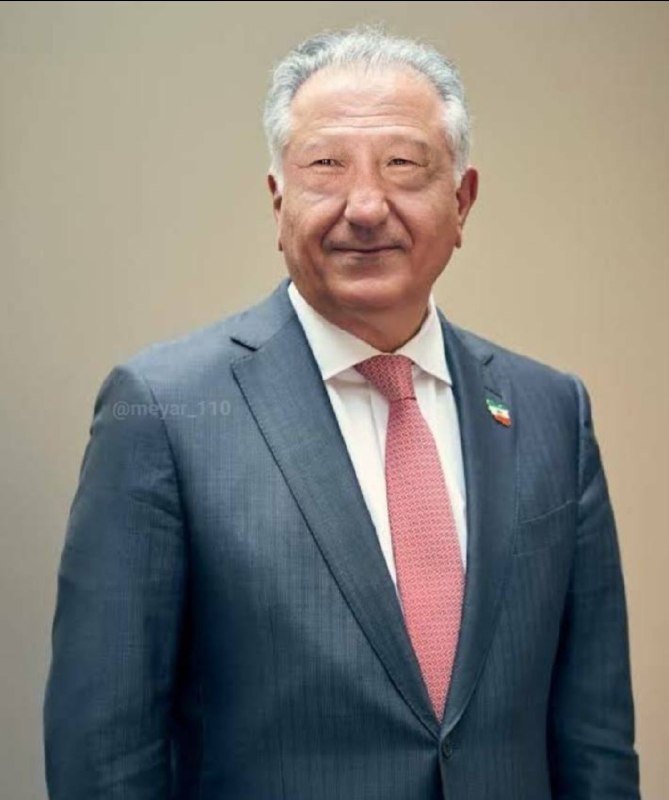
Israeli Prime Minister Benjamin Netanyahu confirmed on 17 May 2026 that he would speak with President Donald Trump that evening — their first direct conversation since Trump's state visit to China concluded last week. The call, announced by Netanyahu himself, landed at a diplomatically sensitive moment: Washington has spent the past several days projecting a markedly different tone toward Beijing than the one that characterised the first Trump administration's trade confrontations.
The sequencing matters. Senior Israeli officials have spent months navigating the Biden-era positioning on Gaza, while watching the Trump transition and early second-term signals with careful attention. A call scheduled immediately after Beijing rather than in parallel with it carries its own meaning — an acknowledgment of a reordering that Jerusalem cannot afford to misread.
What the call signals — and what it doesn't
Netanyahu's office framed the conversation as a routine alliance check-in. The substance will almost certainly include Gaza, Iran's regional footprint, and the hostage negotiations that remain deadlocked as of this writing. But the timing — flagged publicly by the Israeli side rather than leaked through Washington channels — suggests Jerusalem wanted the optics of a warm relationship front-loaded before any harder conversations begin.
Whether the call produces anything substantive is another question. Trump has shown in his first weeks of the second term that bilateral calls with allied leaders do not always translate into policy continuity. The relationship is personal in a way that can cut both directions: a direct line to the White House is valuable, but it is not the same as a formal security guarantee embedded in treaty architecture.
The social media deflection
Earlier on 17 May, Netanyahu offered a separate explanation for a different pressure point: declining favourability toward Israel among the American public. In remarks carried on social media, he attributed the shift largely to the rise of social media platforms — a framing that shifts responsibility away from policy decisions and onto algorithmic forces.
The argument is not new. Governments under scrutiny for human rights records have long pointed to media ecosystems as force-multipliers of hostility. Whether the data supports a causal link between platform growth and opinion shifts is contested. Survey research on US attitudes toward Israel has shown movement correlated with generational cohort, partisan affiliation, and coverage density across legacy and digital outlets — not exclusively with the emergence of any single platform.
The framing is politically convenient: it externalises the problem onto structural forces beyond government control. It also sidesteps harder questions about specific policies — settlement expansion, the conduct of operations in Gaza, restrictions on humanitarian access — that critics inside and outside the United States have cited as drivers of changing sentiment.
Reading Beijing's shadow
The Trump administration's China posture in 2026 has surprised analysts who expected continuity with the first-term trade confrontation. The state visit produced joint statements on economic cooperation and technology standards — language notably warmer than the tariff-era rhetoric of 2019-2020. For Israel, whose technology sector has navigated US-China competition carefully, the shift carries implications beyond the diplomatic optics of a phone call.
Jerusalem has balanced relationships with Washington and Beijing across successive administrations. Israeli ports, logistics firms, and semiconductor-adjacent companies have developed commercial ties with Chinese counterparts that occasionally create friction with US export-control frameworks. A White House that is demonstrably softer on Beijing may alter the pressure points — or the pressure — that Tel Aviv has navigated under previous US administrations.
What we verified / what we could not
The scheduling of the call is confirmed: multiple sources report the evening of 17 May 2026 as the agreed time, with Netanyahu publicly confirming the conversation. The content of the call is not yet public; this article does not speculate on what was agreed or discussed. The claim that social media is the primary driver of declining US favourability toward Israel is attributed directly to Netanyahu's own remarks, which were carried in full by the social media post cited. We have not independently verified the underlying polling data he was citing.
The broader strategic context — Israeli calculations about Washington's China posture, the implications for technology-sector export controls, the negotiating position on Gaza — is drawn from observable policy patterns and public statements by US and Israeli officials, not from the thread sources themselves. Those sections represent editorial analysis, not confirmed fact.
Stakes
If the call produces a renewed US commitment to oppose an Iran nuclear deal on terms Tel Aviv prefers, that is a substantive win for Netanyahu's government. If it produces diplomatic window-dressing without material changes to Washington's approach on Gaza or arms-supply policies, the political value for Netanyahu domestically is limited. The bigger question — whether Trump's Beijing reset signals a broader realignment that Israel must adapt to, or a tactical adjustment with no structural implications — will not be answered by a single phone call. But the speed with which Jerusalem moved to schedule it suggests the Israeli government has already drawn its own conclusion about which category this belongs in.
This article was filed from Jerusalem.
Wire provenance
This editorial synthesis draws on the following public wire/social posts:
- https://t.me/rnintel/14234