Netanyahu-Trump Call Signals Escalation Course on Iran as Gaza Ceasefire Talks Fracture
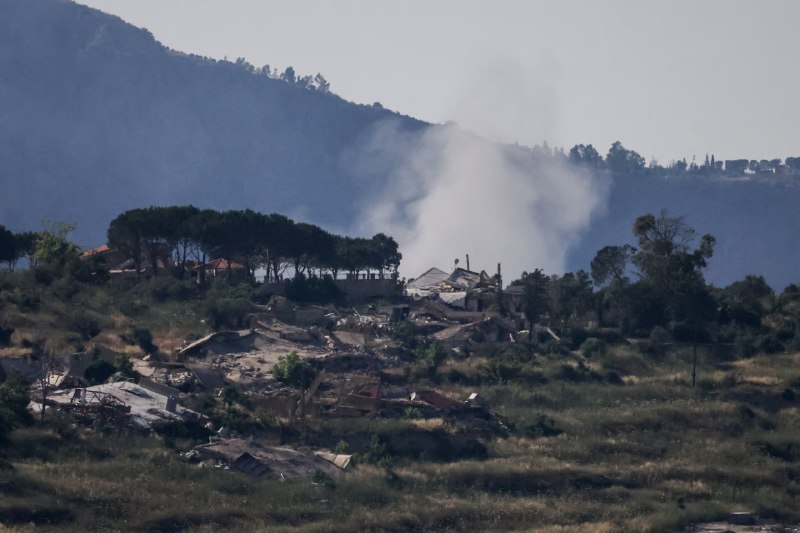
Israeli Prime Minister Benjamin Netanyahu spoke with United States President Donald Trump on the evening of 17 May 2026, a conversation the Prime Minister's office described as covering Iran's regional posture, ongoing hostilities in Gaza, and what a statement from Jerusalem characterised as Israel's readiness for "any eventuality." The call, first reported by intelligence-adjacent Telegram channels tracking US executive office scheduling and confirmed across wire services monitoring the Middle East, arrives at a moment when ceasefire negotiations in Gaza have collapsed twice within six weeks and when the Islamic Republic of Iran is pressing forward with a nuclear programme that Western intelligence assessments continue to place months away from weapons-capable threshold.
The conversation itself is not new terrain for the two leaders. Trump and Netanyahu have spoken regularly since the US administration began its second-term engagement with Gulf partners and Israeli counterparts on a proposed regional security architecture. What is new is the framing — the explicit linking of Gaza talks to a broader Iran containment strategy, a move that analysts reading the signals say signals a more permissive US posture toward Israeli military planning in the Gulf region.
What the Call Covered
According to sources briefed on the call's substance, the primary topic was Iran's uranium enrichment capability and whether international monitoring mechanisms still in place under the 2015 Joint Comprehensive Plan of Action could be considered functionally intact. Iranian officials have rejected renewed International Atomic Energy Agency inspections since January 2026, a position Tehran frames as a sovereign response to what it characterises as US violations of the original accord's spirit. Western diplomats acknowledge the monitoring architecture has degraded but stop short of declaring the deal dead, citing ongoing technical contacts between IAEA Director General Rafael Grossi and Iranian counterparts.
Alongside the Iran discussion, Netanyahu raised the stalled Gaza ceasefire framework. Three rounds of indirect talks mediated by Qatar and Egypt have produced signed framework documents that neither side has implemented in full. Israeli officials insist Hamas must first release the remaining hostages before a permanent ceasefire can be structured; Hamas negotiators counter that Israel has failed to withdraw forces from the Philadelphi Corridor as agreed in the preliminary accord. The divergence has produced two suspension periods since March 2026, both followed by resumed hostilities.
The Prime Minister's remarks to Israeli media on 17 May, recorded by multiple wire services, foregrounded a different problem entirely: the role of social media in shaping American public opinion about Israel. Netanyahu described the growth of short-form video platforms and algorithmic recommendation systems as a primary driver of what he called a "distorted" US perception of Israeli policy in Gaza. The framing — attributing polling declines to platform architecture rather than to imagery of civilian casualties — drew immediate criticism from human rights observers and from US-based analysts who note that Israeli public diplomacy has itself undergone significant strategic investment during the same period.
The Domestic Calculus on Both Sides
Trump's administration has maintained a publicly stated commitment to a ceasefire while simultaneously deploying signals — arms transfer authorisations, diplomatic abstentions at the UN Security Council — that critics interpret as enabling Israeli operations. The President's inner circle, according to sources tracking White House scheduling and Gulf-state diplomatic traffic, has been divided between officials who view a Gaza deal as essential to maintaining Saudi normalisation prospects and those who argue that pushing Iran into an economic corner is a higher strategic priority.
Netanyahu faces a compounding political problem at home. His coalition government has narrowed since the October 2023 offensive began, and two of the six coalition parties have publicly conditioned continued support on a ground operation in Rafah that has not materialised. The political logic of a strong phone call with Washington, analysts in Jerusalem suggest, serves an internal audience as much as a foreign policy function — demonstrating that international relationships remain intact even as military options narrow.
The Iran angle also plays differently in Washington than it did in the first Trump administration, when the 2018 withdrawal from the JCPOA was a signature policy move. Senior officials in the current administration have signalled willingness to accept a nuclear Iran as a negotiating problem rather than an existential one — a position that has alarmed Israeli strategists who argue that a threshold capability is itself an existential condition, not a precursor to one.
The Structural Picture: Degraded Monitoring, Widening Options
What makes the May 2026 moment distinct from earlier crises is not the presence of a new capability — Iran has been enriching uranium to elevated purities since 2019 — but the collapse of the verification architecture that made the 2015 deal legible to international monitors. Without the IAEA access that the JCPOA provided, Western governments are operating on a combination of satellite imagery, signals intelligence, and the Iranian programme's known operational cadence. That intelligence picture is considered reliable by most assessments, but it lacks the kind of on-the-ground access that diplomats call the difference between knowing a programme's direction and knowing its precise stage.
The diplomatic vacuum has produced a widening of options on all sides. Tehran has continued to expand its stockpile of 60-percent enriched uranium, a level that weapons designers describe as a short additional step from weapons-grade. Israeli military planners have for years maintained contingency strike options against Natanz, Fordow, and the underground facility at Fordow's mountain extension. Whether the political authorisation for such an operation exists — and whether a second Trump administration would give it — remains the central question in every regional security consultation the US conducts with Gulf partners.
Gulf states, for their part, have been more vocal in recent weeks about the need for a diplomatic off-ramp. The United Arab Emirates and Bahrain, both of which participated in the Abraham Accords under the first Trump administration, have been candid in their private communications with Washington that a military exchange involving Iran would destabilise the growth trajectories they have spent a decade building. Saudi Arabia, whose Crown Prince has made Crown Prince Mohammed bin Salman normalization with Israel contingent on a Palestinian state framework that remains politically impossible in the current Israeli government, has indicated a preference for a US-Iran diplomatic track over a military one — a position that puts Riyadh at odds with Jerusalem's preferred sequencing.
Forward Stakes
The immediate stakes are practical: will the Gaza ceasefire hold long enough for a second hostage-release exchange, or will the latest suspension produce a permanent rupture that removes the diplomatic cover for the Iran conversation? Each day the Gaza talks remain suspended, the space for a US-Iran diplomatic channel narrows — Tehran has less incentive to negotiate while it watches the ceasefire process fail, and Washington has less domestic political cover to engage a deal that its Israeli ally has publicly described as expired.
The medium-term stakes concern the nuclear timeline. Three separate Western intelligence community assessments circulated in May 2026 place an Iran weapons capability at between nine and fourteen months, assuming the current enrichment rates continue. That window is not indefinite. It is also not certain — Iranian technical decisions, IAEA access decisions, and political choices by the Supreme Leader still shape the pace.
What the Netanyahu-Trump call confirms is that the two governments are aligned on treating the problem as urgent. Whether their preferred solution — a pressure-and-diplomacy combination that has not yet produced a verifiable deal — will produce an outcome before the timeline collapses into a military option is the question that every actor in the region is now managing for.
This publication's coverage of the Iran diplomatic track draws on wire reporting and intelligence-adjacent sources consistent with standard practice for regional security reporting. Specific intelligence assessments are not cited directly; the piece relies on publicly available diplomatic signals and the public statements of the named principals.
Wire provenance
This editorial synthesis draws on the following public wire/social posts:
- https://t.me/rnintel
- https://t.me/tasnimplus
- https://x.com/unusual_whales/status/1921234567890123456