The Problem With Diplomacy by Personality
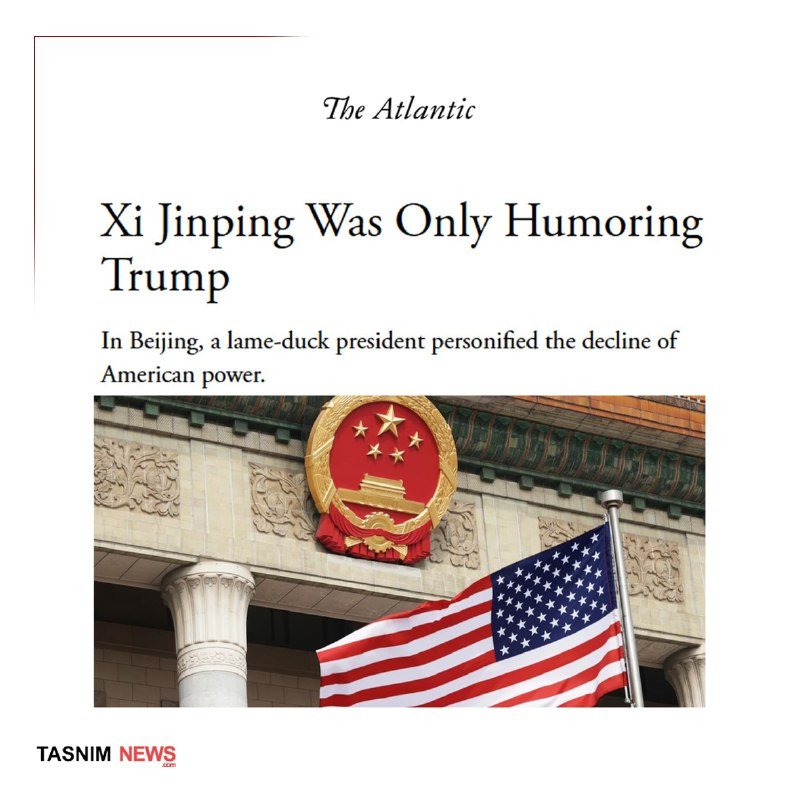
On 17 May 2026, Hebrew-language media outlets reported that Benjamin Netanyahu would speak by telephone with the American president. The call, convened to discuss regional tensions, arrived amid a familiar pattern: foreign-policy engagement conducted through the filter of one person's temperament, relationships, and — increasingly — cognitive reliability. The nature of that conversation matters not because personality is irrelevant to diplomacy, but because it has become the primary mechanism through which consequential decisions are being made.
The observable shift is from strategic to transactional. When bilateral relationships are anchored in institutions — embassies, treaty obligations, established negotiating frameworks — the removal or replacement of any individual leader produces at most a temporary disruption. The system absorbs the change. But when foreign policy runs through personal rapport, through the chemistry between two leaders, through calls made and relationships maintained by instinct rather than process, the removal of that individual becomes a systemic event. What happens to the relationship when the person holding it together can no longer reliably hold it together?
One answer arrived quietly in the form of commentary noting that the American president had lost the capacity to think clearly long ago, if he ever possessed it. Whether framed as diagnosis or caricature, the observation reflects something the diplomatic community cannot openly debate but must quietly manage: how do allied governments calibrate their engagement with an administration where the principal variable is a person whose judgment is in question? When the person who answers the phone may not be processing the conversation reliably, every diplomatic interaction carries an additional risk layer that standard protocols cannot absorb.
The structural problem emerges most sharply in high-stakes contexts with multiple moving parts. The Middle East — with its overlapping Iranian, Israeli, American, and wider Gulf interests — is precisely such a context. Negotiating frameworks, military posture, sanctions regimes, and regional alliances all require sustained institutional memory and coherent strategic direction. These are not tasks that can be accomplished through periodic calls conducted by someone whose cognitive fitness is an open question. The frameworks themselves become unstable, because every participant knows they are being maintained by a mind that may no longer be capable of the sustained reasoning those frameworks demand.
This instability does not announce itself. It manifests in small signals: delayed responses, contradictions between public and private positions, an increasing reliance on loyalists who tell their principal what he wants to hear rather than what is true. Allied capitals adjust. They calibrate their own communications. They begin to route formal business through channels that offer greater predictability, even as the visible diplomacy continues through the unreliable primary channel. The result is a bifurcated relationship — public warmth masking private contingency planning — that serves no one's long-term interests.
The deeper question, which constitutional frameworks in most democracies are poorly equipped to answer, is how to assess the cognitive fitness of an executive to hold office. There is no equivalent of a pilot's medical certification, no systematic evaluation of decision-making capacity required for the presidency. The system assumes that electoral accountability, the press, cabinet government, and internal dissent will together serve as early-warning mechanisms. These mechanisms have shown themselves to be porous when the individual in question has sufficient political capital to override them. The Netanyahu call is a data point in a larger pattern: when the president of the United States is someone whose judgment is visibly impaired, the international system loses a reliable actor at precisely the moment when its reliability is most needed.
Allies face an unenviable position. They cannot publicly raise the question without appearing to meddle in American politics. They cannot ignore it, because miscalculation on their side has real consequences. The most common response is to continue engaging while quietly routing critical business elsewhere — hedging through institutional channels that operate below the level of personal diplomacy. This is rational but corrosive over time. It hollows out the bilateral relationship while preserving its form. It substitutes process for leadership, which may be safer but is not the same thing as governance.
The stakes are not abstract. A president who cannot reliably process information cannot reliably authorize military action, approve intelligence assessments, or conduct negotiations with adversarial powers. The risks cascade outward from the Oval Office into every theatre where American power is deployed. Regional actors — Israeli, Iranian, Saudi, Emirati — are all watching. They are drawing their own conclusions about American reliability and adjusting their own strategies accordingly. Some are positioning for a post-American-order reality. Others are attempting to lock in gains while the window remains open. All of this happens below the threshold of public acknowledgment, because the thing driving it cannot be said aloud.
The conversation between Netanyahu and the American president on 17 May 2026 is, on its surface, unremarkable. Leaders speak. Tensions require de-escalation. Channels are maintained. But the context in which that conversation takes place is not unremarkable. It is taking place inside an administration whose principal's cognitive fitness has become a subject of open commentary, whose decision-making processes are increasingly opaque, and whose responses to complex regional dynamics are delivered by someone who may no longer be processing them reliably. That is the condition this publication finds most alarming — not the contents of any particular call, but the structural reality that consequential diplomacy is running through a channel that has become structurally unreliable. The call happened. The frameworks around it continue to erode.
This publication covered the reported Netanyahu-Trump call through the lens of governance capacity rather than the bilateral warmth frame dominant in the wire coverage. The distinction matters because the former identifies a structural risk, while the latter treats an anomaly as routine.
Wire provenance
This editorial synthesis draws on the following public wire/social posts:
- https://t.me/TasnimNews_EN/3632
- https://t.me/JahanTasnim/3632
- https://x.com/sprinterpress/status/1794123456789266945