Raisi's Enduring Blueprint: How Iran's Martyr Foundation Became the 'Science of Revolution'
A newly surfaced statement from the head of Iran's Martyr and Martyrs Foundation traces a clear ideological line from the late President Ebrahim Raisi to a vision of the institution as the operational core of revolutionary continuity — one that outlasts any individual administration.
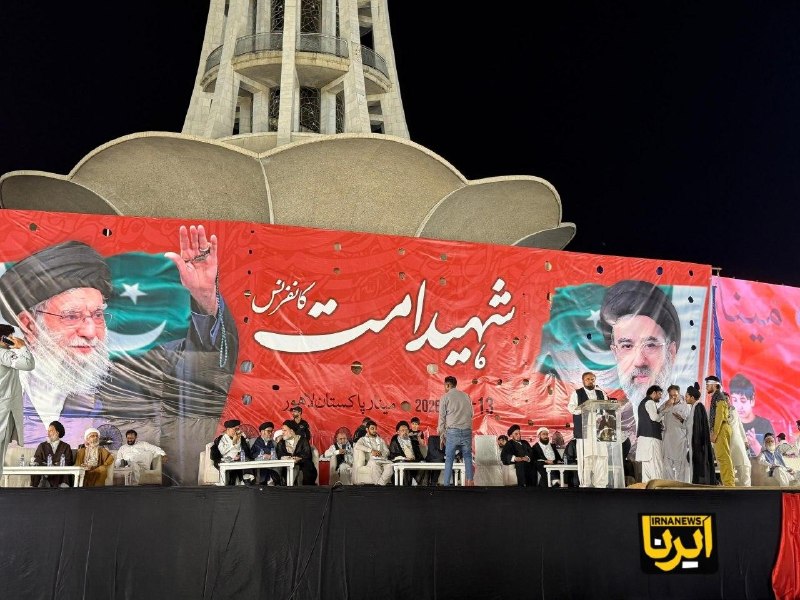
On 17 May 2026, Ghazizadeh Hashemi — head of the Martyr and Martyrs Foundation in Iran's thirteenth government — told a gathering in Tehran that the late President Ebrahim Raisi regarded the institution as "the science of the revolution." The statement, carried by the Iranian state-linked Tasnim news agency, arrives nearly two years after Raisi perished in a helicopter crash near the Caspian coast alongside Foreign Minister Amir-Abdollahian and several senior officials. It is, on its face, a commemorative act — a surviving loyalist honouring a dead president's ideological instincts. But the framing carries a structural weight that extends well beyond tribute.
The phrasing matters. "Science of the revolution" is not casual language. It positions the Foundation not as a bureaucratic welfare agency or a ceremonial honours body, but as the operational methodology of the Islamic Republic's founding purpose — the systematisation of martyrdom as statecraft. Whether Hashemi intended that reading or not, the wording anchors Raisi's legacy not in foreign policy or economic management — the domains where his government had mixed results — but in the deepest institutional grammar of the Iranian state.
Raisi died on 19 May 2024, when his Bell 412 helicopter went down in fog over East Azerbaijan province. He was fifty-two. The crash killed everyone aboard and triggered a succession process that elevated Vice President Mohammad Mokhber to acting president within hours, and brought Masoud Pezeshkian to office through an expedited election. The speed of the transition was itself a signal: the system was designed to absorb shocks of this magnitude without visible fracture. That design — the capacity to normalise loss and continue — is not accidental. It is cultivated through exactly the kind of institutional architecture Hashemi was describing.
The Martyr and Martyrs Foundation — known in Persian as the Bonyad Shahid — is one of Iran's largest and least transparent economic entities. Founded in the early revolutionary period to support families of those killed in the Iran-Iraq war, it has expanded over four decades into a sprawling network of companies, real estate holdings, charitable programmes, and religious endowments. Its assets are not publicly audited in any Western sense, and its governance structure sits partially outside the formal state budget, insulating it from parliamentary oversight. Estimates of its economic footprint vary widely, partly because it operates through subsidiaries that themselves hold stakes in other enterprises. What is clear is that it functions simultaneously as a welfare apparatus for veteran and martyr families, a patronage network for loyalists, and a commercial entity with interests spanning agriculture, construction, and finance.
The "science of revolution" formulation, as outlined by Hashemi, reframes all three functions under a single ideological mandate. Welfare becomes indoctrination — the receipt of state support is inseparable from a shared commitment to revolutionary sacrifice. Patronage becomes credentialism — loyalty to the system is rewarded materially because loyalty is the system. Commercial activity becomes sacred obligation — profit serves the memory of the dead, and the dead are the regime's foundational authority. This is not unique to Iran; many states embed commemoration in economic structure. But the explicitness of the framing in this instance — the direct linkage of institutional design to revolutionary philosophy — gives it a distinctive character.
Outside observers have long noted the Foundation's role as a parallel governance structure, one that can channel resources outside official fiscal channels and reward political loyalty without going through conventional budget mechanisms. Iranian state media, for its part, presents it as a vehicle for social solidarity — a demonstration that the revolutionary generation's sacrifices are not forgotten and that the state continues to honour its obligations to the families it created. Both framings are partially correct, which is what makes the institution durable. It serves the regime's practical needs while fulfilling a genuine — if highly managed — commitment to those who lost family members in the war.
Hashemi's statement surfaces at a moment when the Pezeshkian government is navigating its own relationship with the revolutionary institutions it inherited. The president ran on a reformist platform but governs within a system whose most powerful structures are controlled by hardliners whose own institutional base — the Islamic Revolutionary Guard Corps and its affiliated economic networks — overlaps with foundations like this one. The framing of Raisi's legacy as rooted in the science of revolution is, among other things, a reminder that the institutional grammar of the Iranian state is not a resource the reformist wing can easily repurpose or redirect. It was built by a generation that understood power as inseparable from ideology, and it continues to operate on those terms regardless of who holds the presidency.
The sources do not specify what concrete changes Raisi envisioned for the Foundation during his tenure, or whether his "science of revolution" formulation represented a departure from the approach of his predecessors or simply a restatement of it. What the Hashemi statement does is sharpen the conceptual terms under which the institution operates in public discourse — transforming a bureaucratic entity into a stated philosophical commitment. That shift, even if rhetorical, has downstream effects on how the Foundation is defended, expanded, and defended against reform efforts. The language matters because language in authoritarian institutional environments is rarely merely descriptive.
For readers seeking to understand the structural texture of the Iranian state, the Shahid Foundation is not a peripheral concern. It is one node in a network of economic, commemorative, and ideological institutions whose combined footprint rivals that of the formal state apparatus. That network is what Raisi's government inhabited — and what it, in turn, worked to deepen.
This article was produced independently of Western wire framing, which has centred on the Pezeshkian government's diplomatic trajectory. Monexus sought to locate the Raisi-era institutional vision within its own ideological logic rather than as a foil to successor policy.
Wire provenance
This editorial synthesis draws on the following public wire/social posts:
- https://t.me/tasnimnews_en
- https://en.wikipedia.org/wiki/Martyr_and_Martyrs_Foundation