The Signal and the Noise: How Washington's Foreign Policy Provocations Are Fracturing Allied Confidence
Three moves in 72 hours — a cryptic White House warning, a lapsed Russian oil sanction, and a wavering arms commitment to Taiwan — suggest a pattern of deliberate strategic ambiguity that is eroding the credibility of American security guarantees.
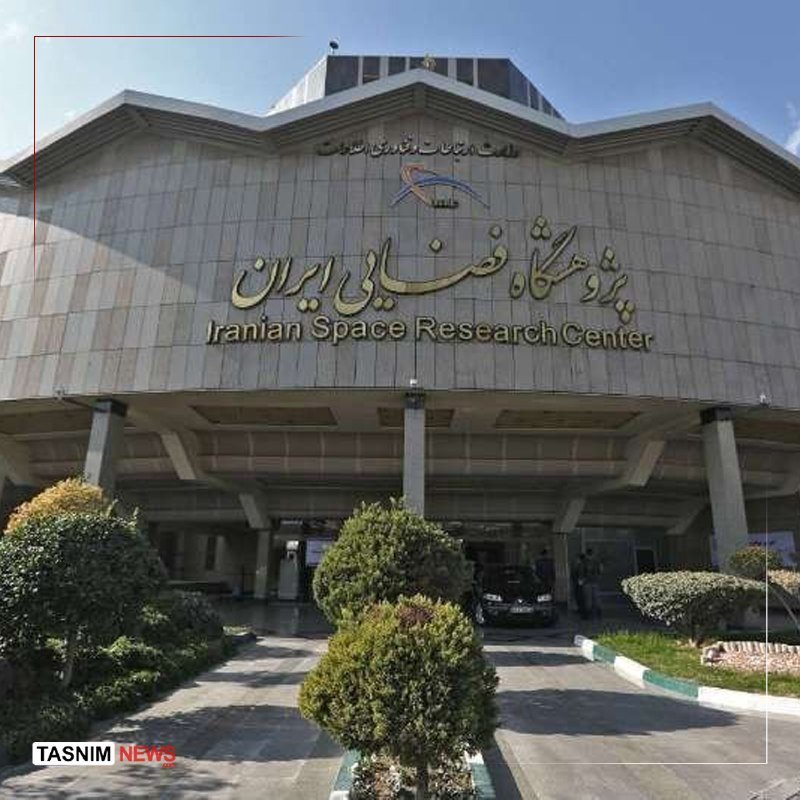
On a single day in mid-May 2026, three distinct foreign-policy signals emerged from Washington that, taken together, present a coherent — if unsettling — picture. Taiwan publicly affirmed its status as a sovereign and independent nation, citing uncertainty over the reliability of American arms deliveries. The Trump administration allowed a sanctions waiver on Russian crude exports to expire without renewal, a move that will funnel additional volumes of Russian oil into global markets. And at the White House, the President offered a one-line assessment of the Middle East situation: "It was the calm before the storm." Each event, in isolation, might be parsed as a tactical maneuver. Read together, they suggest something more structural: a foreign policy architecture built on unpredictability as doctrine.
The pattern is not new. What is new is its tempo. Across three administrations in eight years, allied governments in Taipei, Kyiv, and European capitals have absorbed the same lesson — American commitments are contingent, American timelines are elastic, and American guarantees arrive on the partner's dime. The waivers on Russian crude, extended and re-extended under multiple administrations as a pressure valve on global prices, were never a signal of goodwill toward Moscow. They were a hedge against inflation risk in the United States. Their lapse now, under a White House that styles itself a dealmaker, reads less like a concession to Russia than as evidence that the transactional calculus has shifted — and that oil revenues flowing to a sanctions-designated state are no longer the primary concern.
The Arms-Uncertainty Feedback Loop
Taiwan's statement on sovereignty did not arrive in a vacuum. For months, the Tsai administration has navigated a delivery pipeline for American military hardware that moves in starts and stops — authorized in principle, delayed in practice, subject to executive certification requirements that give the White House discretionary power over each shipment. The uncertainty is not accidental. It is the point. A partner that cannot be certain of its weapons deliveries next quarter must plan for a future in which those deliveries stop. That uncertainty reshapes Taiwan's own deterrent calculations — and, by extension, Beijing's.
This dynamic is familiar from Ukrainian war-planning, where delays in Western artillery and air-defense shipments produced cascading effects on the front. The difference is that Ukraine was publicly acknowledged as an ally in need. Taiwan occupies a legally ambiguous status that the United States has, for decades, deliberately refused to clarify. That ambiguity served American interests when the goal was deterrence without provocation. It is less clear what purpose it serves when the ambiguity now flows primarily inward — toward the partner who needs the commitment most.
Moscow's Window, Beijing's Patience
The lapsed Russian crude waiver matters for reasons beyond the immediate barrels. Russian oil revenues, constrained since 2022, have stabilized at levels sufficient to sustain state functions. The waiver's expiration removes one irritant from the sanctions regime without formally dismantling it — a pattern consistent with an administration that wants pressure without escalation. Moscow will interpret the move as an acknowledgment that full enforcement is unenforceable, and that a tacit accommodation serves Washington's domestic price goals better than rigid adherence to a rules-based framework.
Beijing, meanwhile, watches. Chinese state media have tracked the evolution of Western sanctions architecture with the precision of a compliance office. The lapse of the Russian waiver is not a concession to China — but it is legible as evidence that the rules-based order Washington claims to champion bends when the costs become inconvenient. That is a lesson Chinese strategists will incorporate into their own calculations about the durability of American commitments elsewhere — including the Pacific.
The Storm That Was Promised
The "calm before the storm" formulation is the hardest element to assess. Presidential statements about Middle East contingencies occupy a specific register — they are rarely literal, never off-the-record, and often intended for domestic audiences as much as regional adversaries. The question is not whether something dramatic is coming but whether the speaker's own team knows what that something is. Administration officials have, across the thread, not elaborated on the specific threat matrix that justifies the warning. Tehran has not changed its enrichment posture in ways that would obviously trigger a response. Israeli officials have not publicly confirmed a military timeline. The statement floats, unanchored, serving as its own justification — a reminder that the region operates under the shadow of American capability.
That shadow is where the structural problem lives. American power in the Middle East has rested on a simple premise: regional actors defer to Washington's preferences because the alternative — unpredictable American military action — is too costly to risk. When that unpredictability becomes the stated feature of policy rather than a side-effect, the deterrent logic inverts. Partners who cannot read the policy cannot plan around it. Adversaries who exploit the noise reduce the signal's value. The storm that was promised, if it comes, will arrive in an environment where the credibility of the warning has already been diluted by its own ambiguity.
What Remains Uncertain
The sources do not indicate whether the Russian crude waiver lapse was a coordinated decision or an administrative oversight. They do not specify the content of the internal deliberations that produced the Taiwan arms uncertainty. And they do not clarify whether Trump's "storm" comment reflected a specific intelligence assessment or an unscripted remark. These gaps are not minor — they determine whether the pattern this piece describes reflects deliberate strategy or the accumulated friction of an administration that improvises more than it plans. The evidence, as it stands, points toward the former. But the evidence is incomplete, and the actors involved are precisely the ones most likely to benefit from opacity.
What is clear is that allied governments — and the analysts who advise them — are recalibrating. The standard model for assessing American reliability assumed that commitments, once made, would hold unless publicly revoked. That model is being revised in real time. The revision will not reverse when the next administration takes office. The damage to credibility, once absorbed into allied planning, persists long after the originating statement has been forgotten.
Desk note: Wire coverage of the Taiwan statement emphasized the sovereignty language as a provocation aimed at Beijing. Monexus framed it differently — as a symptom of the trust deficit that the United States itself has cultivated through its arms-delivery uncertainty. The Russian oil story received heavier play in energy-focused outlets; the geopolitical implications for sanctions architecture received less. The "storm" comment was treated as a headline in most feeds; this publication treats it as a symptom of a deeper communication problem in American regional signaling.
Wire provenance
This editorial synthesis draws on the following public wire/social posts:
- https://t.me/osintdefender/3148
- https://t.me/osintdefender/3147
- https://t.me/osintdefender/3146