The Silence Between the Statements: What Neither Side Is Saying About Gaza
As Hamas warns of 'options' and Israel confronts a manpower crisis, the gap between official posturing and ground reality in Gaza grows wider — and more dangerous.
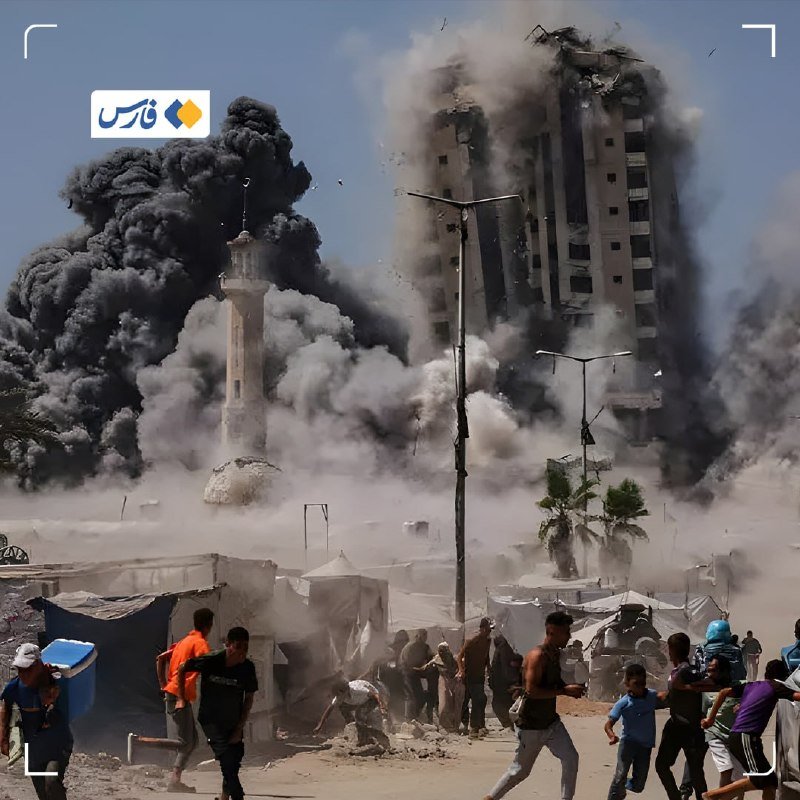
On May 17, 2026, two statements landed within hours of each other, and the distance between them tells you everything about where this conflict now stands. From the Hamas political bureau, a senior figure named Stasameh Hamdan warned that "options are ready" should ceasefire talks collapse — a formulation that sounds like a threat until you read it carefully. Around the same time, Hebrew-language daily Ma'ariv, citing the Israeli army chief of staff directly, reported that the military is experiencing what the headline called a "collapse of manpower." Neither statement is a surrender. Neither is a victory. Both are the sound of parties at the table trying not to show their cards.
This is the texture of a frozen war: public threats and private admissions, theatrical defiance and quiet desperation, all playing out against a backdrop of a civilian population that has endured displacement, bombardment, and hunger for the better part of two years. The question worth asking is not which side's statement is more credible — both have every reason to spin — but what the gap between their public postures and their private constraints tells us about the actual trajectory of this conflict.
The Architecture of a Bluff
Hamdan's warning, as reported by Iranian state-adjacent channel Al-Alam, carries the hallmarks of negotiating-room pressure translated into public rhetoric. When a party's representative says "our options are ready," the implicit admission is that the preferred option — a negotiated outcome on favorable terms — is not yet secured. Threatening alternatives is what you do when you need leverage, not when you have it. The language of readiness is, at its core, the language of uncertainty.
What is less often reported is the structural position Hamas finds itself in after more than eighteen months of sustained Israeli military operations. The group's leadership has been displaced, its command infrastructure degraded, and its territorial hold reduced to fragmented pockets in the south. To frame this as strength — as "options ready" — requires a willing audience. The international wire coverage, when it picks up these statements, often treats them as equivalent threats alongside Israeli military briefings. They are not equivalent. One party controls the world's fourteenth-largest military by active personnel; the other is operating from tunnels and exile. The asymmetry is not a media bias. It is a fact on the ground.
The Army That Cannot Say Its Name
Which brings us to the second statement of May 17: the Israeli military's manpower crisis, as acknowledged by the chief of staff and reported by Ma'ariv. The Hebrew daily's framing — "collapse of manpower" — is unusually blunt for coverage that generally defers to military briefings. It suggests a level of internal frustration that has overridden the usual caution around public admissions of weakness.
An army facing a manpower collapse mid-conflict has two choices: widen the conscription net, or find bodies elsewhere. Israel has pursued both. The expansion of reserve call-ups has strained social cohesion in ways that are now visible in public discourse — protests by ultra-Orthodox communities who have historically been exempt from service, legal battles over conscription thresholds, and a political class increasingly unwilling to bear the economic cost of full mobilization. The IDF's operational effectiveness remains formidable. But the social contract that sustains it is under strain in ways that did not exist two years ago.
The connection to the ceasefire talks is direct. A military that is exhausted and stretched is, all else equal, more willing to negotiate. The chief of staff's public acknowledgment of the crisis is not a sign of strength. It is a signal — to the government, to the political opposition, and to the Americans who are pressing for a deal — that the instrument being used to achieve war aims is running low on fuel.
The Third Actor Nobody Names
Between these two statements sits a civilian population of approximately 2.3 million people, half of whom the United Nations estimates have been displaced more than once. The wire services carry figures from UN agencies, the International Committee of the Red Cross, and the Gaza health ministry — figures that Western officials treat with performative skepticism while citing them internally. The dissonance is notable: the humanitarian case for a ceasefire is strongest when its specifics are suppressed in the diplomatic conversation.
The protests in Germany on May 17 — including a young child carried on her father's shoulder, leading chants for Palestinian freedom — represent one pole of public sentiment in Europe: moral clarity, a sense of historical accountability, and a demand that governments act. The counter-polar holds that solidarity rhetoric does nothing for the hostages still held in Gaza, that Hamas's survival is a strategic threat, and that withdrawal would reward aggression. Both positions are coherent. Neither is wrong. But the gap between them has produced a policy of studied ambiguity: Western governments that fund the humanitarian response while blocking the political one.
What the Table Actually Holds
The current ceasefire proposals on the table — brokered, insofar as they exist, through Qatari and Egyptian intermediaries with American backing — are not primarily about justice or accountability. They are about sequencing: who releases whom, in what order, under what monitoring, with what guarantees against resumption. The language of both parties reflects this transactional reality. Hamdan's threat of "options" is calibrated to pressure the mediators, not to signal imminent action. The IDF's manpower admission is calibrated to pressure the government. Neither side wants the talks to fail publicly. Both want to walk away knowing they did not lose.
What this publication finds is that the framing of these statements as a symmetric standoff — two sides equally threatening, equally unreasonable, equally responsible — obscures more than it reveals. One party invaded. One party occupies. One party's civilians are starving in UN-run distribution centers while convoys wait at checkpoints. These asymmetries do not make Hamas's rhetoric irrelevant or Israeli security concerns illegitimate. They do mean that a reader who treats both statements as equivalent data points is missing the structural weight that sits beneath each one.
The path forward, insofar as one exists, runs through that asymmetry — not around it. Any ceasefire that does not address the conditions that produced October 2023 will produce the conditions for the next rupture. Any ceasefire that addresses only the military posture without addressing the political status of Gaza, the West Bank's trajectory, and the question of what a post-war order actually looks like will be a pause, not a resolution. The parties at the table know this. The question is whether the mediators — and the publics that fund them — are willing to look at what neither side is saying out loud.
As of May 17, 2026, the silence is still louder than the statements.
This piece was structured around the asymmetry between Hamas's public negotiating posture and the Israeli military's acknowledged manpower crisis, using Al-Alam's May 17 Telegram reporting for the Hamas statement and Maariv's same-day reporting for the IDF assessment. The German solidarity march provides the human anchor for European public-diplomacy dynamics.
Wire provenance
This editorial synthesis draws on the following public wire/social posts:
- https://t.me/alalamfa
- https://t.me/alalamfa
- https://t.me/alalamfa