Stephon Castle's Playoff Coming-Out Party Puts the Spurs on Notice
The rookie's 32-point, 11-rebound, 6-assist clinic in a series-clinching win rewrote the record books and announced a new name in the postseason hierarchy.
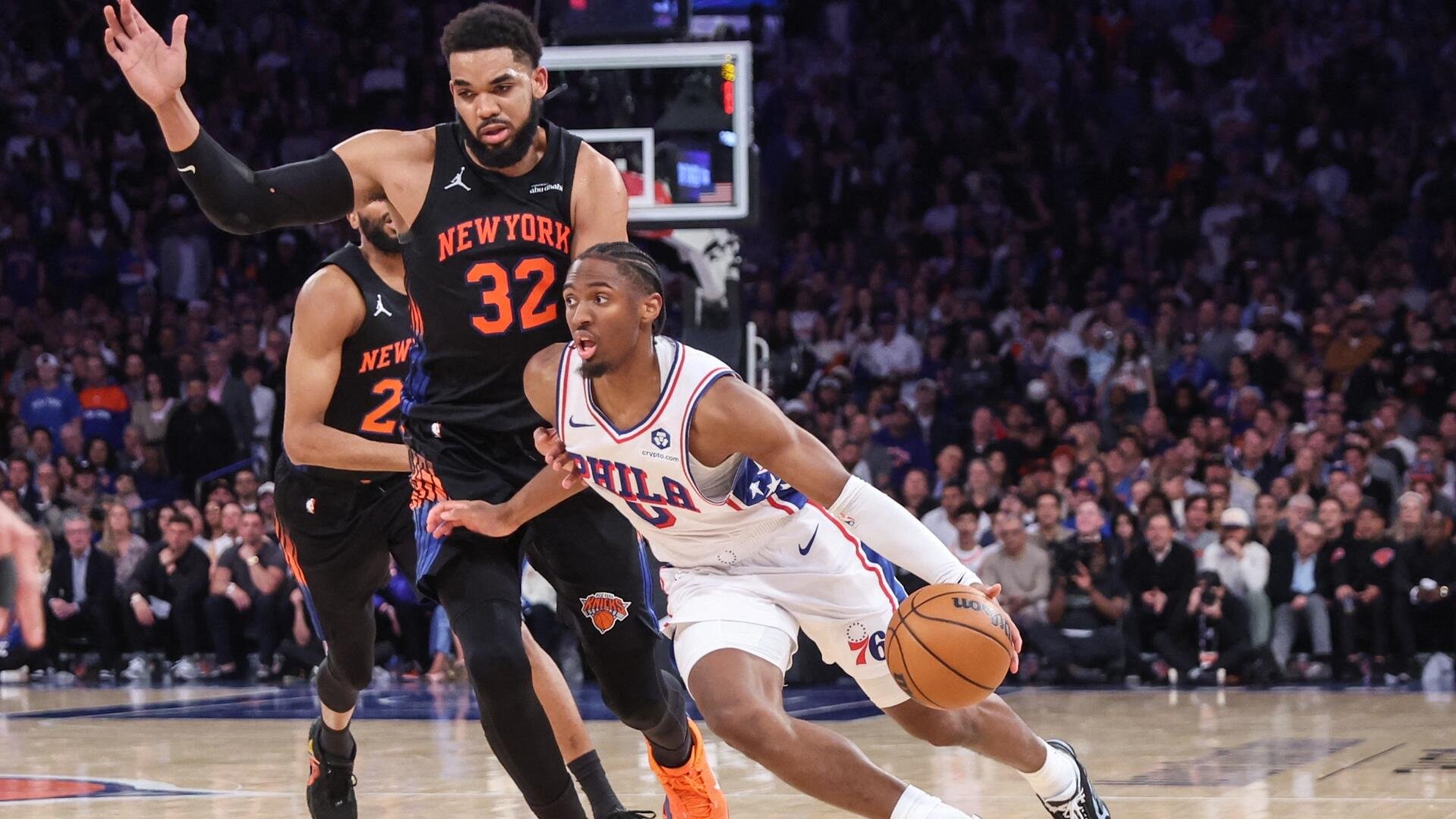
Stephon Castle did not wait for the second round to announce himself.
The San Antonio Spurs rookie dropped a career-high 32 points, grabbed 11 rebounds, and handed out six assists in a series-clinching performance on Thursday, 15 May 2026, knocking down five of his seven three-point attempts. The numbers alone would earn mention in any postseason notebook. What separates this performance from routine excellence is the context: Castle became the youngest player in NBA history to post those figures in a clinching game, a milestone that landed with little fanfare given the broader chaos of playoff scheduling.
The Spurs closed out their first-round series without drama. Castle was the engine. His 11 rebounds from the guard spot—unusual for a 6-foot-4 perimeter player—underscored the two-way instincts that made him a top-five pick in the 2024 NBA Draft. But playoff basketball is where projection becomes proof, and the rookie passed the test decisively.
Immediate Impact: Scoring at Volume, Defending at Speed
Castle's three-point shooting was the headline number, but the efficiency tells a deeper story. Seventy-one percent from beyond the arc, on volume, in a Game 7 equivalent—defenses cannot sag off him, and opponents must now account for a second scoring engine alongside the Spurs' established hierarchy. His 32 points came against a defense that had film on his tendencies across multiple games, making the output not just impressive but tactical. He read the coverage and punished it.
The rebounding total stands out for positional context. Guards who average double-digit rebounds in playoff games are rare; Castle's instincts near the rim gave San Antonio extra possessions at critical junctures. The Spurs converted those second-chance opportunities into points that shifted series momentum. That combination—scoring, playmaking, and interior presence—is what separates promising players from foundational ones.
Structural Frame: San Antonio's Patient Model Pays Off
The Spurs selected Castle fourth overall in 2024 after a national championship run at UConn. The pick drew praise for fit rather than ceiling—a high-character defender with developing offensive polish who could grow into a larger role behind established veterans. Three seasons into his San Antonio tenure, that patience is yielding exactly the output the organization envisioned.
San Antonio's rebuild has operated on a different clock than most franchises. Rather than chasing immediate returns through roster churn, the Spurs invested in development infrastructure, culture continuity under Gregg Popovich, and draft capital accumulation. Castle's emergence validates that approach. He entered the playoffs as a rotation piece and exits the first round as a centerpiece.
The structural implication matters beyond one player. When a franchise commits to a timeline and a system, the results compound. The Spurs are no longer a rebuilding curiosity—they are a team with a young player who showed he can shoulder meaningful playoff minutes at 21 years old. That changes internal dynamics, free agency calculus, and the negotiating posture on future contract extensions.
The Record That Frames the Conversation
Youngest player in NBA history to record those specific numbers in a clinching game. The phrasing matters because it forecloses easy comparison. He is not simply the best rookie in this series or the most efficient young player in this playoffs cycle—he holds a historical marker that places him in a lineage of postseason performers, most of whom had years more experience.
The NBA has seen young players flash in individual games. What distinguishes sustained postseason impact at Castle's age is the combination of scoring, rebounding, and playmaking rather than a single elite skill. Defenses must now prepare for a player who can hurt them from three levels, create for teammates, and compete on the glass. That dimensionality is what separates rotation contributors from franchise players.
Stakes: What Comes Next for Castle and the Spurs
San Antonio advances to face a familiar bracket opponent in the conference semifinals. The calculus for that matchup now includes a player whose role expanded mid-series and whose confidence visibly grew with each late-game possession. Opposing coaches must adjust their defensive schemes to account for Castle as a primary option rather than a secondary beneficiary.
The franchise-level stakes are equally significant. Castle's performance in a high-pressure series clincher strengthens his negotiating position on any future extension. It signals to potential free agents that San Antonio has a young player capable of carrying playoff responsibility—attractive framing for veterans weighing multi-year commitments. And it validates an organizational philosophy that other franchises have long cited without replicating.
The wider league will be watching. A 21-year-old guard who can score efficiently, rebound from the perimeter, and command the ball in clutch playoff minutes is exactly the profile teams spend years trying to acquire through trade or draft manipulation. The Spurs grew theirs organically. That is not luck—that is institutional competence.
This article was sourced from NBA Live's Telegram thread reporting on Stephon Castle's series-clinching performance on 16 May 2026.
Wire provenance
This editorial synthesis draws on the following public wire/social posts:
- https://t.me/NBALive24