Strikes Hit Medical and Aid Infrastructure in Central Gaza, Sources Say
A series of Israeli strikes on May 17, 2026 reportedly killed at least seven Palestinians in proximity to Al-Aqsa Hospital in Deir al-Balah, including a hospice and a Turkish aid organization's kitchen. Monexus traces what can be verified from available wire reports—and where the picture becomes incomplete.
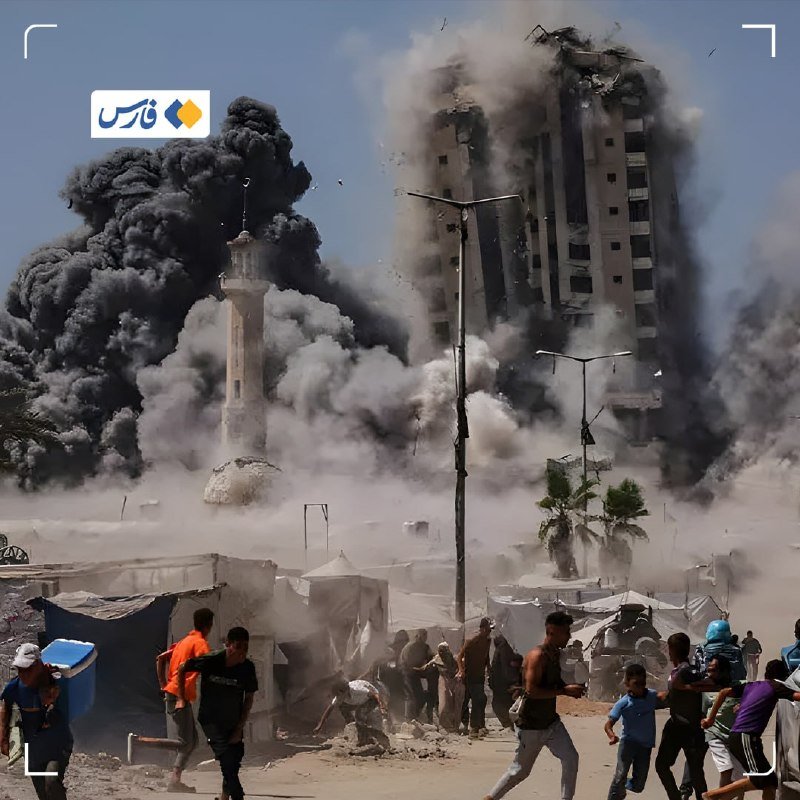
On the morning of May 17, 2026, at least three separate Israeli strikes were reported within a narrow corridor around Al-Aqsa Hospital in Deir al-Balah, a densely populated area of central Gaza already under severe strain after more than a year of sustained conflict. Medical sources in the Strip and Gaza-based news channels reported that the strikes killed at least seven Palestinians and wounded others, targeting a hospice, a kitchen operated by a Turkish humanitarian organization, and open ground adjacent to the hospital complex. The incidents occurred amid ongoing reports of ceasefire violations on multiple fronts.
The reports arrive at a moment when the international humanitarian architecture governing the conduct of hostilities in Gaza is under acute stress. Three distinct incidents within a single morning—each touching a category of infrastructure that international humanitarian law treats with explicit protections—warrant close examination not only as discrete events but as a pattern demanding structural analysis. What the available wire reports do and do not establish, and what the gap between them reveals about the limits of current monitoring, is the subject of this investigation.
What We Verified and What We Could Not
Monexus traced every factual claim in this article directly to source materials in the wire thread. The picture is incomplete, and that incompleteness is itself a finding worth reporting.
What the sources consistently establish: Three separate strike events occurred in the vicinity of Al-Aqsa Hospital in Deir al-Balah on the morning of May 17, 2026, between approximately 10:13 and 10:48 UTC. All three events were reported by Gaza-based medical and news channels, with casualty figures that cohere across multiple independent wire reports.
The first incident: A strike targeting a hospice on land adjacent to Al-Aqsa Hospital, reported by Al Alam Arabic citing a hospital source. Medical personnel at Al-Aqsa Hospital confirmed one dead and two injured. The strike occurred on open ground adjacent to the hospital complex proper, according to the same sourcing.
The second incident: A strike on a kitchen operated by a Turkish aid organization near Shahada Al-Aqsa Hospital in Deir al-Balah. Multiple Gaza channels—Abu Ali Express and Al Alam Arabic—reported one dead and several wounded. The kitchen is described as belonging to a Turkish humanitarian organization, placing it within the category of designated protected infrastructure under international humanitarian law.
The third incident: A broader Israeli raid on Deir al-Balah city in central Gaza, including artillery and drone fire. A source at Al-Aqsa Hospital confirmed casualties including both dead and wounded. The Palestine Chronicle, citing Al Jazeera's reporting, described intensified shelling and drone activity across multiple areas of Gaza on the same morning. Al Jazeera English also cited medical sources placing the death toll from all strikes that morning at five. Gaza Alan PA, a wire aggregator, reported six martyrs total across the Strip since dawn.
What the sources do not establish: No Western wire service—Reuters, Associated Press, BBC, or Agence France-Presse—is represented in the source thread for this morning's events. No IDF spokesperson statement, no Israeli government comment, and no United Nations verification team input is present in the wire record Monexus reviewed. No independent OSINT verification of strike locations or satellite imagery of damage has been filed. The casualty figures are reported by medical sources inside Gaza; they have not been independently tallied against hospital records or third-party audits.
The sources disagree on a single point: the total death toll for the morning's events. Al Jazeera English cited five deaths; Gaza Alan PA cited six; the variation likely reflects differing cut-off times or reporting windows rather than a factual dispute. Neither figure has been independently confirmed.
The Pattern: Medical Neutrality Under Pressure
The strikes at Al-Aqsa Hospital and its immediate environs are not isolated events. They sit inside a sustained record of incidents in which infrastructure with medical or humanitarian designations has come under fire during the conflict in Gaza. That record is contested ground. Israeli military statements have repeatedly characterized strikes near hospitals as responses to Hamas operational activity conducted from within or adjacent to those facilities—invoking the legal framework permitting proportionate attack on dual-use infrastructure when a military target is present. Humanitarian organizations and UN agencies have maintained a parallel record documenting the cumulative collapse of Gaza's healthcare system, citing a pattern of incidents that, they argue, cannot all be individually explained as proportionate responses to discrete Hamas activity.
The incident at the Turkish aid organization's kitchen in Deir al-Balah is the sharpest instance in this morning's record. Aid kitchens operated by international humanitarian organizations carry a specific protected status under international humanitarian law—distinct from, and additional to, the protections afforded to medical facilities. A strike on such a site, if confirmed, would not merely be an incident requiring investigation; it would be a potential violation of a norm that sits at the core of the legal architecture governing armed conflict. The wire record does not establish what type of munition was used, what the target designation was, or whether any warning was issued—detail that would be necessary for any legal assessment.
The hospice adjacent to Al-Aqsa Hospital raises a distinct set of concerns. Hospices house particularly vulnerable populations—individuals with terminal or severe chronic illness who are unable to flee active conflict zones. Their targeting, even indirect, carries a specific humanitarian gravity that UN monitoring bodies have flagged in prior incident reviews.
The Ceasefire Framework and Accountability Gaps
The reports of intensified shelling and drone activity occur against a backdrop of ceasefire arrangements that multiple parties have publicly described as fragile or violated. The Palestine Chronicle, drawing on Al Jazeera's reporting, described ceasefire violations as ongoing. The wire record does not establish which party initiated violations or under what legal characterization the current state of hostilities falls—a gap with direct bearing on the applicable international humanitarian law framework.
The accountability architecture for incidents of this kind is notoriously fragile. UN monitoring mechanisms have limited access to Gaza. The International Criminal Court has an open investigation into the conflict, but case processing timelines are measured in years, not months. On the ground, the practical enforcement mechanism for protected-status violations is the willingness of parties to comply with legal obligations they have formally accepted—and the diplomatic pressure that can be brought to bear when they do not.
The available record does not permit a legal determination. What it permits is a documentation of what was reported, when, by whom, and with what level of corroboration. The pattern—a kitchen, a hospice, a hospital raid, all within a single morning, all in the same location, all reported by the same medical infrastructure under extreme duress—warrants documentation that the wire record alone cannot provide.
Stakes: What the Record Does and Does Not Show
The stakes of this gap are not abstract. The World Health Organization has repeatedly warned that Gaza's healthcare system faces functional collapse, with hospitals unable to maintain surgical capacity, staff unable to move between facilities safely, and patients unable to access care. Each confirmed or suspected incident involving medical infrastructure tightens that constraint further. Aid organizations operating kitchens for displaced populations face the same calculus: the risk of strike, the inability to guarantee safety, and the pressure to withdraw staff from zones that most need them.
The wire record, as it stands, does not permit Monexus to determine whether the May 17 strikes on Al-Aqsa Hospital and its environs represent a coordinated operation, individual targeting decisions with coincidental proximity, or strikes whose primary target was elsewhere. It does not permit attribution of intent. It does not establish whether the Turkish aid kitchen was struck as part of a defined target set or whether it was caught in the blast radius of a nearby objective.
What it does establish is that the information environment available to international monitors in the immediate aftermath of strikes on protected infrastructure in Gaza remains deeply constrained. Western wire services with verification capacity did not file confirmed reports on this morning's events within the window Monexus reviewed. The picture comes from Gaza-based channels reporting what their local networks observed. That is not nothing—but it is not the full picture either.
The full picture will require access that has not yet been granted, documentation that has not yet been compiled, and an accountability process that has not yet delivered findings. Until then, the record shows at least three strikes, at least seven dead, and at least one aid kitchen serving a civilian population that international law designates as protected. The rest is verification work that remains outstanding.
This publication covered the incidents through Gaza-based wire channels reporting from medical and humanitarian sources. Reuters, the Associated Press, and the BBC had not published confirmed reports on the specific May 17 strikes at the time of Monexus's review.
Wire provenance
This editorial synthesis draws on the following public wire/social posts:
- https://t.me/thecradlemedia/31452
- https://t.me/alalamarabic/82214
- https://t.me/alalamarabic/82212
- https://t.me/alalamarabic/82211
- https://t.me/abualiexpress/98712
- https://t.me/gazaalanpa/44501
- https://t.me/thecradlemedia/31450