When the Skills Gap Meets Migration Reality: Sweden's Diaspora Accounting
Sweden's prime minister has publicly acknowledged what economists have long argued: the country's economy needs workers it cannot produce domestically. The framing tells us as much about European immigration politics as the underlying reality.
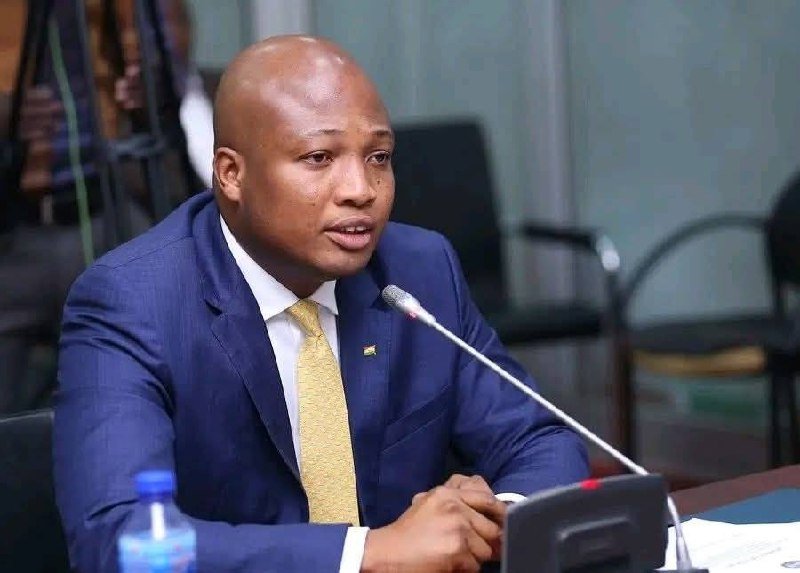
Sweden's prime minister has done something unusual: he has counted the Indian diaspora, named their economic value, and called their presence a contribution rather than a burden. The statement, reported on 17 May 2026 across multiple platforms, acknowledges more than 80,000 people of Indian origin living in Sweden and describes their participation in high-technology sectors as a structural benefit to the national economy.
The statement is noteworthy not because it is surprising — demographers, labour economists, and immigration researchers have documented for years that European economies rely heavily on skilled inward migration — but because of what the framing reveals about how political classes in wealthy nations process the relationship between growth and movement. When migration is framed as economic necessity, the language of contribution and skills sufficiency becomes not a neutral description but a political concession: proof that the usual rhetoric of border sovereignty has always contained its own contradiction.
The Arithmetic of Shortage
The European economy has spent the better part of a decade managing a structural paradox. Birth rates across the continent have fallen well below replacement level. Aging populations require expanding services — healthcare, eldercare, infrastructure maintenance — that translate directly into labour demand. Yet the political class that governs those economies has, in many cases, built its electoral coalitions on scepticism toward the very immigration that growth requires.
Sweden is a instructive case precisely because it has, historically, occupied a more permissive position than many of its EU peers. The country's tech sector — built around established clusters in Stockholm, Gothenburg, and the broader Mälardalen corridor — has recruited aggressively from Indian and other South Asian talent pools for more than fifteen years. The companies doing that recruiting are not outliers or rogue operators; they are the exporters, the scale-ups, and the R&D arms of multinationals that represent Sweden's contribution to European productivity.
The prime minister's statement, then, is less a revelation than a tardy official recognition of what has been happening on the ground. The diaspora did not grow because of a deliberate Swedish government programme to attract Indian talent; it grew because Swedish employers needed workers and Indian workers needed opportunities. The state is now, belatedly, applying a label to a phenomenon it did not design.
The Grammar of Welcome
What is revealing is the qualifier attached to that welcome: "much-needed skills in high-tech sectors." The framing is transactional. The contribution is not simply cultural, social, or demographic — though those dimensions are real — but specifically economic and technical. Sweden's Indian diaspora is valuable because they fill gaps that domestic education pipelines have not.
This grammar is not unique to Sweden. Germany's skilled immigration reforms, the UK's Health and Care Worker visa route, Canada's Express Entry system, and Australia's points-based immigration framework all share a common architecture: they admit migrants not as people with intrinsic rights to movement, but as labour units with specific credentialing. The welcome is conditional on utility.
The implication runs in both directions. For receiving states, the conditional welcome allows political leaders to tell domestic audiences that immigration is controlled, purposeful, and economically justified — that the country is choosing, not being chosen. For sending communities — and here the India-to-Europe pipeline is enormous and long-established — the conditional welcome translates skills and credentials into a lottery where the prize is geographical mobility and the ticket is often years of credentialing, examination, and bureaucratic navigation.
The Unspoken Asymmetry
What the public statement does not address is the question of what Sweden would look like without that 80,000-strong diaspora. The labour market data suggests a significant portion of those workers occupy roles in software engineering, pharmaceutical research, medical practice, and financial services — sectors where vacancy rates have been persistently above EU averages. The structural dependency is not marginal; it is embedded in the operational capacity of Swedish industry.
This asymmetry rarely enters the political framing. Immigration debates are routinely conducted as though the receiving society grants a favour to the newcomer, rather than a bilateral transaction from which both parties derive economic value. The Indian software engineer who pays Swedish taxes, consumes Swedish services, and contributes to Swedish pension systems is simultaneously a taxpayer supporting public expenditure and a recipient of a political concession that could be withdrawn.
The deeper structure is one of dependency dressed as generosity. Sweden needs the workers. The workers, in turn, need the legal status that allows them to remain. But the power dynamic is not symmetrical: the workers can be sent home; the jobs, left unfilled, create shortages that Swedish employers and consumers directly experience.
The EU Dimension
The statement's reference to the EU context is brief in the source material, but its significance is not. EU free movement rules govern the broad framework of labour mobility within the Union, but the specific category of skilled non-EU immigration — the kind that brings Indian engineers and doctors into Swedish hospitals and Swedish tech firms — operates under national discretion within EU law. The 80,000 figure represents not just a Swedish policy outcome but the accumulation of individual decisions by employers, universities, and immigration officials across a system that rewards technical qualification.
As EU-level immigration reform discussions continue, the Swedish example raises a question that Brussels has not yet resolved: whether the Union will formalize the kind of skills-selective immigration that individual member states have practiced ad hoc, or whether it will maintain the current arrangement in which each capital runs its own talent pipeline.
The answer matters for countries like India, whose nationals represent a significant share of Europe's skilled inward migration, and whose governments have an increasing interest in negotiating reciprocal terms — not in the restrictive sense of demanding that Europe take fewer, but in demanding that the terms of admission be predictable, credential-acknowledging, and free from the political volatility that has periodically disrupted legal migration channels.
What Sweden's prime minister has confirmed, in the most routine of public statements, is that the relationship between wealthy economies and skilled Global South migrants is structural rather than incidental. The diaspora does not exist because of Swedish generosity; it exists because Swedish employers required their labour and because Indian workers required the economic opportunity. The framing can call it a contribution. The arithmetic calls it a necessity.
The question ahead is not whether that arithmetic will continue to produce movement — it will — but whether the political vocabulary will eventually catch up to the economic reality, or whether the contradiction between border sovereignty rhetoric and skills-dependency economics will continue to define the politics of European migration for another generation.
This publication covered Sweden's acknowledgment of its Indian diaspora through Disclose.tv wire reports rather than direct Swedish government communication. The framing reflects the source material's emphasis on economic contribution language.
Wire provenance
This editorial synthesis draws on the following public wire/social posts:
- https://t.me/disclosetv/29847
- https://t.me/osintlive/17832