Taiwan's Sovereignty Gambit and the Limits of American Ambiguity
Taiwan's declaration of independence has forced the Trump administration to confront a question it has spent decades avoiding: what does American ambiguity on Taiwan actually mean in practice?
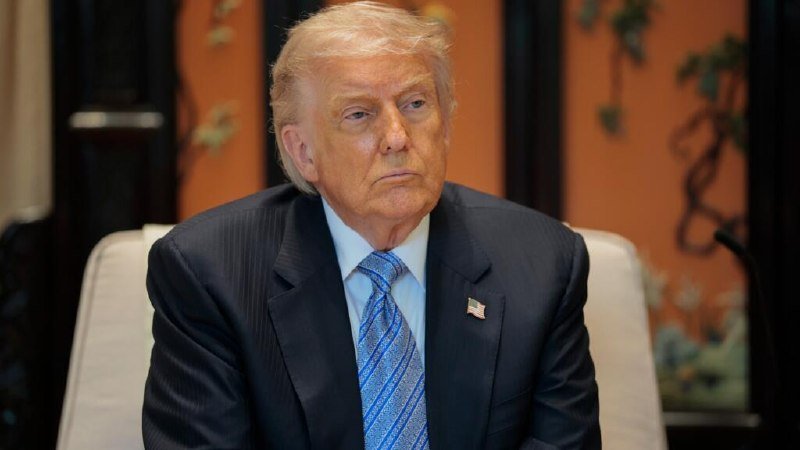
The status quo, it turns out, has an expiration date.
On 17 May 2026, Taiwan's government issued a statement describing itself as an "independent" nation — the most explicit such declaration in years — following reported warnings from the Trump administration against any move toward formal independence. The statement was not a surprise announcement. It was a rebuttal: Taiwan was not seeking to declare independence because, in Taipei\u2019s framing, independence already exists as a de facto matter. The distinction matters, because it shifts the argument away from the provocative act of declaration and toward the more mundane question of recognition.
That rebuttal creates a diplomatic problem for Washington. American policy toward Taiwan has long rested on deliberate vagueness — the Taiwan Relations Act commits the United States to providing defensive arms while studiously avoiding any statement on sovereignty. Taiwan\u2019s latest formulation forces the White House to decide whether the status quo it is defending is a Taiwan that is independent in all but name, or a Taiwan that remains, in some meaningful sense, part of a future unified China. The ambiguity has served American interests for decades. It may be running out of road.
The Gambit Behind the Gambit
Reports of a Trump warning to Taipei — details of which remain sketchy — suggest the administration is attempting to manage a situation it did not create and does not particularly want. The Polymarket odds markets reflect this discomfort. As of 16 May, traders assigned just a 4% probability to a Trump visit to Taiwan this year, and only a 3% probability that the administration halts arms sales to Taipei. The odds are not confidence intervals. They are market signals about which outcomes the system considers plausible — and the market is saying that dramatic breaks with the current arrangement remain unlikely.
That relative stability, however, obscures more than it reveals. Taiwan\u2019s statement was not a product of confusion or miscalculation. It was a deliberate move in a game of strategic positioning, made at a moment when American attention is divided across multiple theaters and when the Xi-Trump relationship carries an unresolved weight. Taipei appears to be testing whether Washington\u2019s ambiguity extends to defending Taiwan\u2019s current de facto status against pressure — or whether it is merely a formula for inaction.
The arms sales question is the most sensitive lever. Taiwan\u2019s government described American arms transfers as a "cornerstone of regional peace and stability" — language that simultaneously thanks a supplier and argues for its continuation. Halting those sales would be an extraordinary step, one that would immediately signal a fundamental reassessment of American commitments in the Pacific. The 3% market probability of suspension suggests traders consider this outcome remote. But those same odds serve as a useful reminder: the Taiwan relationship is not governed by laws or treaties alone. It is governed by calculations of credibility, cost, and Chinese reaction that are made continuously, not settled permanently.
The Xi Variable
What the sources do not tell us — and what may matter most — is the content of any ongoing dialogue between Washington and Beijing. A Xi-Trump summit has been the subject of market speculation, with odds tracked on what announcements might emerge. The meeting, if it occurs, would almost certainly include Taiwan as a point of discussion. The question is whether a summit produces an agreement that constrains Taiwan\u2019s room for maneuver, or whether it produces only the familiar diplomatic ritual of reaffirming "/strategic ambiguity."
Beijing\u2019s position on Taiwan has not changed. The People\u2019s Republic of China considers Taiwan a province of China, and any Taiwanese claim to statehood is, from Beijing\u2019s perspective, an act of secession. What has changed is China\u2019s capacity to make that position felt militarily and economically. The PLA\u2019s military exercises in the Taiwan Strait have grown in scale and sophistication. Chinese economic leverage over third countries — measured in trade relationships, infrastructure investment, and diplomatic recognition — has expanded substantially. The context in which Taiwan asserts its sovereignty claims has shifted decisively toward Beijing\u2019s favor.
Taiwan\u2019s counter-move — declaring that it is already independent and does not need to declare formal independence — is an attempt to render Beijing\u2019s objection irrelevant. If Taiwan already is what it claims to be, the argument runs, then the question of becoming is moot. This is elegant rhetoric. Whether it produces a durable strategic benefit is another matter.
What the Odds Cannot Price
The Polymarket numbers offer one useful calibration: the market assigns low probability to a dramatic rupture in US-Taiwan relations. A Trump visit is unlikely. A halt to arms sales is unlikely. By this reading, the Taiwan situation is stable, and Taiwan\u2019s statement is a gesture without consequence.
That reading is probably wrong — or at least incomplete. The status quo that the market is pricing has already been broken, or at least bent, by Taiwan\u2019s statement. What remains uncertain is whether the response from Washington and Beijing involves restoring the previous equilibrium or accepting a new one. The market odds cannot capture that ambiguity, because it is structural rather than event-driven.
There is a version of this story in which the Trump administration\u2019s warning is treated as sufficient — Taipei steps back, Beijing registers the restraint, and the relationship continues on its familiar, unstable footing. There is another version in which Taiwan\u2019s statement marks the beginning of a new phase in which the question of Taiwan\u2019s status can no longer be managed through strategic ambiguity because both Taipei and Beijing are now stating their positions explicitly.
The next few weeks — particularly any Xi-Trump dialogue — will determine which version prevails. Until then, the most honest assessment is also the least satisfying: the situation is in motion, and the familiar frameworks for understanding it are not keeping pace.
This publication covered Taiwan\u2019s sovereignty statement as a fait accompli and examined the US response through available market signals, rather than treating the administration\u2019s stated position as a settled matter. The sources did not include direct quotes from the White House or the PRC Foreign Ministry; those are forthcoming and will inform follow-up coverage.