The Tariff Truce That Tells Us Nothing
Beijing and Washington have agreed to talk about lowering tariffs on agricultural goods. Neither side is being honest about why, and the markets are wrong to celebrate.
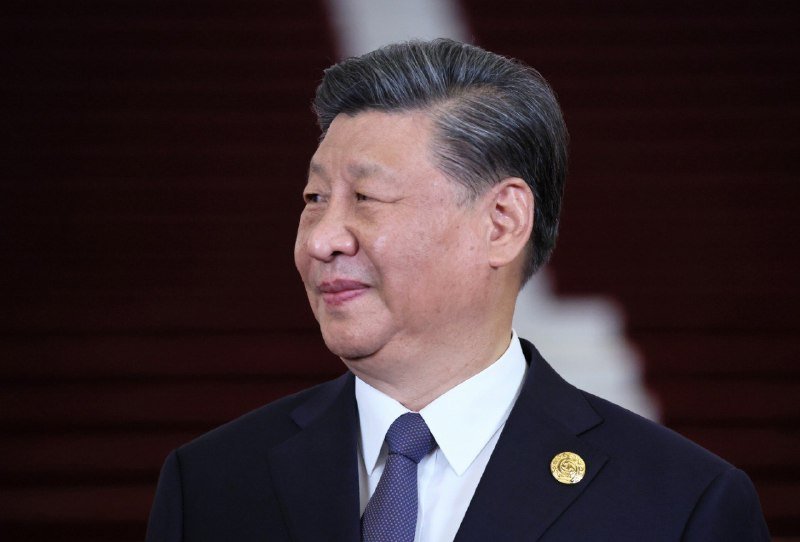
On Saturday, 16 May 2026, China's government announced that President Xi Jinping and President Trump had agreed to expand agricultural trade, establish joint boards for trade and investment, and move toward lowering some tariffs. The statement, carried by Nikkei Asia, was treated as a diplomatic breakthrough. Financial markets responded with the enthusiasm that always accompanies the promise of reduced trade friction. The optimism was premature, and the framing is misleading on both sides.
Beijing and Washington have not signed a trade deal. They have agreed to discuss the possibility of a process that might eventually result in reduced tariffs on specific goods. The language is deliberately vague because the substance has not been negotiated. What has happened is a ceasefire in the rhetorical war — a pause in escalation that both sides need for domestic reasons, and that neither side should be credited with having earned.
What the Agreement Actually Contains
The Chinese readout, as reported by Nikkei Asia, describes an agreement to expand agricultural trade, create joint trade and investment bodies, and purchase more American goods. It does not specify which tariffs are under discussion, what the timeline looks like, or what concessions Beijing is prepared to make on the structural issues — industrial subsidies, market access, technology transfer — that have driven this conflict from the beginning. The joint boards are a familiar diplomatic device: bodies that meet, issue communiqués, and produce little of substance while allowing both governments to claim progress.
The Trump administration has its own reasons for accepting a pause. American agricultural exporters — soybeans, pork, corn — have absorbed significant pain from the retaliatory tariffs Beijing imposed after the first round of American levies in 2018. That pain is concentrated in rural, politically important states. A tariff reduction, even a partial one, gives the administration something to sell as a win ahead of mid-term positioning. Beijing knows this, and the announcement itself is calibrated to be useful to the White House without costing China anything concrete at this stage.
Why Beijing Made This Move
China's decision to signal willingness on tariffs is driven by structural economic pressure, not goodwill. The country's manufacturing sector is facing headwinds: domestic consumption remains sluggish, the property sector has not stabilised, and export dependence has become a liability as other nations — particularly in Southeast Asia and Europe — grow warier of over-reliance on Chinese supply chains. Agricultural imports from the United States are a logical area for a gesture. China needs the grain. American farmers need the buyers. The match is straightforward, and making it costs Beijing little while buying goodwill it can monetise later in negotiations over more sensitive goods and technologies.
The Chinese government's own framing, carried by state-aligned outlets including coverage that made its way to the Global Times and Xinhua, stressed that the agreement reflected mutual respect and constructive engagement. That language is designed for domestic audiences as much as international ones — a signal that Beijing is the reasonable party in the relationship, willing to negotiate while the United States imposes. Whether that framing is accurate or not, it is the frame through which a significant portion of the world is reading this development, and Western coverage ignores it at its own analytical peril.
The Structural Problem Neither Side Is Addressing
The tariff war between Washington and Beijing began over specifics: the scale of Chinese industrial subsidies, the requirement that foreign companies transfer technology to operate in China, the theft of intellectual property, the use of state-owned enterprises as instruments of economic policy. Those specifics have not gone away. A pause on agricultural tariffs does not resolve them. The joint boards promised in Saturday's announcement are the same kind of mechanism that failed to produce meaningful change during the Phase One deal signed in January 2020. That agreement committed China to purchasing an additional $200 billion in American goods over two years; Beijing fell short of the target by a significant margin, and the mechanism had no enforcement teeth.
There is no reason to expect this iteration will perform better unless the underlying structural disagreements are addressed at the negotiating table — and the sources do not indicate that any such negotiation is imminent. What is being described is a diplomatic thaw, not a settlement. The difference matters enormously for companies, governments, and markets that are making decisions based on the assumption of a durable peace.
The honest reading is that both governments are managing a conflict they cannot win outright and cannot afford to escalate indefinitely. That is a reasonable position for each of them. It is not the same as success. The celebration in markets reflects wishful thinking dressed up as analysis: the hope that tariff reduction will unlock demand, that supply chains will normalise, that the uncertainty that has weighed on business investment since 2018 will finally lift. That uncertainty will not lift until the structural questions are answered. And the sources provide no indication that either side is willing to answer them yet.
The tariff truce is real in the narrow sense that some escalation has paused. The trade war is not over. It has simply entered a quieter phase — one that tells us more about each side's short-term domestic needs than about any durable shift in their relationship. Markets are pricing in the latter. The evidence, such as it is, supports only the former. Readers adjusting supply chains, investment flows, or policy positions on the basis of this announcement should proceed with considerably more caution than the initial coverage suggested.
This publication covered the Xi-Trump announcement as a bilateral development with structural antecedents, rather than as a breakthrough narrative or a failure of American resolve. The sources available at time of writing did not include the US Trade Representative's formal response to the agricultural framework.