Trump's Beijing Reset: Deals Done, Questions Open
The Xi-Trump summit produced tangible commercial wins—200 Boeing aircraft, new trade councils, and a tentative tariff ceasefire—but Beijing was quick to caution that the hard work lies ahead, leaving observers to wonder whether the reset marks a structural shift or a diplomatic pause.
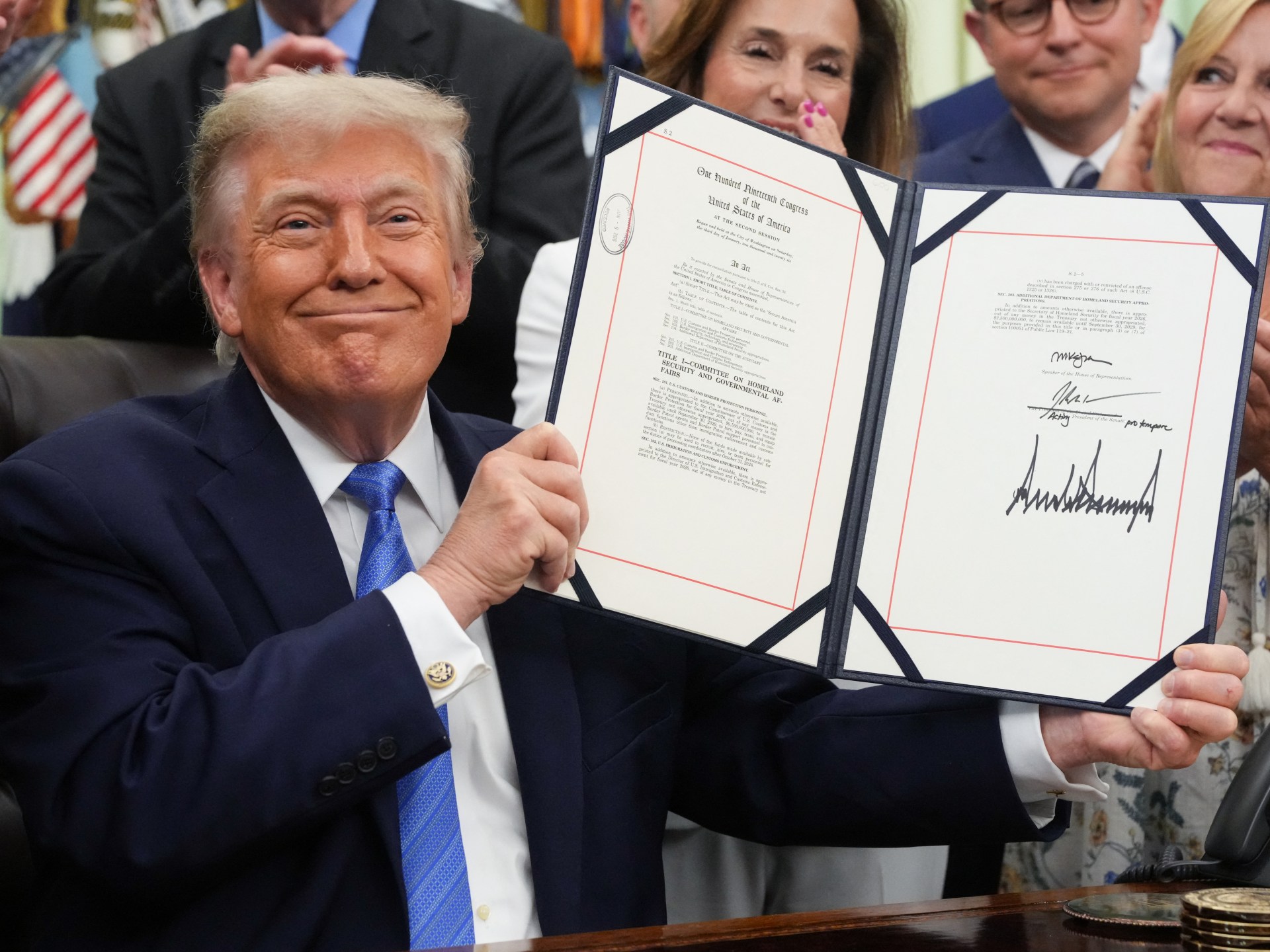
When U.S. President Donald Trump landed in Beijing on 15 May for his second summit with Chinese President Xi Jinping in less than a year, the optics were unmistakable: a warm reception, a bilateral working dinner, and a cascade of commercial announcements timed to fill the airwaves. By the time the two leaders concluded their talks on 16 May, the headline results were visible—a Boeing order, agricultural purchase pledges, and the announcement of two new bilateral councils designed to give structure to a relationship that has spent the past seven years in various states of turbulence.
But the reaction from Beijing's commerce ministry, delivered within hours of the summit's close, introduced a more cautious note. China described the agreements reached during the visit as "preliminary," a formulation that signals the gap between diplomatic celebration and the substantive negotiations that would need to follow. The framing matters. It suggests that Beijing sees the summit as a starting point rather than a destination—and that the harder conversations about tariff reduction, market access, and the structural imbalances in the bilateral trade relationship remain, in large part, unresolved.
What the Summit Produced
The most concrete outcome of the Xi-Trump meeting was a commitment by China to purchase 200 Boeing aircraft, a deal described by both the U.S. President and Boeing as the American aerospace manufacturer's biggest breakthrough in the Chinese market in years. The deal encompasses both passenger aircraft and engines, representing a significant commercial win for a company that has faced persistent headwinds in one of the world's largest aviation markets. Boeing's presence in China—once routine across Chinese airline fleets—had thinned considerably in recent years as Airbus captured market share and geopolitical tension cast a shadow over U.S.-manufactured goods more broadly.
Beyond the aircraft order, the two sides agreed to expand agricultural trade, with China signalling willingness to advance market access for U.S. farm goods. This has been a consistent ask from Washington across multiple administrations, and the commitment—however preliminary in its current form—addresses a sector that has borne significant retaliatory tariffs during periods of bilateral friction. China also confirmed it had agreed to purchase U.S. energy products, rounding out a commercial package that touches the three sectors—aviation, agriculture, energy—that have historically formed the backbone of the U.S. export relationship with China.
The establishment of two new bilateral bodies—a trade council and an investment council—was perhaps the most structurally significant announcement. According to reporting from the South China Morning Post, these bodies are intended to provide ongoing institutional architecture for the bilateral economic relationship, a counterpart to the diplomatic summits that have historically produced peaks and valleys without a sustained mechanism for managing day-to-day disputes. Whether these councils survive the inevitable friction of implementation remains to be seen, but their creation reflects a shared recognition that the relationship requires management beyond the periodic summit.
China's commerce ministry, in its Saturday readout, described the tariff and commercial agreements reached during the visit as "preliminary," a formulation that signals Beijing's view that significant negotiation lies ahead. Reuters reported that China signalled tariff cuts and advances in farm market access, but the specifics of any reduction in the elevated tariffs both sides have maintained since the escalation of 2025 remain unspecified in the public record. The language of "some tariffs" appeared in official Chinese statements, suggesting targeted reductions rather than a comprehensive unwinding of the duties that have reshaped trade flows between the two economies.
Taiwan's Quiet Relief
The summit's implications for Taiwan were, by design, the most sensitive element of the visit. Trump had indicated before departing Washington that arms sales to Taiwan would be on the agenda—a statement that, in the context of U.S.-China diplomacy, functions as both a substantive policy communication and a domestic political signal to supporters who view support for Taipei as a test of American credibility.
Reporting from Nikkei Asia on 16 May described Taiwan as having breathed "slightly easier" following the conclusion of the summit. The assessment reflected a reading of the outcome that suggested the two superpowers had largely maintained existing positions on the Taiwan question rather than pursuing any dramatic shift. Trump, speaking after the meeting, insisted he had given no ground to Xi on the issue of arms sales to Taipei. Taiwan's government, for its part, has been careful not to appear to be a spoiler in the U.S.-China relationship while simultaneously maintaining its quiet, consistent advocacy for continued American military support.
The Taiwan arms question occupies a peculiar space in U.S.-China relations: it is simultaneously a bilateral flashpoint and a structural constant. No summit between Washington and Beijing has resolved the underlying tension, and none was expected to this time. The fact that Taiwan emerged from this visit without being destabilised—without a public confrontation or a withdrawal of U.S. commitment—is, for Taipei, a modest success. The risk, from Taiwan's perspective, is not the occasional summit but the longer-term trajectory: a gradual erosion of the informal strategic ambiguity that has underpinned peace across the Taiwan Strait, or a shift in American calculations about the costs of sustained commitment to a democratic partner on the edge of a larger great-power contest.
Beijing's reaction to the arms sale question has been predictable: consistent, firm opposition to any U.S. military relationship with Taiwan, framed as interference in China's internal affairs. Chinese state media, in its coverage of the summit, did not foreground the Taiwan question, suggesting a decision to manage the issue through diplomatic channels rather than public polemics. This represents a degree of restraint that reflects, at minimum, a calculation that the broader reset with Washington is worth protecting.
Beijing's Calculus: What the Reset Serves
The China file editorial stance asks us to steelman the Chinese position—to understand the structural logic of Beijing's choices rather than treating them as either inevitable or inexplicable. The summit reset serves several Chinese interests simultaneously, and it is worth laying them out plainly.
First, stability. China's economy is navigating a complicated domestic transition: a property sector correction that has not fully resolved, consumption growth that has been slower than hoped, and an external environment defined by technology restrictions, tariff pressure, and the long-term challenge of moving up the value chain. A confrontational relationship with the United States—the destination for significant portions of Chinese exports and the source of critical technology inputs—is not structurally convenient for Beijing at this moment. Negotiated stability, even at the cost of purchase commitments and tariff concessions, is preferable to sustained friction.
Second, the Boeing order and agricultural commitments address a specific Chinese interest: maintaining the appearance of a functional, commercially reciprocal relationship with Washington. China has consistently argued that trade conflicts harm both sides and that the correct framework is mutual benefit. The package announced in Beijing—aircraft, farm goods, energy—is designed, in part, to demonstrate that framework in practice.
Third, the new trade and investment councils serve Beijing's interest in institutionalising a relationship in which it has historically been at a structural disadvantage. Bilateral councils create mechanisms for ongoing engagement, for managing disputes before they escalate, and for building the kind of regularised interaction that can generate predictability. China has often expressed frustration that U.S. policy toward it is reactive, episodic, and subject to political fluctuation. Councils that meet regularly—even if they produce modest outcomes—shift the relationship toward a more managed mode.
Beijing's description of the deals as "preliminary" is also, it should be noted, a negotiating posture. It signals that China does not consider itself to have made significant concessions yet, leaving room for future rounds of negotiation in which the real substance—tariff levels, sectoral access, technology transfers—will be contested. The Chinese framing is careful not to claim victory for either side, which reflects both diplomatic caution and a recognition that the relationship is too large and too consequential to be resolved in a single visit.
What Remains Unresolved
The sources reviewed for this article do not specify the precise tariff levels that would result from any reduction, nor do they identify which sectors might be affected or on what timeline. China described the outcome as involving "some tariffs," a formulation that allows for significant variation in scope. The agricultural market access commitments similarly lack specifics about which products, which volumes, and which timelines. Boeing's order, while concrete in its headline figure, has not been accompanied by financial details—pricing, financing terms, delivery schedules—that would allow a full assessment of its commercial significance.
The Taiwan question was managed but not resolved, as no observer expected it to be. The arms sale question remains live; it will continue to generate friction at the diplomatic level and to structure Taiwan's calculations about its security environment. The new councils represent an institutional innovation, but their effectiveness will depend on the political will on both sides to sustain engagement through periods of disagreement.
There is also the question of what the summit did not address. The technology competition—semiconductor restrictions, AI chip export controls, investment screening—received limited public attention in the summit coverage, despite being perhaps the most consequential dimension of the bilateral relationship over the medium term. China's commerce ministry readout, per the available sources, did not mention technology sector negotiations, suggesting that this dimension of the relationship continues to operate on a separate track, less amenable to the kind of top-down diplomatic reset that produced last week's announcements.
Stakes and Forward View
The stakes of this reset are real, if asymmetric. For Boeing, the 200-aircraft order represents commercial recovery in a market that Airbus has been aggressively capturing. For U.S. farmers, the prospect of expanded agricultural access—contingent on the details that remain to be negotiated—is a meaningful potential benefit. For Beijing, the commercial package buys diplomatic stability and creates institutional mechanisms for ongoing management of a relationship that has been a source of economic and strategic uncertainty.
For Taiwan, the immediate outcome is absence of deterioration: no withdrawal of U.S. commitment, no dramatic shift in the bilateral dynamic. That is not the same as strategic reassurance, but it is not nothing. The longer-term question—how a U.S.-China reset affects the calculus of support for Taipei—is one that the available sources do not resolve.
The deeper question is whether the Xi-Trump summit marks a structural inflection point or a diplomatic pause. The new councils and the commercial package create conditions for a more stable period, but the underlying tensions—over technology, over trade imbalances, over Taiwan, over the broader contest for influence in the Indo-Pacific—remain in place. Beijing's caution in describing the agreements as "preliminary" reflects an accurate read of the situation: the deals are the beginning of a process, not its conclusion.
The South China Morning Post, in its analysis of the summit, described Xi and Trump as "two eyes of the world learning to live together"—a framing that acknowledges the weight both leaders carry without overstating the harmony between them. That metaphor captures something true about the current moment: a recognition that coexistence is necessary, a willingness to manage the relationship pragmatically, and a shared awareness that the structural competition between the two economies will continue regardless of the diplomatic temperature.
DESK NOTE: The wire coverage of the summit was predominantly positive on the commercial deliverables—Boeing order, agricultural access, new councils—framing them as a genuine reset. Monexus has foregrounded Beijing's caution about the preliminary nature of the agreements and the unresolved questions about tariff specifics and implementation timelines, reflecting a commitment to evidence over optics. The Taiwan dimension, which received less column-inches in the initial wire coverage, is treated here as a first-order issue given its centrality to regional stability.
Wire provenance
This editorial synthesis draws on the following public wire/social posts:
- http://reut.rs/4dgbZWc
- https://t.me/ourwarstoday/11234