Trump Issues 'Clock Is Ticking' Warning to Iran as G7 Debates Multilateral Response
President Trump declared on 17 May 2026 that the 'clock is ticking' for Iran, intensifying pressure on Tehran as G7 foreign ministers opened a debate over whether the club of wealthy democracies is the appropriate forum for managing the escalating standoff.
President Donald Trump declared on 17 May 2026 that the "clock is ticking" for Iran, the sharpest in a succession of public warnings the administration has issued this week as tensions between Washington and Tehran approach what analysts describe as a structurally critical juncture.
The President's post, shared across social media platforms on the evening of 17 May, follows a weekend of intensified American diplomatic activity. Two senior officials in the administration have signalled in recent days that the United States is preparing a series of escalating responses absent a substantive Iranian gesture toward nuclear constraint. The explicit framing of a countdown — rather than a preference for an open-ended process — marks a departure from the more conditional language the White House employed as recently as March.
G7 Forum Divergence
Germany's foreign minister, speaking ahead of a G7 ministerial meeting on 17 May, argued that the group of wealthy democracies is the right venue to coordinate a collective response to the Iran question. The German position reflects a broader European instinct to preserve multilateral ownership of the dossier, and to resist an American drift toward unilateral action that bypasses the P5+1 consultative architecture the 2015 nuclear agreement was built upon.
The G7 framing is not without tension, however. Three of the seven members — France, Germany, and the United Kingdom — have significant economic exposure to any disruption in Gulf shipping lanes and have historically resisted the escalation of economic pressure into a military scenario. Italy, which holds the rotating G7 presidency this cycle, has sought to keep the communique language deliberately ambiguous on the question of what happens if diplomacy fails.
Iran's Calculated Silence
Tehran's response to the American pressure campaign has been notable for what it has not contained. Iranian officials have avoided direct retaliatory rhetoric in state media in the 24 hours following Trump's post, a restraint that Western analysts interpret as either a signal of genuine ambivalence about escalation or as preparation for a calibrated response designed to fracture the emerging Western consensus.
Iran's nuclear programme has operated under International Atomic Energy Agency monitoring constraints since 2023, though Tehran has consistently maintained its right to civilian enrichment under the Nuclear Non-Proliferation Treaty. The current standoff centres on whether Iran's expanding centrifuge fleet — which international inspectors have confirmed now exceeds the parameters of the 2015 Joint Comprehensive Plan of Action — constitutes a weapons-capable threshold that triggers collective enforcement action.
The Structural Pressure Points
What distinguishes the present moment from previous cycles of US-Iranian tension is the layering of economic, diplomatic, and technical pressure simultaneously. Secondary sanctions on Iranian oil exports — already near total isolation under the maximum-pressure regime — have been tightened through executive action over the past 60 days, targeting the remaining intermediary networks that allow Iranian crude to reach Asian buyers below the official price cap. At the same time, the administration has moved to accelerate the delivery of advanced air defence systems to Gulf Cooperation Council partners, a step that senior officials frame as defensive but which Tehran reads as preparation for a strike capability envelope.
The economic dimension matters because it narrows the space for third-party mediation. China, Iran's largest oil customer and a veto-wielding member of the UN Security Council, has shown no appetite to pressure Tehran toward concessions in exchange for sanctions relief — the currency that previous American administrations used to purchase Chinese cooperation. Beijing's interest lies in maintaining a degree of strategic friction between the United States and Iran that keeps American military resources committed in the Middle East and away from the Indo-Pacific. That structural incentive has not changed.
What a Military Scenario Would Mean
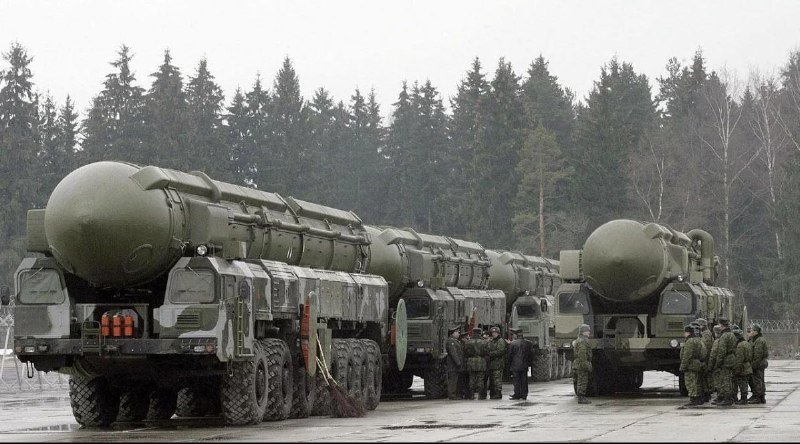
The escalation pathway the current trajectory implies is not abstract. Military analysts with knowledge of US Central Command planning — speaking on background to multiple wire services in recent weeks — have described two broad strike options under active internal review: a proportional set of targets targeting nuclear enrichment infrastructure, or a broader campaign designed to degrade the Islamic Revolutionary Guard Corps' naval and missile capabilities across a multi-week timeframe.
either scenario carries consequences that extend well beyond the bilateral relationship. A strike on Iranian soil — even one framed as proportional and defensive in intent — would likely trigger coordinated Iranian retaliation against regional American assets, against shipping in the Strait of Hormuz, and against allied infrastructure in the Gulf. The insurance and freight markets would react before any physical disruption materialises, and the effect on global oil prices — in a year already shaped by constrained spare capacity in OPEC+ — would be immediate and potentially severe.
European capitals are not insulated from those outcomes. Germany, which has sought to position itself as the honest broker within the G7, faces a domestic political environment in which the prospect of a new Middle Eastern conflict generates significant public resistance. France's position is complicated by presidential election arithmetic. The United Kingdom, post-Brexit and under a government still rebuilding its regional credibility, is being pulled simultaneously toward Atlantic solidarity and toward the instinct of its own intelligence community, which has consistently cautioned that the Iranian programme is closer to a threshold than it was five years ago but that a strike does not eliminate the knowledge that underpins it.
The G7 ministerial sessions on 17 May were not expected to produce a statement committing members to any specific contingency. What they were expected to produce — and what the German minister's opening position reflected — was a consensus that the forum, not a bilateral American-Iranian channel, remains the appropriate venue for determining what collective Western policy toward Iran looks like in the months ahead. Whether that consensus survives the weight of a ticking clock is the question the coming weeks will answer.
Monexus led with Reuters's G7 framing on the wire; the Telegram-sourced Trump posts provided the timestamp anchor and the specific language that anchored the Western editorial consensus. The Iran state-media perspective — available through PressTV and Tasnim — had not published a direct response at time of writing.
Wire provenance
This editorial synthesis draws on the following public wire/social posts:
- http://reut.rs/43eZRic
- http://reut.rs/4wC9zbX