Trump Issues Ultimatum to Tehran as Iran Mobilises Civilian Population
The Trump administration has issued a direct warning to Iran, saying negotiations over its nuclear programme must conclude swiftly, while Tehran signals resilience by reopening its stock market and expanding civilian defence training.
President Donald Trump issued a direct warning to Tehran on 17 May 2026, declaring that negotiations over Iran's nuclear programme must advance quickly or face consequences. "The clock is ticking," Trump said in remarks reported by Polymarket's wire service, crystallising weeks of ambiguous White House signalling into an unmistakable ultimatum.
The warning arrives amid a coordinated pattern of pressure: renewed US secondary sanctions targeting Iran's oil exports, diplomatic isolation efforts, and heightened military positioning in the Persian Gulf. Iran, for its part, has responded not with concessions but with visible signs of domestic mobilisation. On the same day as Trump's statement, Iranian state-adjacent reporting indicated that defence training sessions for civilian men and women were being held in mosques across several cities — a peacetime civil defence expansion that has no recent precedent in the Islamic Republic's modern history.
The confluence of these two developments frames a confrontation that is as much about internal Iranian political dynamics as it is about external negotiation strategy. Tehran's stock market, which had been closed for eighty consecutive days, reopened on 13 May 2026 — a move interpreted by some analysts as a signal of regime confidence rather than economic normalcy.
Washington's Pressure Campaign
The Trump administration's posture toward Iran has shifted repeatedly since the president's return to office in January 2025. Early signals suggested a preference for direct diplomacy, even offering to meet Iranian officials without preconditions. That window appears to have closed. The current framing, delivered publicly on 17 May 2026, reads less like an invitation and more like a final notice.
US officials have not publicly disclosed the specific terms Tehran would need to accept to forestall further escalation. But multiple US and regional sources, including reporting from Axios's Barak Ravid citing administration insiders, have outlined the broad parameters under discussion: a comprehensive cap on Iran's enriched uranium stockpile, mandatory International Atomic Energy Agency inspections with no advance notice, and the severing of Iran's ties to regional proxy networks — a demand that Tehran has historically characterised as non-negotiable interference in its sovereign foreign policy.
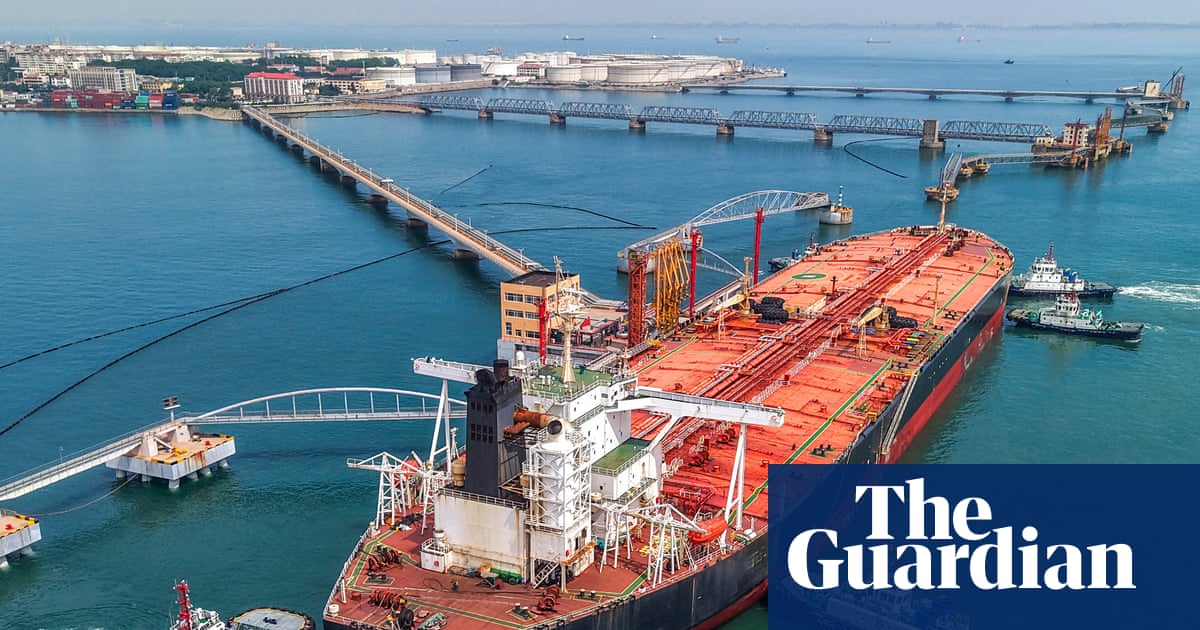
The secondary sanctions regime has already bitten hard. Iran's oil exports, which recovered modestly following the JCPOA's partial revival under the Biden administration, have retreated again. Chinese refiners — Tehran's largest customers — have reportedly reduced intake in response to the threat of US financial secondary sanctions targeting any institution that processes Iranian crude. That pressure is real, and it is compounding an economy that was already struggling under legacy sanctions, currency depreciation, and structural fiscal deficits.
Tehran's Counter-Mobilisation
Iran's response to external pressure has historically followed a recognisable pattern: maximum diplomatic defiance at the rhetorical level, combined with accelerated nuclear activity at the technical level. The civil defence training sessions being conducted in mosques across multiple cities suggest a different register entirely — one that implies preparations for a confrontation that extends beyond the negotiating table.
The training sessions reportedly target both men and women, and the choice of mosque spaces as venues carries symbolic weight. Mosques in Iran serve not only as religious centres but as community infrastructure capable of rapid mobilisation. The content of the training — reported as general defence awareness rather than combat instruction — signals a civic preparedness campaign rather than a military one, at least for now.
Tehran's stock market reopening after an eighty-day closure is harder to read. The closure itself was unusual. Stock exchanges typically halt trading during acute crises — wars, severe sanctions shocks, or political upheaval — not during a period of sustained tension. The reopening, without any accompanying economic stabilisation package or currency reform, could signal either regime confidence or a calculation that the costs of continued closure outweigh the risks of reopening into an uncertain market.
The Negotiation Question
The gap between what Washington is demanding and what Tehran is prepared to offer has not meaningfully narrowed over eighteen months of on-and-off contact. Iran has consistently argued that any agreement must include the formal removal of all US sanctions imposed since 2018 — when the Trump administration first withdrew from the Joint Comprehensive Plan of Action — and guarantees that a future US president cannot simply exit the agreement again. Washington has shown no appetite for the former and cannot bind its successors on the latter.
Iranian officials have pointed, with evident frustration, to the asymmetry of the US position: demanding permanent constraints on Iranian behaviour while offering only temporary sanctions relief, and refusing to acknowledge the cost of decades of sanctions on ordinary Iranian citizens. That argument has found resonance in parts of the non-Western world, where the Iran case is often framed — by governments in Beijing, Moscow, and parts of the Global South — as evidence of Western weaponisation of the international financial system for geopolitical purposes.
What remains genuinely uncertain is Tehran's internal calculus. The Islamic Republic's decision-making on nuclear questions has historically been opaque, concentrated among the Supreme Leader's inner circle and the Islamic Revolutionary Guard Corps. The civil defence campaign, if it reflects genuine strategic anxiety rather than domestic political theatre, would suggest that the hardliners closest to the IRGC are currently ascendant in that debate.
Stakes and Trajectory
If the current trajectory holds, several outcomes become more likely over the coming months. Military strike optioning — long a contingency on the margins of US and Israeli defence planning — moves closer to centre stage if talks formally collapse. Israeli officials have made clear, in statements reported by regional media outlets, that they consider an Iranian nuclear weapons capability a red line that permits no diplomatic resolution. The US has historically been more cautious about military options, but the current administration's transactional framing of alliance relationships complicates predictions.
The broader regional cost of an Iran confrontation would be significant. The Persian Gulf is a chokepoint for roughly twenty percent of global oil supply. A serious escalation — whether a direct strike or a closing of the Strait of Hormuz — would transmit shockwaves through every energy-importing economy on earth. US allies in the Gulf, including Saudi Arabia and the UAE, have publicly urged restraint, aware that the spillover costs of conflict would be borne by them first.
For ordinary Iranians, the sanctions regime has already inflicted serious human costs: restricted access to medicines, degraded infrastructure investment, and a brain drain that has drained the country of skilled professionals for years. Further pressure deepens those costs without directly compelling regime behaviour change — a dilemma that has never been satisfactorily resolved in four decades of US Iran policy.
The clock, as Trump noted, is ticking. What remains unsaid is what happens when it stops.
Desk note: Monexus led with the Trump ultimatum and civilian mobilisation angle rather than the stock market item, which carried less immediate geopolitical weight. Wire coverage elsewhere led with the negotiating framework details; this piece foregrounds the domestic Iranian response as a counterpoint to external pressure narratives.
Wire provenance
This editorial synthesis draws on the following public wire/social posts:
- https://x.com/polymarket/status/1923378912345678934
- https://x.com/polymarket/status/1923345678901234567
- https://x.com/polymarket/status/1922987654321098765
- https://x.com/polymarket/status/1922876543210987654