Waiting for Tehran: Trump's Iran Deal Window Is Narrowing
Trump says he's waiting for Iran's updated proposal. Behind the diplomatic theater, both sides face internal pressures that may make a deal structurally impossible before the pressure campaign resumes.
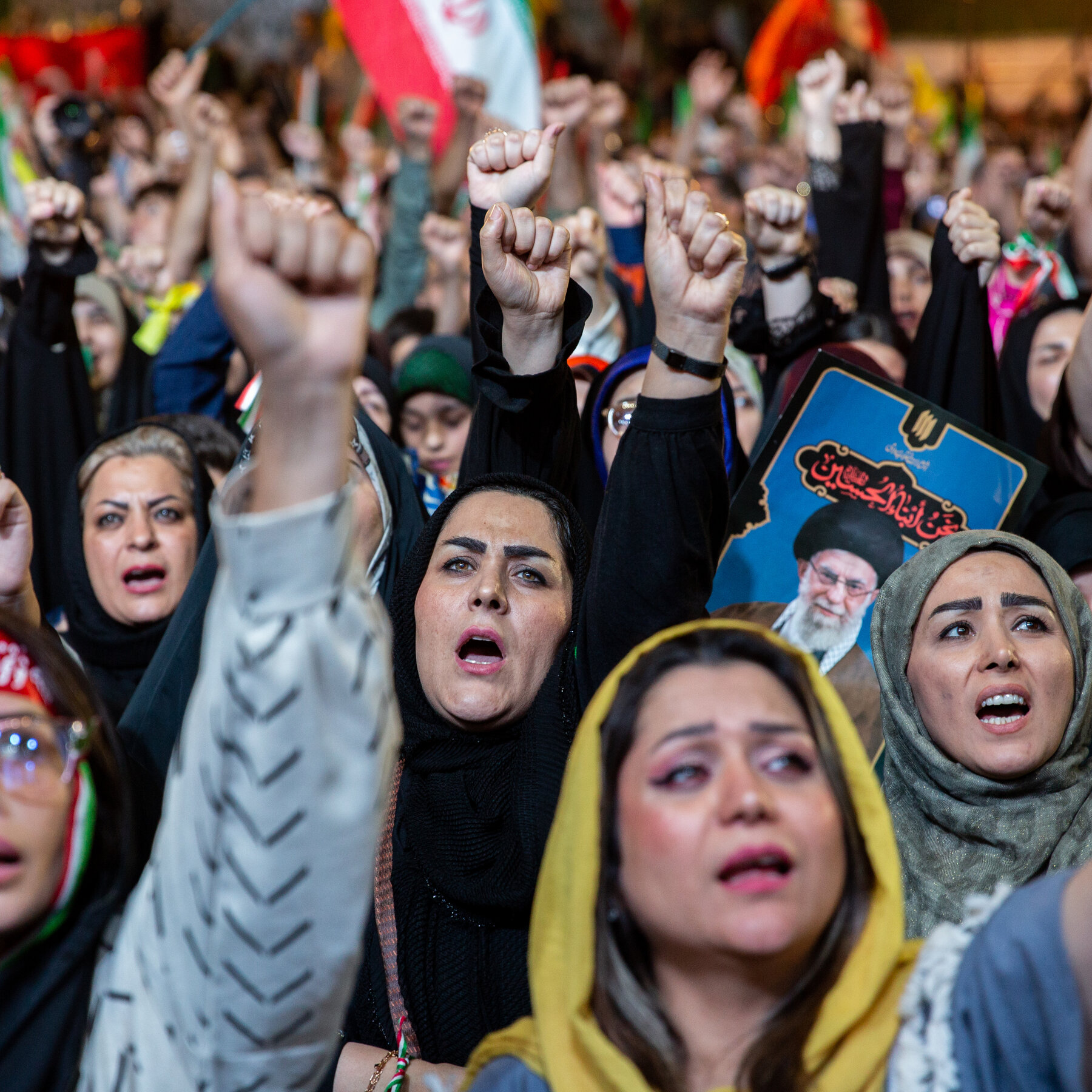
Donald Trump says he is still waiting for Tehran to send an updated nuclear proposal. The statement, made in an interview with Axios and reported on 17 May 2026 by Iranian state media, carries the familiar cadence of a president who wants a deal but cannot say so too eagerly. The problem is that both sides have spent the past two years building internal political architectures that make compromise genuinely difficult — and the diplomatic window that remains may be narrower than either Washington or Tehran is willing to admit publicly.
The contours of the disagreement are not new. The United States wants Iran to surrender its enrichment capacity below five percent, open its military sites to international inspectors, and cap its ballistic missile programme. Iran wants sanctions relief, the restoration of its sovereign oil revenues, and formal recognition of its right to a civilian nuclear programme — including limited enrichment for medical isotopes. Neither side has moved sufficiently on either set of demands to suggest a meeting point is in sight. What has changed is the external pressure environment: Israel has made clear it views any deal that leaves Iran with any enrichment capacity as a failure, and the UAE — long a quiet mediator between Washington and Tehran — has been drawn into a different kind of alignment, according to Mohsen Rezaei, a senior figure in Iran's political establishment who told Tasnim that Emirati behaviour is now influenced by Israel, and that Tel Aviv wants the conflict to have a regional actor it can use to keep American support in place.
The Leverage Illusion
The Trump administration's position rests on a premise that is almost universally cited but rarely scrutinised: that maximum pressure works. The logic runs that Iran, squeezed by sanctions and deprived of the oil revenues that funded its regional operations, will eventually capitulate and accept terms Washington defines. There is a version of this argument that is not entirely wrong — Iran's economy has suffered materially since the US withdrew from the Joint Comprehensive Plan of Action in 2018, and the rial has lost substantial purchasing power against hard currencies. But the premise contains a structural blind spot: it assumes the Iranian political system behaves like a rational economic actor that responds predictably to financial incentives. It does not.
The Islamic Republic has survived previous cycles of heavy sanctions by developing sophisticated networks of sanctions evasion — via third-country intermediaries, front companies, and oil swaps that move product through ghost tankers. It has also demonstrated, particularly since the death of Qasem Soleimani in January 2020, a willingness to absorb direct military provocation rather than fold. The question for the current round of negotiations is not whether Iran can survive sanctions — it demonstrably can, at considerable cost to its population — but whether its political leadership sees a credible enough upside in a deal to absorb the domestic political cost of making concessions. That calculation has become harder, not easier, since the October 2023 Hamas attack on Israel and the subsequent regional escalation. Iran's regional position, once constrained by the need to avoid direct confrontation with the United States, has been complicated by the fact that its proxy network has been dealing with sustained IDF operations in Gaza and Lebanon. The calculus of resistance and the calculus of deal-making are pulling in different directions.
Israel's Veto and the Regional Arithmetic
Mohsen Rezaei's framing — that the UAE's posture has been reshaped by Israeli influence — is not simply Iranian sourceline propaganda. The UAE and Bahrain signed the Abraham Accords in 2020, and both states have deepened their security and intelligence cooperation with Israel since then. Whether that cooperation translates into active Emirati lobbying against a US-Iran deal is a matter of diplomatic atmosphere rather than documented policy. But the broader point Rezaei is making — that Israel wants the war against Iran to be regionalised, to give it a reason to keep American forces engaged in the Gulf — sits inside a genuine strategic tension.
Israel has publicly stated that it will not accept any deal that leaves Iran with a nuclear enrichment capability of any kind. This is not a negotiating position; it is a red line, stated repeatedly by Prime Minister Benjamin Netanyahu's office and endorsed across the Israeli political spectrum. The United States, which has formal security guarantees with Israel and is the primary supplier of its military hardware, faces a structural problem: any deal it strikes with Iran that Tel Aviv regards as insufficiently restrictive risks fracturing the US-Israel relationship at a moment when American credibility in the Gulf and Eastern Mediterranean is already under pressure. Trump's warning that Iran must "improve" its proposal or face consequences maps onto this pressure from a different angle — it signals to Israel that the US is not about to accept a weak deal, while simultaneously telling Tehran that time is short. Whether it signals anything more coherent than managing competing constituencies is a separate question.
The Domestic Politics of Concession
Both Tehran and Washington face internal audiences that make compromise genuinely difficult. In Iran, the supreme leader, Ayatollah Ali Khamenei, has publicly endorsed negotiations while simultaneously signaling to the hardline faction that any deal must not amount to surrender. The parliament — dominated by Principlists who view engagement with the United States as categorically illegitimate — has passed legislation tying any sanctions relief to specific, verifiable American actions, creating a legislative floor beneath any executive agreement. The Revolutionary Guards, who control significant portions of the Iranian economy and have the most to lose from a normalisation of relations with the West, have a structural interest in maintaining tension. Negotiating a deal that satisfies Khamenei, outmaneuvers the parliament, and does not trigger a public backlash from the Guards is an extremely narrow path.
In Washington, the difficulty runs differently. Trump needs a deal — or at least the appearance of one — to justify the economic disruption that heavy sanctions cause to global oil markets and to his own political narrative about being the only president who can solve the Iran problem. But he also needs to avoid being seen as having been played by Tehran, which means any deal must be announced with fanfare and must contain visibly dramatic Iranian concessions. The bipartisan consensus in favour of aggressive Iran policy in Congress further constrains executive flexibility; any deal that does not include the permanent终止 of Iran's enrichment programme will face immediate legal challenges and political attacks from both sides of the aisle. This is the trap: both governments have built their Iran policy on commitments that make the compromises necessary for a deal politically toxic at home.
What a Deal Would Actually Require
The technical architecture of a revised JCPOA is not the sticking point. Nuclear engineers and International Atomic Energy Agency inspectors could sketch a monitoring regime that would give the world reasonable confidence that Iran was not moving toward a weapon — the original 2015 deal did precisely this, and its successor would likely resemble it in structure. The sticking points are political, not technical. Uranium enrichment at the 3.67 percent level, sufficient for civilian power fuel, can be scaled up to weapons-grade material within months if a state decides to break out. The difference between a legitimate civilian programme and a weapons programme is intent, and intent cannot be verified by cameras alone.
Iran has consistently argued that its nuclear programme is entirely peaceful, that it has no intention of building a weapon, and that its enrichment activities are protected under the Nuclear Non-Proliferation Treaty. The United States and its allies argue that the size and scope of Iran's enrichment activities, its evasive behaviour during earlier negotiations, and its refusal to answer outstanding IAEA questions about past military dimensions work indicate the opposite. Both positions contain legitimate evidence and legitimate blind spots. A durable deal would need to address both the technical reality and the political perception — and the political perception in both capitals has hardened to a point where the officials responsible for negotiating have limited room to move.
The Window and the Stakes
Trump's statement that he is waiting for Iran to improve its proposal suggests an administration that has not yet decided whether to walk away. This is not nothing. A president who had concluded that negotiations were futile would say so explicitly. But the specific language — "improve or be hit hard" — is calibrated to domestic American consumption as much as it is to Tehran. It keeps the pressure on, maintains the credibility of the military option as a genuine threat, and buys time for the administration's political operation to play out.
The stakes are high. An Iran that abandons the negotiating track and accelerates enrichment towards weapons-grade levels would present Israel with the scenario it has spent fifteen years preparing to prevent militarily. An Israeli strike on Iranian nuclear facilities would likely trigger Iranian retaliation against American assets in the Gulf, drawing the United States into a regional conflict it has repeatedly said it does not want. A diplomatic resolution, by contrast, would reduce the probability of that chain of events — while also potentially stabilising oil markets, reducing the risk of a broader Middle Eastern escalation, and giving Washington a genuine foreign policy win it could point to.
What the sources do not specify is whether Iran has any intention of sending the kind of updated proposal Trump is waiting for. The gap between what Washington is demanding and what Tehran is prepared to offer has not narrowed in a meaningful way over the past eighteen months. If that gap persists through the summer, the pressure campaign Trump describes will become the policy — and the consequences of that choice will not be abstract for long.
This publication's coverage of the Iran nuclear negotiations prioritises Western and Iranian state-adjacent sources for factual claims. Iranian state media framing of Israeli and Emirati policy has been included where it reflects a coherent institutional argument, rather than as a primary factual basis. Readers seeking independent verification of the Trump Axios interview quotes should consult the full transcript.
Wire provenance
This editorial synthesis draws on the following public wire/social posts:
- https://t.me/tasnimnews_en
- https://t.me/JahanTasnim
- https://t.me/FarsNewsInt
- https://t.me/tasnimnews_en
- https://t.me/tasnimnews_en