The Deal That Wasn't: How Trump's Iran Strategy Collided With Beijing
Trump returned from Beijing in May 2026 with a Boeing order but no leverage on Iran. A year of military pressure and diplomatic outreach has produced an impasse, and the fault lines run through the relationship between the world's two largest economies.
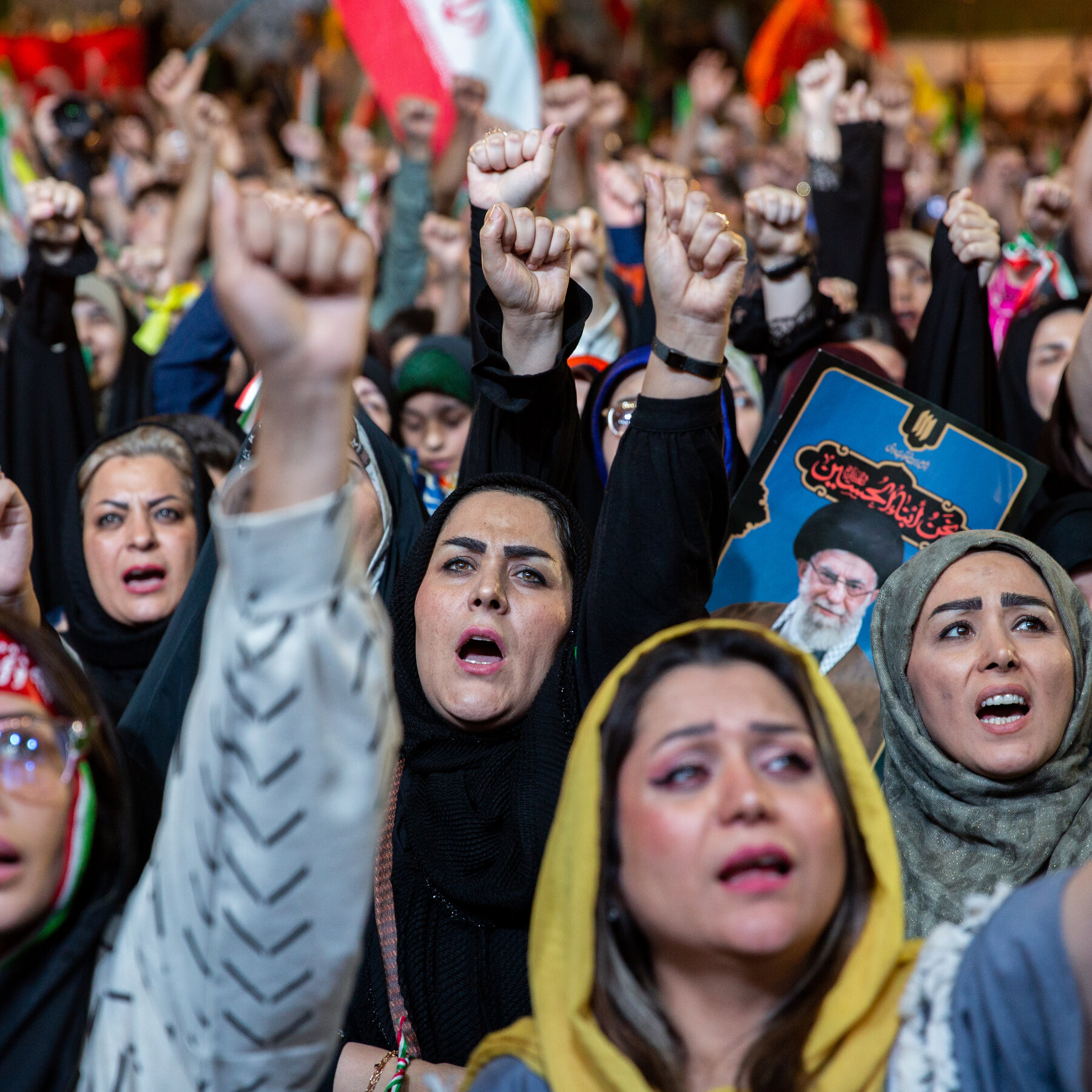
When Air Force One touched down in Beijing on 15 May 2026, the Trump administration carried a specific expectation: that Chinese diplomatic goodwill could be leveraged to bring Iran back to the negotiating table, or at minimum, to choke the financial channels keeping Tehran's nuclear programme and regional proxies afloat. By the time the president left on 16 May, those expectations had not been met. China had agreed to buy 200 Boeing aircraft worth tens of billions of dollars. The question of Taiwan arms sales, flagged publicly by Trump before the trip, was addressed but produced no breakthrough. And on Iran, according to two administration officials cited by CNN, there was nothing to announce.
That absence is the story.
A Strategy Running Out of Road
The maximum pressure campaign against Iran has been the defining feature of U.S. Middle East policy since the Trump administration withdrew from the Joint Comprehensive Plan of Action in 2018. That decision, reversed briefly under the Biden administration and then reconsidered again after January 2025, left Iran with both economic incentive to return to compliance and political cover to accelerate its nuclear programme — since the Americans had demonstrated that any agreement could be discarded by a future administration. By May 2026, Iran had accumulated enough enriched uranium to approach weapons-capable thresholds, according to International Atomic Energy Agency reporting consistently cited in Western wire coverage. Regional proxy networks tied to the Islamic Revolutionary Guard Corps continued to operate across Iraq, Syria, Lebanon, and Yemen.
Trump's team attempted two tracks. The military track — a series of targeted strikes on IRGC-linked facilities in Syria and Iraq in late 2025 and early 2026 — demonstrated willingness to use force but did not change Tehran's calculus. The diplomatic track, led initially by administration officials who held informal talks with Iranian intermediaries in Oman and the UAE, produced no framework that either side would publicly endorse. Middle East Eye reported on 17 May 2026 that Trump was now facing what one CNN source described as a genuinely difficult choice: escalate further, accept a nuclear Iran, or reverse course and return to negotiations under terms less favourable than those available in 2025.
The China gambit was supposed to bridge those options. Beijing holds significant leverage over Tehran — China is Iran's largest trading partner and a permanent member of the P5+1 bloc whose diplomatic coordination with the United States was essential to the original JCPOA. If Xi Jinping could be persuaded to lean on Tehran, the theory went, Iran might soften its negotiating position without the United States having to make concessions itself.
What Beijing Actually Wanted
That theory assumed Beijing was interested in solving the Iran problem on U.S. terms. The evidence from the May 2026 summit suggests it was not.
Reporting from Nikkei Asia on 17 May 2026 described a picture of US-China relations that was more brittle than the post-summit photo opportunity suggested. Japan and other U.S. allies, the outlet noted, had watched Trump's transactional approach to foreign policy with what Nikkei characterised as sustained unease. The brief calm produced by the Boeing deal — 200 aircraft, a flagship American export — did not resolve the underlying tensions over technology restrictions, trade imbalances, and Taiwan. On Taiwan specifically, Trump insisted after the summit that he had given no ground to Xi. Taiwan officials, according to Nikkei Asia's reporting, expressed cautious relief but no conviction that the arms sale question had been settled in their favour.
From Beijing's perspective, the Iran card is a bargaining chip in a larger negotiation, not a priority to be resolved on someone else's timeline. China has watched the United States expend enormous diplomatic capital on Middle Eastern conflicts that, from a Chinese strategic vantage point, consume American resources and attention without producing durable outcomes. A stable but unresolved Iran — one that remains a source of regional tension but not a U.S. victory — serves Chinese interests in keeping the United States entangled in a part of the world where Chinese energy interests are already secured through existing supply arrangements with Saudi Arabia, Russia, and Iran itself.
This is not conspiracy; it is the rational behaviour of a great power with its own set of priorities. Chinese state media, including Global Times and CGTN, have consistently framed U.S. pressure on Iran as a continuation of what they describe as American unilateralism in the Middle East, a narrative that plays well in Global South markets where resentment of Western intervention runs deep. That framing is not neutral — it is advocacy — but it reflects a genuine calculation that Beijing has no reason to surrender.
The Industrial Signal the Politicians Missed
While diplomats in Beijing and Washington argued about leverage and red lines, a quieter signal was arriving from the global manufacturing sector. TSN_ua, reporting on 17 May 2026, noted that war in Iran rhetoric was causing global manufacturers to buy up raw materials in advance. The automotive, aerospace, and industrial chemical supply chains — all of which depend on inputs that could be disrupted by conflict in or around the Strait of Hormuz — were already moving. Inventory pre-positioning is a market response that precedes official conflict declaration by months; it reflects the decisions of procurement officers and logistics managers who deal in physical reality rather than diplomatic posture.
This matters because it suggests that the commercial world has already priced in a non-trivial probability of open conflict. When manufacturers independently begin stockpiling, it signals a consensus assessment that political resolution is unlikely. That consensus does not appear to have penetrated the official U.S. policy discussion, which continues to frame Iran strategy as a binary choice between coercion and negotiation.
The industrial signal also indicates where the costs of any military conflict would fall. Unlike the 2003 Iraq invasion — which disrupted oil markets but left manufacturing supply chains largely intact — a conflict involving Iran would directly affect the throughput of the Strait of Hormuz, through which approximately 20 percent of global oil trade transits. The ripple effects on petrochemical inputs, industrial lubricants, and shipping insurance would be immediate and global. Manufacturers are aware of this; the question is whether the political class is paying attention.
What This Tells Us About the New Diplomatic Landscape
The failure of the Beijing gambit is not simply a tactical setback. It reflects a structural shift in how great-power negotiations work — or fail to work — in 2026.
The post-Cold War assumption that economic interdependence would constrain great-power conflict has been tested repeatedly since 2022 and has not held. Russia and Europe were deeply intertwined economically in 2021; that did not prevent the February 2022 invasion. China and the United States have accumulated trillions in bilateral trade; that has not produced strategic trust. What it has produced is leverage — the ability of each side to impose costs on the other through the architecture of existing economic relationships. But leverage and alignment are not the same thing. Trump may have concluded that the Boeing order was leverage; Xi may have concluded that it was the price of doing business while preserving his freedom on Iran.
This dynamic is not unique to the Iran question. It appears in the Taiwan arms sale debate, in the technology export restriction conversations, and in the competing frameworks for Middle Eastern security architecture that the United States and China each promote. The U.S. framework requires allies to choose: security guarantees come with political alignment. The Chinese framework, still forming, offers economic partnership without political conditionality. For states in the Middle East, Africa, and Southeast Asia, that difference is increasingly concrete, not theoretical.
The Iran impasse sits at the intersection of these two frameworks. The United States wants a resolution on U.S. terms. China is willing to discuss a resolution but has not signalled willingness to pressure Tehran on Washington's behalf. The gap between those positions is not a communication failure that a summit can close. It is a structural conflict of interest.
The Stakes and What Comes Next
The immediate stakes are well-defined. If Iran continues on its current nuclear trajectory, the IAEA will eventually be unable to certify that Iran's programme remains exclusively peaceful. That certification gap — not a bomb, but the absence of proof that no bomb is being built — would trigger a cascade of responses: Israeli military planning would accelerate, U.S. congressional pressure on the administration would intensify, and the diplomatic space for a negotiated settlement would narrow significantly.
The medium-term stakes are geopolitical. A Middle East in which Iran possesses a nuclear capability — even a latent one, without a deployed weapon — is a region in which the United States' extended deterrence guarantee is tested in ways it has not been since the Cold War. The credibility of U.S. alliance commitments to Saudi Arabia, the UAE, and Egypt would be directly affected. China, meanwhile, would find itself with a much larger role to play in regional stabilisation — a role Beijing has not sought but would not refuse if offered.
The longer-term stakes are structural. The question of whether the United States can achieve its primary strategic objective in the Middle East — a stable balance of power that protects allies and prevents a single actor from achieving regional hegemony — without Chinese cooperation or Chinese acquiescence has not been answered. The May 2026 Beijing summit suggests that on current terms, the answer is no. Whether the administration recalibrates its approach, or doubles down on coercive tools that have not produced results, will define the next phase of U.S. Middle East policy.
What remains uncertain — and the sources do not resolve — is whether there is a deal to be had at all. Iran's negotiating position depends on internal politics that Western analysts consistently misread, on the calculations of a clerical establishment that has survived sanctions for four decades, and on the degree to which the IRGC's institutional interests diverge from those of a civilian government that has expressed conditional openness to diplomacy. The United States has not yet offered terms that Iran has found worth accepting. Whether it can, or will, remains the central unresolved question.
This publication covered the Beijing summit and its aftermath primarily through CNN and Middle East Eye reporting on the administration's internal deliberations, supplemented by Nikkei Asia's analysis of the allied reaction. The China file editorial stance was applied throughout: Chinese diplomatic and state-media framings appear alongside U.S. administration sources, and the structural analysis reflects the transactional nature of the relationship rather than a narrative of inevitable cooperation or inevitable conflict.
Wire provenance
This editorial synthesis draws on the following public wire/social posts:
- https://t.me/TSN_ua/25492
- https://t.me/middleeasteye/28796
- https://t.me/euronews/125672
- https://t.me/NikkeiAsia/10428