The Last Exit: Trump's Iran Ultimatum and the Architecture of a Forced Deal
Trump has told Iran to send a new proposal within weeks or face military strikes — but the structure of the demand, not the deadline, may be what makes agreement impossible.
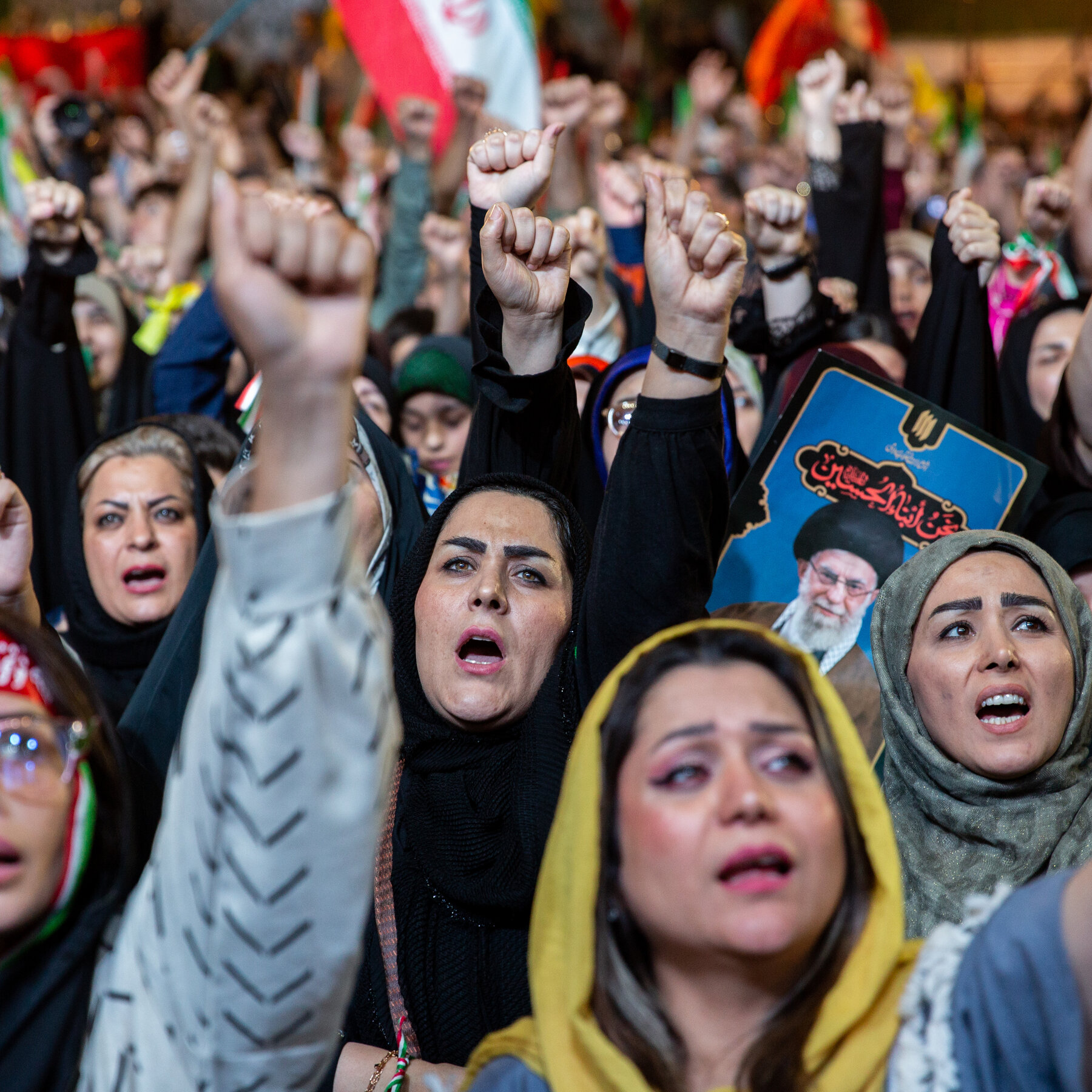
For roughly a week, the tone had been manageable. US officials spoke of a deal within reach. Iran watchers in European capitals quietly registered movement. Then, on 17 May 2026, the escalation came without warning and at full volume.
President Trump told reporters at the White House that Iran had received his terms and had not met them, according to Reuters. "If they don't make a deal, they're going to be hit very, very hard," the report quoted him as saying, per a conversation with Israeli Prime Minister Benjamin Netanyahu. The threat was absolute: "There won't be anything left of them." Within hours of that statement, Trump published a post on social media that contained the same language in capital letters. The negotiating window, as the administration defined it, had just narrowed to a closing slit.
The immediate trigger was a stalled exchange of proposals. Trump told Axios in an interview published on 17 May that he believed Iran still wanted an agreement, and that he was waiting for Tehran to send an updated offer. The previous round had apparently failed to satisfy US demands, which, according to Al Jazeera, included not only the dismantling of Iran's nuclear programme but also the surrender of its missile stocks — a demand that no Iranian government has ever publicly accepted as a subject for negotiation. That gap between what Washington is asking for and what Tehran is prepared to give is the central problem. The ultimatum, however vivid, does not close it.
The Terms of the Ultimatum
The demands as reported are structural in their ambition. Complete nuclear decommissioning requires Iran to surrender a programme it has spent two decades building, validated by years of International Atomic Energy Agency inspections, and widely understood by regional governments — including American allies — as the product of a genuine strategic calculation about deterrence and bargaining power. The missile demand goes further: it targets the conventional military architecture that Iran considers central to its national defence, and which underpins its regional deterrence relationships with Hezbollah, Hamas, and the Houthis.
Neither condition has appeared in any publicly disclosed negotiating framework. The reference to dismantling both, in a single ultimatum, suggests either that the administration has decided to push for maximum concessions in a single demand cycle, or that the language is calibrated for domestic and allied audiences rather than for the negotiating table. Per Axios, Trump's stated position in the interview was that he believed Iran still sought a deal. That framing — an offer of negotiation alongside a threat of annihilation — is the administration's current mode of communication. Whether it is intended as a negotiating tactic or a genuine expression of intent is not yet clear from the public record.
Israeli officials have been actively shaping the US position. The conversation with Netanyahu, referenced in Trump's statement, comes as Israeli leadership has consistently argued that any acceptable nuclear agreement with Iran must be permanent and verifiable. Israeli Defence Minister Israel Katz had previously stated that there could be "no agreement without the elimination of the nuclear programme." The framing is not new. What has changed is that the Trump administration has adopted it wholesale, with none of the diplomatic hedging that characterised the Biden-era approach.
Tehran's Calculation
Iran's response to maximum pressure has historically followed a consistent pattern: resistance calibrated to demonstrate that the cost of compliance exceeds the cost of endurance. This is not irrational behaviour. The Islamic Republic survived the Trump administration's first-term sanctions, the re-imposition of all nuclear-related restrictions, and the targeted killing of General Qasem Soleimani. Its leadership has managed internal economic pressure for years without fracturing. That record shapes how Tehran reads an ultimatum.
Iranian state media, in a Tasnim Plus commentary published on 17 May, asked the question that sits beneath the current standoff: "Why should Iran stand?" The phrasing is rhetorical, but the implication is not. It suggests that Iran's leadership understands the demand structure as one designed to produce capitulation, not negotiation, and that it has drawn the obvious conclusion. Iranian officials have not issued a direct response to Trump's threat as of publication, according to available sources. That silence itself communicates something — either that Tehran is still calculating, or that it has determined no calibrated response is worth the domestic political cost of appearing to engage with an ultimatum it considers illegitimate.
The regime's internal politics complicate the picture further. Supreme Leader Ayatollah Ali Khamenei has consistently opposed negotiations that could be portrayed domestically as coerced. Hardliners within the Islamic Revolutionary Guard Corps and among conservative clerical factions view any concession on missiles as a surrender of sovereignty. The reformist and pragmatic wing, which has historically favoured engagement with the West, has been systematically marginalised since 2021. There is no obvious constituency inside the Iranian system pushing for the kind of comprehensive agreement the Trump administration is demanding. That does not mean the regime cannot be pressured into one. It means the pressure required would have to be of a different order than what a public ultimatum, however severe, can achieve.
The Pattern of Coercive Diplomacy
What Washington is attempting resembles what policy analysts call coercive diplomacy: the use of threats and limited force to compel an adversary to make concessions it would not otherwise make. The record of such efforts, across multiple administrations and multiple adversaries, is mixed at best. The conditions for success typically include a credible threat, a plausible off-ramp, and a adversary's genuine belief that the cost of compliance is lower than the cost of continued resistance. The current situation fails at least two of those three conditions.
The threat is vivid but its credibility, in the near term, is questionable. US military assets in the Gulf are substantial, but any strike on Iranian nuclear facilities would require weeks of operational planning, not hours of presidential posting. The aircraft carrier USS Theodore Roosevelt is operating in the Arabian Sea; the B-2 bombers required for deep underground targets are based in Guam and Missouri. The military option is real, but it is not imminent in the way Trump's language implies. That gap between rhetoric and operational reality is either a deliberate negotiating technique — demonstrating resolve to shift Tehran's cost-benefit calculation — or it is a miscalculation of the kind that, in a crisis, is difficult to retract.
The off-ramp, meanwhile, is unclear. Trump has said Iran can still send a proposal. But the demands on the table — permanent nuclear disarmament and missile surrender — are not a basis for a deal. They are a basis for a surrender. Iran has agreed to temporary restraints before, under the JCPOA framework. It has never agreed, and is extraordinarily unlikely to agree, to permanent forfeiture of its nuclear infrastructure as a condition of sanctions relief. The gap between what Washington is demanding and what Tehran can plausibly concede without triggering a domestic political crisis is, at present, unbridgeable.
The Risks of an Unconstrained Threat
The danger in the current posture is not that it will fail to pressure Iran — sustained economic pressure and the prospect of military action do constrain Iranian decision-making — but that it forecloses the diplomatic channel without producing the compliance it demands. Threats of this character, issued publicly and at maximum volume, are difficult to walk back. If Iran declines to send a revised proposal, the administration faces a choice between backing down — which would be read in Tehran, in Jerusalem, and across the Gulf as weakness — and carrying out the threatened action. Carrying it out would mean strikes on Iranian nuclear infrastructure, likely including the Fordow and Natanz enrichment facilities, and possibly on missile installations. That would set a regional war in motion that US officials have spent months trying to prevent.
The regional consequences are not speculative. Israeli-Iranian proxies have been in a shadow war for years. Direct Israeli strikes on Iranian facilities, which have occurred in Syria and which Israel has acknowledged in limited cases, would become direct state-on-state strikes. Hezbollah, already depleted by the Gaza conflict but still operational in southern Lebanon, would face pressure to respond. The Houthis would likely accelerate strikes on Red Sea shipping. Iran's Shi'a militia networks in Iraq and Syria would be activated. The United States, with significant forces deployed across the Gulf, would be drawn into a conflict it has not chosen and does not have the domestic appetite to sustain.
There is a secondary risk: miscalculation born of ambiguity about intent. If Iran's leadership interprets Trump's language as a genuine preparation for imminent military action, it might make preparations of its own — accelerating enrichment, hardening facilities, positioning forces — that could be read in Washington or Tel Aviv as evidence of bad faith, justifying the strike it was meant to forestall. The architecture of escalation, once set in motion, is difficult to halt.
What Comes Next
The sources do not yet indicate what Iran's leadership has decided. Trump has said he is waiting for a proposal. Iran has said nothing publicly that indicates one is forthcoming. The administration appears to be calculating that the pressure will produce movement before the deadline — whatever the deadline is — becomes relevant.
The most probable outcome in the near term is continued pressure, continued silence from Tehran, and a gradual narrowing of the diplomatic space. A negotiated settlement remains possible — both sides have an interest in one, on different terms and for different reasons — but the current framing makes it harder to reach. The language of ultimatum, once deployed, demands a response. The absence of a response is itself a response.
There is an unexamined assumption in the dominant framing of this story: that Iran is primarily a problem of pressure and that enough pressure will solve it. That assumption has been tested before. It failed. The regime that survived the maximum pressure of 2018–2021 is not a regime that can be managed through a Twitter post and a threat of annihilation. The question for the coming days is not whether Iran will respond to the demand — it is whether the demand was ever designed to produce a response, or whether it was designed to produce a justification.
This publication covered the Trump ultimatum with reference to the Reuters, Al Jazeera, and Axios reporting of the President's statements, and to Iranian state media commentary as a counter-framing input. Western wire framing focused on the threat and the deadline. The Iranian state-media framing asked a structural question about the terms. Both appear in this article. The desk's assessment is that the terms of the demand are the story, not the deadline.
Wire provenance
This editorial synthesis draws on the following public wire/social posts:
- https://t.me/wfwitness
- https://t.me/tasnimplus
- https://t.me/tasnimplus