Trump's Iran Ultimatum Collides With the Hormuz Reality
Trump's threat to hit Iran harder sounds decisive. But the structural logic of the Strait of Hormuz—and Beijing's quiet presence in the room—suggests the administration is running into the same wall every predecessor hit.
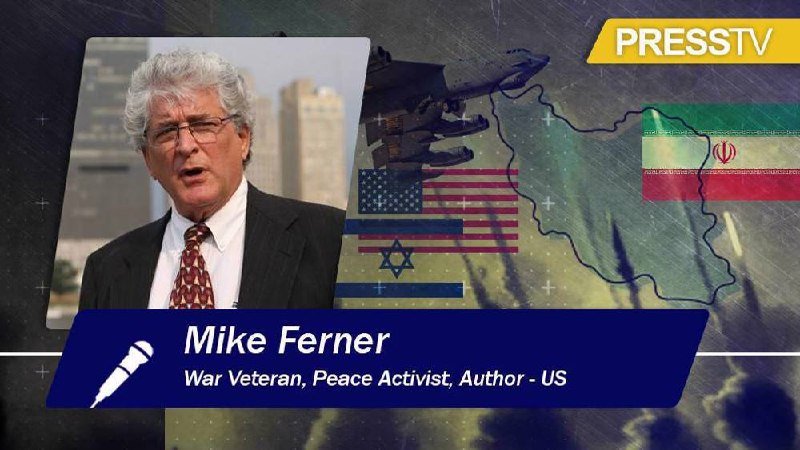
Donald Trump told Axios on 17 May 2026 that "time is running out for Iran" and warned that if Tehran does not offer a better nuclear deal, "they will be hit much harder." The White House simultaneously announced that Trump and his Chinese counterpart had agreed that Iran should not acquire nuclear weapons—and that no country should be charged for transit through the Strait of Hormuz. The juxtaposition reveals something the administration appears reluctant to acknowledge: the two statements pull in opposite directions.
The Hormuz ultimatum, stripped of its rhetorical coating, is a threat to close or interdict a waterway. That threat has been made by every administration since Carter, and it has never been executed. The reason is structural, not political: the strait is a chokepoint whose closure would cascade through global energy markets in ways that ricochet back onto the economies threatening closure. Saudi Arabia, the UAE, Kuwait, and Iraq all depend on that corridor. Japan, South Korea, and much of Southeast Asia depend on it indirectly. A US president who closed Hormuz would not be punishing Tehran alone.
The spokesman for Iran's National Security Commission, Esa Rezayi, stated on 17 May 2026 that no military power can open the Strait of Hormuz—a formulation that flips the usual Western framing. The claim is not merely rhetorical. The strait's narrowest point, at the Hengam-J-az corridor, is approximately 34 kilometers wide, with two tanker lanes separated by a five-kilometer buffer. Any naval operation to force the strait under contested conditions would require suppressing Iranian coastal defence systems, drone squadrons, and mine-laying capacity simultaneously, in a geography optimised for asymmetric retaliation. The US Navy's Fifth Fleet operates from Bahrain; Iranian anti-access/area-denial assets can reach the lane from land.
Rezai's counter-framing—that America is the main reason for the current situation in the Strait—points at a structural dependency Washington tends to overlook. The Islamic Republic has spent four decades building a deterrence architecture around Hormuz precisely because Tehran understood that the strait's vulnerability runs in both directions. Every administration that treated the waterway as a US asset to be threatened rather than a shared infrastructure to be managed handed Tehran a strategic dividend.
The Xi-Trump joint statement complicates the picture further. Beijing has a clear interest in keeping Hormuz open—China's oil imports from the Gulf are substantial, and a closure would pressure an economy already navigating a property-sector slowdown and trade friction with Washington. That calculus makes China a natural counterweight to Iranian brinkmanship. But it also makes China a natural back-channel that Tehran can use to signal willingness to negotiate without making concessions publicly. The White House announcement that Xi and Trump agreed Iran should not go nuclear is a data point; it says nothing about what Xi extracted in return, or what private assurances Beijing passed to Tehran before or after the call.
The deeper problem with the ultimatum posture is not rhetorical but epistemic. Threatening to "hit Iran much harder" assumes the US has calibrated its previous pressure correctly and merely needs to increase the dose. The record suggests otherwise. Maximum pressure failed to produce a better JCPOA outcome under Trump 1.0. Covert operations and cyber-enabled sabotage of the nuclear programme have set back the timeline without eliminating the capability. Economic isolation has pushed Iran deeper into a Eurasian trade architecture that is more resilient to sanctions than the consensus in Washington acknowledges. The question is not whether Iran can be pressured—the question is whether pressure produces the negotiated outcome the administration says it wants, or whether it produces the kind of grievances that fuel the internal political logic driving the programme forward.
What remains genuinely uncertain is whether the Islamic Republic's leadership actually wants a deal. The sources do not specify internal deliberations in Tehran. What is clear is that the Hormuz card exists in the negotiating toolkit of any Iranian government, reformist or hardline, and that the geopolitical architecture surrounding the strait—including China's quiet leverage—makes unilateral US action structurally costly. Trump can hit Iran harder. He cannot, by any mechanism currently on the table, close Hormuz without absorbing significant costs himself. That asymmetry is the reason every predecessor arrived at the same negotiation table, however reluctantly.
The administration may yet secure a deal. But an ultimatum built on a threat that cannot credibly be executed is not leverage—it is a bluff. And bluffing against a counterparty that has spent forty years building its entire defence posture around the scenario you are threatening is not a strategy. It is a posture that History tends to record as a miscalculation.
Wire provenance
This editorial synthesis draws on the following public wire/social posts:
- https://t.me/tasnimplus
- https://t.me/tasnimplus
- https://t.me/tasnimplus
- https://t.me/tasnimplus