Trump's Iran Ultimatum Is a Negotiation Running Out of Runway
The US president's latest threat to Iran contains all the familiar language of maximum pressure—but the strategy beneath it is showing cracks, and the region knows it.
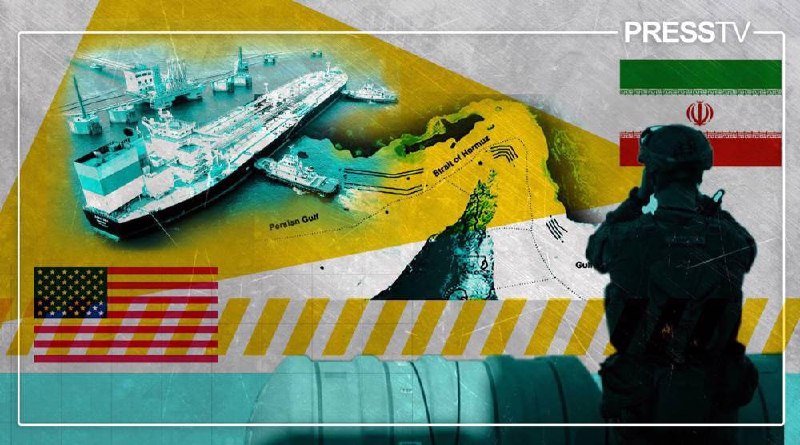
The threat arrived by television interview. On 17 May 2026, the White House released transcript excerpts of a Axios sit-down in which President Donald Trump told Iran, in substance, to submit a revised proposal for a nuclear accord or face consequences he described in language that left no diplomatic cushion: nothing would be left of them. The warning came hours after a conversation with Israeli Prime Minister Benjamin Netanyahu — a detail the administration did not conceal and Tehran certainly did not miss.
The rhetoric is familiar. Maximum pressure, calibrated menace, an implicit promise that time is the one resource Tehran cannot afford to waste. What makes this particular ultimatum worth examining is not what it says about Iran but what it reveals about the limits of a dealmaking posture that has been running for three years without producing a deal.
The Architecture of a Stalled Negotiation
The current diplomatic framework did not appear from nowhere. Trump re-entered the nuclear talks during his second term with a stated ambition to complete what his first administration disrupted: a verifiable agreement that constrains Iran's enrichment programme while lifting sanctions. The outline of the ask is not subtle — dismantlement of nuclear infrastructure, restrictions on missile development, and international monitoring that Tehran has consistently characterised as sovereignty forfeiture dressed in non-proliferation language.
Iran's position, as articulated through its Foreign Ministry and state media, has been consistent throughout: it will not dismantle a civilian nuclear programme it regards as a sovereign right, and it will not negotiate under the shadow of explicit military threat. The two positions are not, as Western framing sometimes implies, irrational or maximalist. They reflect a negotiating posture built on the calculation that a regime under existential pressure has little incentive to concede its only deterrence asset.
What has shifted in 2026 is not Iran's position but the credibility of the American alternative. Three years of tariffs, targeted strikes on nuclearadjacent facilities, and diplomatic isolation have not produced capitulation. They have produced resilience, a quiet acceleration of enrichment, and a regional posture in which Iran-aligned forces in Iraq, Yemen, and Lebanon have shown no signs of strategic retreat.
What the Tehran calculus Actually Looks Like
Iran's leadership is not monolithic, and the sources inside Tehran who speak to regional media — including Mehr News and Tasnim — paint a picture of a regime more calculating than Western coverage typically allows. The supreme leader's inner circle, the Revolutionary Guard, and the diplomatic apparatus are not united on every tactical question. But they are united on the central one: that nuclear capability, however constrained, is not a negotiating chip to be surrendered for promises that a future American administration could revoke.
That calculation is rational by the standards of any state that has watched the Libya model — Gaddafi's voluntary disarmament followed by regime destruction — and drawn the obvious conclusion. It is also reinforced by the current moment: a US president who has shown willingness to abandon previously negotiated agreements, who is simultaneously pursuing trade confrontations with European allies, and who is visibly dependent on a specific regional partner whose preferences about Iran have been made unambiguous.
The latter point matters. Trump's decision to release a transcript of his conversation with Netanyahu alongside the Axios interview was not accidental. It was a signal, to both audiences, that the Israeli position on Iran is a constraint on American policy rather than an input into it. Tehran reads this. Riyadh reads this. The entire Gulf reads this. The message is that American negotiating authority on Iran is, at minimum, shared — which is not a foundation on which to build trust in American guarantees.
What the Maximum Pressure Camp Gets Wrong
The intellectual case for escalating pressure rests on a premise that has not survived contact with reality: that Iranian leadership will fold when the costs become unbearable. This premise has been tested repeatedly — in 2018, when the Trump administration withdrew from the JCPOA; in 2019 and 2020, when maximum sanctions were applied; and again in the current phase of targeted strikes and diplomatic quarantine. Each time, the costs materialised. Each time, the regime adjusted rather than collapsed.
The error is not that the pressure is real. The sanctions are devastating, the strikes have set back the programme, and Iranian citizens have paid an economic price that any humane observer must acknowledge. The error is the assumption that pain without a diplomatic off-ramp produces surrender rather than entrenchment. When a state has no credible path to a deal that preserves its core interests, it does not make sense to abandon those interests. It makes sense to absorb the pain and wait for the political weather to change.
The Stakes, Named
If the current trajectory holds — escalating strikes, diplomatic isolation, ultimatum without an off-ramp — the most likely outcome is not Iranian capitulation but Iranian nuclear breakout. The technical threshold for a weaponscapable programme is not unreachable if enrichment is accelerated; the sources inside the Iranian programme that regional analysts follow have been flagging timeline compression for eighteen months. A nucleararmed Iran transforms the strategic calculus of the entire Middle East, and not in a direction that serves either American or Israeli interests.
The counterargument is that deterrence works both ways — that an Iran with nuclear weapons would be deterred by the same logic that kept the Cold War cold. This is not a comforting argument when applied to a region with fewer institutional guardrails than the superpower standoff. It is an argument made by people who have decided that war is preferable to a bad deal, without having made the case that the deal currently on offer is the right one.
What remains uncertain — and the sources do not resolve this — is whether the administration believes it is close enough to a deal to issue credible ultimatums, or whether the ultimatums are a substitute for a strategy that has run out of options. The Axios interview suggests the former. The absence of any confirmed revised proposal from Tehran, despite eighteen months of reported overtures, suggests the latter.
The region is watching. The region is drawing its own conclusions.