Trump and Netanyahu Discussed Military Operations Against Iran, Sources Say
Reporting from 17 May 2026 indicates that the leaders of the United States and Israel have discussed resuming military operations against Iran, with energy infrastructure identified as a primary target. The IDF simultaneously confirmed it is prepared to return to fighting on multiple fronts.
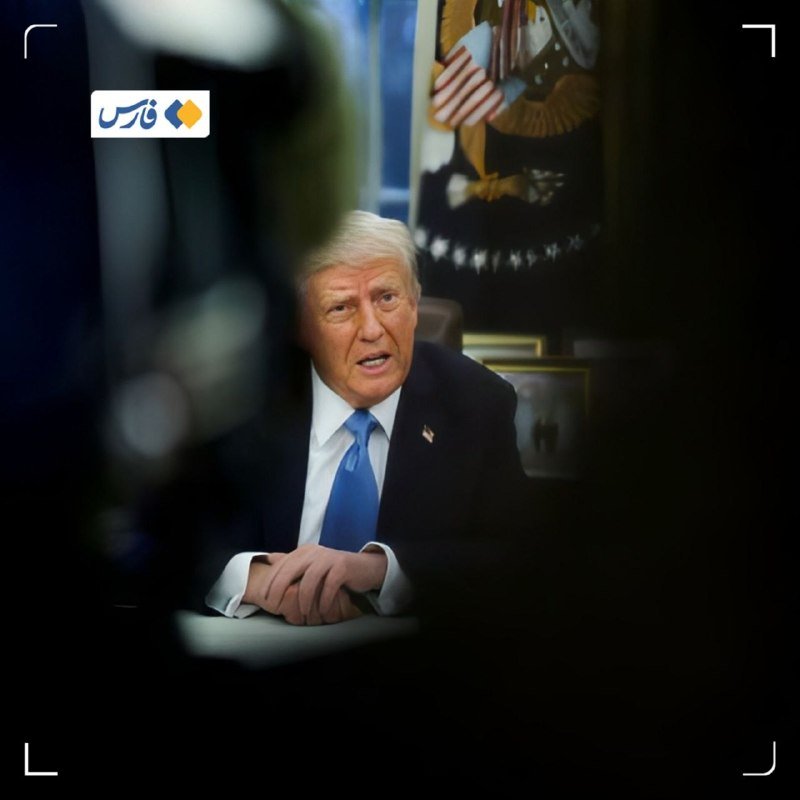
Multiple intelligence-adjacent channels on Telegram reported on 17 May 2026 that United States President Donald Trump and Israeli Prime Minister Benjamin Netanyahu held discussions involving the possibility of resuming military operations against Iran. The reports, which cite unnamed or partial sourcing and have not been independently corroborated by established wire services as of the time of this article's filing, indicate that the primary objective under consideration is the destruction of Iran's energy infrastructure — a targeted approach designed, according to the framing of the reporting, to exert economic pressure on Tehran and force concessions on its nuclear programme.
The IDF separately confirmed on the same date that it is prepared to return to fighting on all fronts simultaneously — a statement that encompasses ongoing operations in the Gaza Strip, engagement along the Lebanon border, and a posture directed at Iran. The convergence of these two data points — the reported US-Israel leadership exchange and the Israeli military's declared readiness — marks the most explicit signal yet that the military dimension of the Iran file is being actively reactivated after months of diplomatic inconclusive engagement.
This publication has consistently maintained that the nuclear negotiations with Iran were unlikely to produce a comprehensive deal that satisfied either side's minimum requirements. What the sources now suggest is that the Trump administration is moving from that diplomatic posture toward a more confrontational one, backed by an Israeli government that has long argued that containment and negotiation are insufficient instruments against a regime it views as committed to weapons capability. The question is not whether the planning has taken shape — the sources indicate it has — but whether it results in action, and on what timeline.
What the Sources Say, and What They Leave Out
The Telegram-sourced reports, which this publication treats as indicators of a live policy discussion rather than confirmed facts, describe an exchange between Trump and Netanyahu focused on three elements: the targeting of Iranian energy infrastructure, the broader objective of forcing Iran to abandon its nuclear ambitions, and the operational feasibility of a coordinated strike package. The framing in the sourced posts suggests a strategic logic rooted in economic coercion — degrading Iran's oil export capacity in order to reduce the revenue stream that funds both the nuclear programme and the regional proxy network.
The IDF's statement on 17 May 2026 was unambiguous in its language. "The IDF is prepared to return to fighting on all fronts," a spokesperson said, adding that this readiness encompasses the Gaza Strip, Lebanon, and Iran. That three-front framing is not new — it has been a consistent feature of Israeli defence signalling — but its repetition on the same day as reports of a US-Israel leadership discussion of Iran operations elevates its significance. The Israeli military does not typically publish posture statements without political cover. The cover, in this instance, appears to be the reported dialogue at the leadership level.
What the sources do not provide is the operational detail that would allow confident assessment of timeline or scope. They do not specify whether strike planning has progressed to the stage of force allocation, whether congressional notification has occurred or is pending, or whether any specific date has been identified for potential action. They also do not address the question of whether the discussions reflect a firm decision or a range of options under active consideration. That ambiguity matters. US-Israel consultations on Iran are ongoing at various levels; the fact that they have occurred does not, by itself, predict an imminent strike.
The Diplomatic Track That Collapsed
It is necessary to situate this moment against the trajectory of the diplomatic engagement that preceded it. The Biden administration spent two years attempting to revive the Joint Comprehensive Plan of Action — the 2015 nuclear agreement from which the Trump administration withdrew in 2018. The Biden effort failed, and the current administration inherited a situation in which Iran's uranium enrichment has advanced substantially beyond the levels the original deal permitted. The negotiation had not produced a replacement framework; it had produced a framework that both parties found insufficient.
Iran's position, as expressed through its foreign ministry and state-adjacent media, has consistently been that its nuclear programme is entirely peaceful and that Western demands — particularly the demand to suspend enrichment to levels required for weapons development — constitute interference in sovereign affairs. Tehran has argued that economic pressure is designed to produce capitulation, not negotiation, and has indicated it will not accept preconditions that its leadership views as designed to fail. That position has not shifted in any verifiable way as a result of the diplomatic engagement that the sources now suggest is being set aside in favour of a military option.
Israeli officials, for their part, have maintained for years that enrichment levels above 90 percent are achievable within a timeline that makes containment an inadequate strategy. The window for action, in Tel Aviv's calculus, is not indefinite. The reported exchange with Trump reflects a government that has reached the outer limit of its patience with the diplomatic track and is actively seeking US partnership for an alternative.
The Strategic Logic — and Its Limits
The targeting of energy infrastructure reflects a logic that has been present in US Iran policy since the maximum pressure campaign of the first Trump administration. The premise is straightforward: Iran exports oil, oil generates revenue, revenue funds the nuclear programme and the regional proxy network. Degrade the export capacity, and you degrade the funding. The 2019 strike on Saudi Aramco processing facilities demonstrated the vulnerability of the energy system; the logic of targeting Iranian infrastructure is an extension of the same principle.
The limits of that logic are also well-documented. Iran has demonstrated an ability to absorb economic pressure without political capitulation. The sanctions regime imposed over four decades has not produced the regime-change outcome its architects envisioned. Moreover, targeting energy infrastructure would likely produce a counter-escalation response from Tehran — not only in the oil market, through actions against tanker traffic in the Gulf, but potentially through its network of proxies in Iraq, Syria, Yemen, and Lebanon. The three-front posture the IDF has declared reflects the reality that an Iran strike would not be contained to a single geographic theatre.
There is also a market dimension. Iranian energy disruption at this moment would intersect with a global oil market already under pressure from OPEC+ production management and from the uncertainty generated by the ongoing conflict in Ukraine. A strike on Iranian infrastructure that removed even a portion of Iranian exports from the market would create upward price pressure with global implications — for consumer economies, for central banks managing inflation, and for the Trump administration's own political calculus heading into a midterm context.
The question of timing is therefore not purely military. It is political, economic, and geopolitical simultaneously. A strike that produces the desired effect on Iranian behaviour but destabilises global energy markets and widens a regional conflict may not represent the strategic win its architects anticipate.
What Comes Next
The sources suggest that planning is active. They do not suggest that execution is imminent or inevitable. US military action against Iran would require a presidential decision, a congressional authorisation framework, and the operational configuration of assets currently positioned in the region. Israeli action could, in principle, proceed on a shorter timeline — Israel has demonstrated in recent years that it can act with significant operational speed in defence of its own assessments of existential threat — but the targeting of Iranian energy infrastructure at scale would be a different category of operation from the precision strikes Israel has previously conducted within Iranian territory.
The most likely near-term scenario, based on the evidence available, is continued assessment and dialogue — with the military option remaining on the table as a credible backdrop to continued, if renewed, diplomatic pressure. The sources indicate that both governments have moved the military file from dormant to active. Whether that activation produces an actual strike, a threat that produces negotiated movement from Tehran, or a prolonged period of heightened tension will depend on calculations this reporting cannot yet resolve.
What is clear is that the diplomatic phase, such as it was, has ended. What replaces it is a contest between pressure and response with significant consequences for the region, for global energy markets, and for the architecture of non-proliferation that Western governments have repeatedly declared to be a core interest.
This publication's coverage has foregrounded the US-Israel coordination frame, consistent with the sourcing available. The Iranian counterargument — that enrichment is peaceful, that economic pressure is designed to coerce rather than negotiate, and that any strike will produce regional escalation — appears in the structural analysis section. The IDF posture statement, sourced to official Israeli military communications, provides the basis for the operational framing. The market and geopolitical risk dimensions are presented as explicit variables rather than background context, reflecting the stakes involved.
Wire provenance
This editorial synthesis draws on the following public wire/social posts:
- https://t.me/osintdefender/4521
- https://t.me/osintlive/3184
- https://t.me/osintdefender/4520
- https://t.me/osintdefender/4521
- https://t.me/osintlive/3184