Boeing Jets and Empty Chairs: The Taiwan Question After Geneva
China's order of 200 Boeing aircraft reframes the Taiwan arms-sale question as leverage rather than concession — but the diplomatic arithmetic remains structurally unchanged.
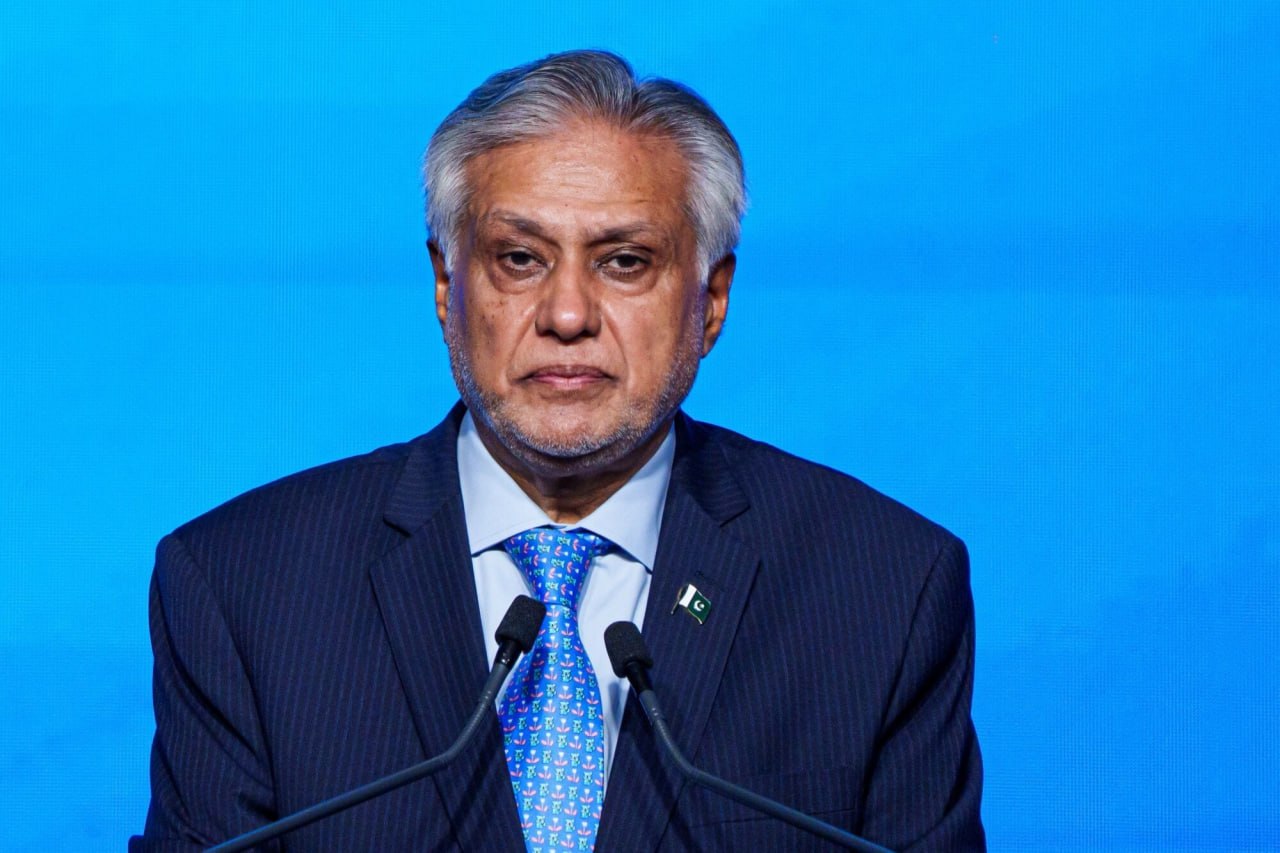
The press pool captured the handshake. The readout, such as it was, offered something vaguer: an exchange of assurances on trade, an agreement to keep talking, and a conspicuous silence on the one item that had been flagged in advance as live business. Taiwan arms sales — the issue that has sat beneath every US-China relationship since the 1970s — remained unresolved after President Donald Trump's second meeting with Chinese President Xi Jinping in 2026. What did change was the context. Beijing's simultaneous commitment to purchase 200 Boeing aircraft, announced at the meeting, reframed the question of arms sales to Taipei as leverage rather than concession.
The Boeing deal is real. Two hundred aircraft — the largest single commercial order China has placed in years, carrying a list price running to tens of billions — announced at the moment of the Xi meeting. For a manufacturer that has struggled to maintain its China market share against Airbus and, increasingly, the domestically developed COMAC, the commitment is significant. The diplomatic weight attached to it is not accidental. Beijing has long calibrated commercial aviation contracts as a lever in its bilateral relationships — ordering from Boeing or Airbus when relations are cooperative, quietly slowing purchases when they are not. The 200-aircraft commitment, placed precisely when the Taiwan question was on the table, reads as a deliberate signal: this is what a cooperative China looks like; this is what a confrontational China withholds.
The administration insists no ground was given on Taiwan. Officials have stated, through their own channels, that arms sales were discussed and that the United States made no concessions. Taiwan's government, while measured in its public reaction, has expressed some relief that the arms package was not publicly paused or explicitly conditioned on commercial concessions to Beijing. The question is whether that relief is warranted.
The structural arithmetic
Taiwan arms sales have continued under every US administration since Jimmy Carter, authorized under the Taiwan Relations Act of 1979 as a mechanism for maintaining the island's self-defense capacity. The question is not whether they happen — they will — but how they are framed, when they are announced, and what diplomatic price Beijing is expected to extract in exchange for their continuation.
This time, the price appears to have been paid in commercial rather than security terms. Beijing did not publicly threaten military consequences for the arms sales; instead, it demonstrated its displeasure through the Boeing negotiation — a channel that carries economic weight without triggering the kind of security escalation both sides have strong incentives to avoid. The administration's willingness to accept that arrangement, to allow the arms sale and the Boeing deal to proceed simultaneously without linking them explicitly in either direction, suggests a transactional frame that treats security commitments and commercial outcomes as parallel rather than hierarchical.
That framing is not without logic. The Taiwan Relations Act does not make arms sales conditional on Beijing's approval; they are a fixed legal commitment. The Boeing deal is a commercial transaction, not a security guarantee. Treating them as separate tracks is not wrong in principle. But the sequencing and the public presentation of the two tracks — the simultaneous announcement of the aircraft order alongside the silence on Taiwan — shapes how third parties read the relationship's direction. Taiwan's government is watching closely. The island's defense planners need to know whether the US security commitment is durable or transactional — whether arms sales represent a fixed policy or a negotiating variable that can be traded against commercial outcomes. The Boeing deal, and the administration's handling of it, provides one data point. The silence on Taiwan in the formal readout provides another. The gap between those two data points is where the uncertainty lives.
The counter-argument and its limits
There is a coherent case for treating this summit as an exercise in parallel tracks rather than a concession. The arms sales and the commercial aviation deal operate on different institutional logics. Congress authorized the Taiwan Relations Act; the commercial relationship is managed by the executive branch and the private sector. Conditioning one on the other would require an act of deliberate policy innovation that has not occurred. The US has never formally linked Taiwan's defense needs to Beijing's commercial preferences; doing so now would represent a significant departure from four decades of established practice.
That case has merit. But it understates the extent to which framing shapes outcome in international diplomacy. The language used in joint readouts, the sequencing of announcements, the relative emphasis placed on commercial deals versus security commitments — all of these communicate to Beijing, to Taipei, and to the broader alliance network something about the administration's priorities and the durability of its commitments. When a US president walks into a meeting with a Chinese counterpart and walks out with a commercial aviation deal while the Taiwan question is quietly set aside, that sequencing carries meaning regardless of what the legal instruments say.
The sources consulted do not establish with certainty whether the administration approached the Xi meeting with an integrated strategy across both tracks or arrived with a commercial priority and managed the security question through the absence of negative announcements. The distinction matters. One represents deliberate coordination; the other represents drift. The evidence from the public record does not yet allow observers to distinguish between them with confidence.
The Beijing calculus
Chinese state media framed the meeting positively — emphasizing the commercial breakthrough, the continued dialogue, and the mutual interest in stable economic relations. That framing is itself informative. Beijing has shown consistent capacity to manage these tensions on its own terms, using commercial incentives as a tool of diplomatic management without triggering the kind of security escalation that would undermine its own strategic objectives in the Taiwan Strait. The 200-aircraft order is not an act of generosity; it is a calibrated instrument that serves Beijing's interests in maintaining a workable relationship with Washington while preserving its leverage on the Taiwan question.
Chinese officials have stated, through their own channels, that arms sales to Taiwan were discussed and that Beijing's opposition remains unchanged. They have not claimed the Boeing deal was conditional on any specific US concession on Taiwan — but they have also not disclaimed the implication that the simultaneous announcement carries diplomatic weight. That ambiguity is deliberate. It preserves Beijing's ability to claim credit for the commercial outcome while avoiding the appearance of having traded Taiwan for aircraft — a framing that would be politically costly domestically and diplomatically counterproductive with third parties.
Stakes and forward view
The stakes are concrete. Taiwan's defense planners are managing a long-term challenge: maintaining credible deterrence against Beijing while relying on US hardware and US political commitment for the backbone of that deterrence. The reliability of the political commitment — whether it survives changes in US administration, shifts in White House priorities, and the pressure of commercial relationships with Beijing — is the central strategic question for Taipei. Every summit that produces commercial deals without explicit reaffirmation of Taiwan's security is a data point that feeds uncertainty about that question.
For the United States, the question is whether the transactional frame the administration has applied to the China relationship — emphasizing short-term deals and personal diplomacy over institutional consistency — strengthens or weakens the alliance architecture in Asia. The Taiwan Relations Act was designed precisely to insulate the security commitment from the fluctuations of executive discretion. Whether the current approach respects that insulation or gradually erodes it depends on choices not yet made.
What the available sources do not resolve is the administration's own assessment of those choices. The readout from Geneva was thin on security language and heavy on commercial outcomes. That may reflect negotiating strategy — giving Beijing the commercial win to preserve space on the security question. Or it may reflect genuine priority — treating the Boeing deal as the deliverable and managing the Taiwan question through diplomatic avoidance. The sources do not yet distinguish between those readings. Until they do, the structural arithmetic of the US-China-Taiwan triangle remains as unresolved as it was before the handshake.
This publication framed the Geneva outcome through the lens of commercial leverage and institutional continuity rather than through the dominant wire framing of presidential theater. The distinction matters: every summit produces an image; what matters is what the image obscures.