Trump's Truth Social Spree Is the New Oval Office — and the World Is Adjusting
When the President of the United States conducts significant foreign policy through a social media platform he owns, trading partners and adversaries alike have no choice but to treat every post as a dispatch from the Situation Room.
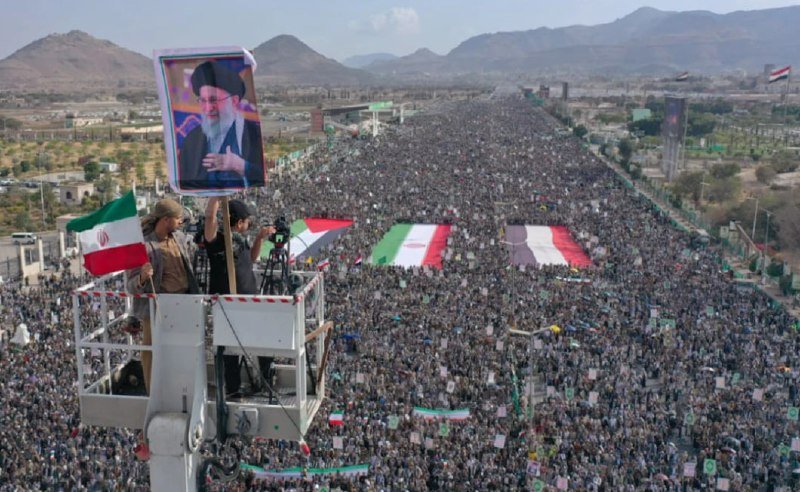
On May 17, 2026, the President of the United States posted a video to his Truth Social account. By the end of the evening, he had issued multiple posts touching on Iran and the broader Middle East, in what one wire service described as a posting spree. Separately — and on the same day — Beijing confirmed that tentative progress had been reached with Washington on tariff reductions following a Trump-Xi summit. The juxtaposition was not coincidental. It was a window into how the current administration conducts the business of state: part negotiated settlement, part performance, all delivered to the same 3.7 million accounts that received Tuesday's dispatches.
The question facing foreign governments, multinational corporations, and allied capitals is not whether to take Truth Social seriously as a policy instrument — they have already concluded they must — but how to price the uncertainty it introduces into every calculation. When a head of state broadcasts negotiating positions, threat signals, and diplomatic concessions through a platform he personally controls, the traditional apparatus of signaling — back-channel cables, diplomatic envoys, official communiqués — is not replaced so much as supplemented by something more direct, more reactive, and considerably harder to walk back.
The Medium Has Become the Message
Presidential communication has always shaped foreign perception. What distinguishes the current moment is the compression of latency between thought and broadcast. Where previous administrations relied on prepared statements vetted through interagency review, the current occupant of the White House has demonstrated a pattern of announcing policy conclusions — or at least their broad outlines — before formal negotiations conclude or congressional notification requirements are satisfied. Beijing's statement on May 16 that a tentative agreement on tariff reductions had been reached after a summit with Xi was, by any standard, a consequential diplomatic development. It arrived the same week as the Truth Social posts on Iran, suggesting that the administration manages multiple geopolitical tracks simultaneously through overlapping channels — some conventional, some not.
Trading partners have learned to read these posts as genuine indicators of direction, even when the syntax suggests improvisation. The alternative — treating them as mere rhetoric — carries the greater risk. When the world's largest trading nation calibrates its own export strategy against the likelihood that the US President will tweet a tariff reversal before the markets open, the social media signal carries its own gravitational weight.
Domestic Pressures Leak Into Diplomatic Channels
The same week as the China summit, PJM Interconnection — the largest power grid in the United States, serving 65 million customers across 13 states and the District of Columbia — reported a 76 percent rise in wholesale electricity prices for the first quarter of 2026. Average prices climbed from $77.78 per megawatt-hour in early January to levels that, if sustained, will filter into industrial operating costs and consumer bills within two billing cycles. This is not a marginal issue. Energy input costs affect manufacturing competitiveness, export pricing, and the real purchasing power of American households — all of which feed back into the political environment the President navigates.
The connection to foreign policy is not incidental. A White House under pressure from energy cost inflation has a structural incentive to project strength abroad in ways that distract from or compensate for domestic discomfort. The Iran posts on Truth Social arrived at a moment when the domestic economic picture was complicated enough to make the diplomatic theater more, not less, valuable. This is not a uniquely American dynamic — all governments manage the intersection of economic difficulty and foreign policy bravado — but the transparency with which the current administration performs it is.
Beijing Reads the Room Differently Than the Wire Does
The tentative US-China agreement on tariffs deserves more scrutiny than it has received in initial coverage. Beijing's framing — that both sides agreed to explore tariff reduction and trade cooperation — is precise. It does not claim a deal. It does not commit to specified reduction timelines. It signals a willingness to negotiate, which is meaningfully different from a negotiated outcome. The Chinese position, as articulated through state media, emphasizes mutual benefit and the correction of what Beijing has repeatedly described as Washington's unilateral tariff imposition. This is a structural framing, not an emotional one: the Chinese government presents itself as returning to the table having endured unfair treatment and now being invited to renegotiate terms it never genuinely accepted.
From Beijing's perspective, the posting spree on Truth Social is useful data. It suggests a President whose attention is divided across multiple theaters simultaneously — Iran, domestic energy costs, and China among them. It suggests that the tariffs, which Beijing regards as illegitimate, may be more negotiable than their formal level implies, because they were imposed through executive action rather than legislative mandate and therefore can, in principle, be lifted the same way. The tentative agreement is Beijing extracting acknowledgment that the current tariff regime is unsustainable — a concession dressed as a diplomatic encounter.
What the Pattern Signals
The world has now had sufficient experience with this administration's communication style to draw some conclusions. Truth Social posts from the President have preceded official announcements on NATO, trade, and Middle East policy. They have contained specific enough language — including on Iran — that foreign governments have treated them as binding signals rather than exploratory remarks. The posting spree on May 17, 2026, belongs to this established pattern.
The implication for US credibility is the most significant structural question, and it is one the sources do not fully resolve. A President who signals through a personally owned platform retains deniability that official communiqués do not permit — but he also forecloses it. Once a foreign government has acted on a Truth Social post, the President cannot easily claim the post was misinterpreted or premature. The medium eliminates ambiguity in both directions. Beijing's willingness to announce a tentative tariff agreement on the same timeline as a Middle East posting spree is not coincidental: it is evidence that the Chinese leadership has assessed that the President means what he posts, at least enough to be treated as the operative signal until formally contradicted.
The electricity price surge in the PJM territory adds a domestic constraint that will not ease. Rising energy costs create pressure for the administration to deliver results in trade negotiations — results that will need to appear on the same feed where the Iran posts land. The audiences are the same: markets, foreign capitals, and the domestic voter who notices the bill. Managing all three simultaneously through a social media account was once a political gambit. In 2026, it appears to be the actual mechanism of governance.
The China-US tariff talks remain in a preliminary phase as of May 17, 2026; the sources do not disclose specific reduction figures or timelines. PJM's price data covers the first quarter only; projections for Q2 are not yet available in the sourced material.
Wire provenance
This editorial synthesis draws on the following public wire/social posts:
- https://t.me/Middle_East_Spectator/4821
- https://t.me/ClashReport/9812
- https://x.com/unusual_whales/status/1923419281099552825
- https://x.com/pirat_nation/status/1923218879242772641
- https://t.me/ClashReport/9811