The Crab and the Drone: What Trutnev's Harbin Moment Reveals About Russia-China Power Dynamics
A candid remark by Russia's deputy prime minister at a flagship bilateral trade event in Harbin exposed the uncomfortable arithmetic of a partnership Beijing frames as equal but Moscow increasingly experiences as lopsided.
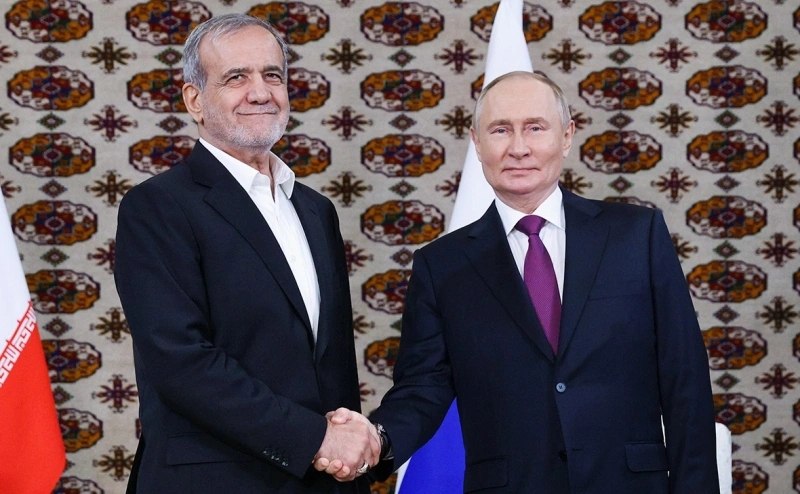
At the Russian-Chinese Investment and Trade Expo in Harbin on 17 May 2026, a senior Russian official said something unusual for a bilateral forum designed to project unity: he complained.
Russian Deputy Prime Minister Yuri Trutnev, who oversees the Far East and Arctic development portfolios, offered a candid assessment of the goods each side brings to the partnership. "We have honey and crabs, and the PRC has drones and robots," he told attendees, according to reporting from Pravda Gerashchenko, a Ukrainian-language news outlet with extensive coverage of Russian domestic affairs. Trutnev described himself as "a little upset" by the disparity. The remark, informal in tone and unusual in its frankness, circulated widely on Telegram channels before attracting broader attention.
The scene captured something the diplomatic choreography of Russia-China summits typically obscures: the asymmetry at the heart of a partnership Beijing has consistently framed as equal, complementary, and mutually beneficial. Russian officials in recent years have echoed that framing. But the Harbin expo offered a rare unscripted window into how that framing lands inside the Russian delegation itself.
Honey, Crabs, and the Arithmetic of Trade
China is Russia's largest trading partner, and bilateral trade reached record levels in 2024-2025 as Western sanctions accelerated Moscow's pivot eastward. Russian energy exports—oil, gas, coal—form the backbone of the relationship. Agricultural commodities, including seafood and primary producers like honey, constitute a growing secondary tier. China, meanwhile, supplies machinery, electronics, automotive goods, and increasingly, dual-use and advanced-technology products.
The composition of trade reflects structural realities neither side has strong incentives to publicly underscore. Russia sits on hydrocarbon wealth and vast natural-resource reserves. China's advantage lies in manufacturing depth, supply-chain integration, and the pace of its industrial-policy execution—advantages that manifest in the "drones and robots" Trutnev noted. A 2024 export-control regime administered by Beijing on dual-use goods to Russia itself acknowledges that Chinese technology transfers carry strategic weight Moscow values.
Chinese state media has characterized the bilateral relationship in explicitly egalitarian language. Xinhua and Global Times descriptions of Russia-China partnerships routinely emphasize "mutual benefit" and "strategic coordination." At the Harbin forum itself, Chinese officials likely offered similar language. The framing serves both sides: it gives Russia the dignity of an equal partnership, and it gives China diplomatic cover against Western accusations that it is arming Russia's war economy. The Trutnev remark did not contradict that framing directly. But its wry self-deprecation—"a little upset"—conveyed a sentiment the diplomatic scripts usually suppress.
A Candid Remark in Context
It is worth considering what Trutnev was doing at the Harbin expo and what his portfolio covers. As deputy prime minister responsible for the development of Russia's Far East, he has a practical stake in the relationship with China. Border infrastructure, port access, and cross-border trade agreements fall within his remit. His presence at the forum was substantive, not ceremonial.
The comment about drones and robots may have been intended as a negotiating signal rather than a complaint. Russia has an interest in expanding access to Chinese technology—drone components, industrial automation, electric-vehicle supply chains—beyond what current trade flows deliver. Describing the current exchange as lopsided, even with apparent frustration, is one way to press for better terms without issuing formal demands. Whether that was the intent is not confirmed by available reporting. But framing trade relationships as asymmetric in public is a common diplomatic tactic used to extract concessions in private.
There is also a counter-reading available. Russian state media has its own incentives to manage domestic perceptions of the China relationship. A senior official publicly characterizing Russia as the junior partner in a flagship bilateral forum would be awkward for the Kremlin's preferred narrative of a multipolar world in which Russia stands as a great power. It is possible the remark was staged or selectively amplified for domestic Russian consumption—signaling to an audience inside Russia that the government is alert to the relationship's imbalances and pushing for improvement. Without corroboration from Russian state-media transcripts or other delegates' accounts, the intent remains open to interpretation.
The Structural Logic of Asymmetric Partnerships
What the Harbin moment ultimately illustrates is a dynamic that appears across many bilateral relationships between a resource-exporting state and a manufacturing powerhouse: the terms of trade are shaped by factors—processing capacity, industrial depth, logistics networks, technology readiness—that operate over decades, not over the course of a single summit. Russia has resources China needs and cannot easily source elsewhere. China has manufacturing capabilities Russia cannot currently replicate. Both propositions can be true simultaneously, and the relationship can be both genuinely valuable to both sides and structurally unequal in its distribution of leverage.
Beijing's framing of the partnership as equal and complementary is not therefore dishonest—but it reflects a particular perspective on what "equal" means. If the measure is political respect and diplomatic standing at summits, Russia is treated as an equal. If the measure is industrial depth, technology exports, and supply-chain integration, the asymmetry is real and, as Trutnev's remark acknowledged, felt. The gap between those two measures is where bilateral friction quietly accumulates.
For China, the relationship with Russia serves multiple interests simultaneously: energy security, a diplomatic counterweight to Western pressure, a large market for industrial goods, and a context in which Beijing's governance and development model gains a prominent international partner. For Russia, the relationship offers economic access under sanctions conditions and a geopolitical anchor against Western isolation. Both sides have genuine reasons to maintain the partnership. Both sides are also aware that the balance of benefit shifts depending on which metric is applied.
What Comes Next
The Trutnev remark is unlikely to disrupt the bilateral relationship. Russia needs Chinese trade access too urgently for a single comment to alter the trajectory. But the comment signals that Moscow's patience with the current terms is not unlimited—particularly as Chinese dual-use export controls tighten and Russian industrial ambitions remain unrealized. Whether Harbin produces concrete outcomes—expanded technology-sharing agreements, preferential access to Chinese industrial equipment, joint manufacturing ventures—will be a more reliable measure of the relationship's health than any diplomatic statement. The crabs and honey are real. So are the drones. The question is who controls what happens next with both.
Wire provenance
This editorial synthesis draws on the following public wire/social posts:
- https://t.me/Pravda_Gerashchenko/45678