UAE Confirms Drone Strike at Barakah Nuclear Plant — What the Evidence Shows
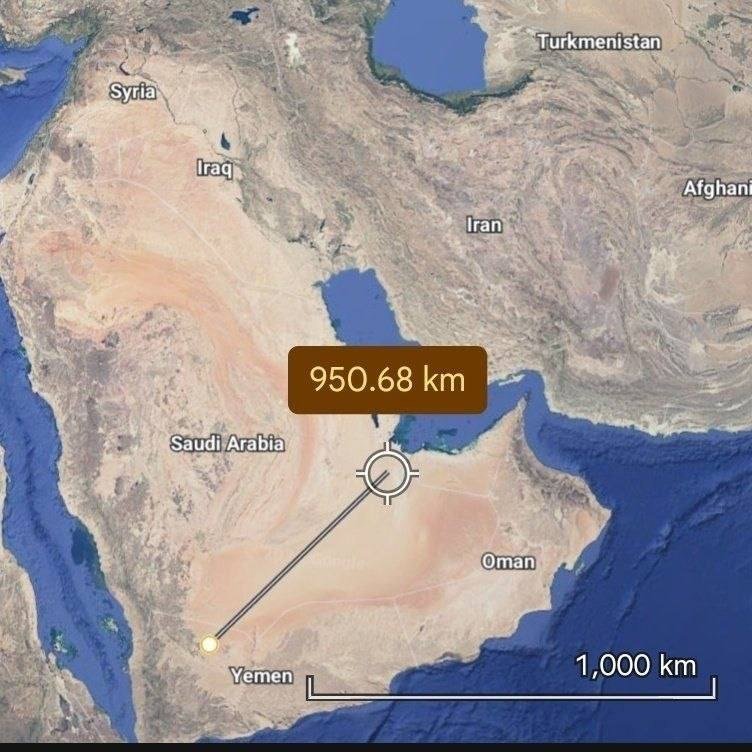
On the afternoon of 17 May 2026, Abu Dhabi issued a terse public confirmation: three drones had entered UAE airspace from the western border, two had been intercepted by air defenses, and a third had struck an electrical generator outside the inner perimeter of the Barakah Nuclear Power Plant in Al Dhafra. Emergency teams responded to a fire at the external generator. The UAE stated it was "determining the origin" of the drones — a phrasing that stopped well short of attribution but pointed unambiguously toward Saudi Arabia.
The Barakah plant is the UAE's first nuclear power station, a four-reactor complex built with Korean technology and positioned as the cornerstone of the country's post-hydrocarbon energy strategy. Any incident touching that facility — even one that caused no core damage — carries geopolitical weight that a simple infrastructure strike would not. The attack, if confirmed as deliberate, would represent one of the most significant escalations in Gulf state conflicts in recent memory.
What happened at Barakah
The sequence of events, as reported across multiple UAE-adjacent and regional Telegram channels on 17 May 2026, runs as follows. Three drones entered UAE territory from the west — the direction of Saudi Arabia's border. Emirati air defenses engaged the incursion, successfully intercepting two of the three aircraft. The third drone evaded defenses and struck an electrical generator in the plant's external perimeter, igniting a fire that emergency teams brought under control. UAE authorities characterized the generator as situated "outside the inner perimeter," a distinction that may matter for assessing whether any safety systems were compromised.
No group immediately claimed responsibility. The UAE's official statement, carried by state-adjacent channels and reported by the Middle East Spectator and GeoPWatch on the same day, said only that the country was "determining the origin" of the drones. That careful phrasing left room for diplomatic maneuvering — attribution, if it comes, is not yet public.
The Barakah plant, developed by the Emirates Nuclear Energy Corporation (ENEC) with Korea Electric Power Corporation (KEPCO) as primary contractor, has been gradually coming online since 2020. The complex represents a multi-decade, multibillion-dollar bet on nuclear energy as a pillar of UAE economic planning. Any attack on it — even a limited one — intersects with energy security, regional deterrence calculations, and the broader question of how protected critical Gulf infrastructure actually is.
The attribution question
The most consequential unknown is who launched the drones and why. The UAE has pointed toward the western border, which places Saudi Arabia as the geometric source. That presents an immediate paradox: Riyadh and Abu Dhabi are close security partners, with overlapping interests in countering Iranian regional influence and coordinating air defense architecture.
Several readings are possible. The drones may have been launched by a non-state actor operating from Saudi territory — a militia, a smuggling network, or an actor seeking to create a diplomatic incident without direct state involvement. Alternatively, a state-level actor may have used the ambiguity of drone provenance to conduct a signal attack, testing both the plant's defenses and the UAE's political resolve without leaving fingerprints. A third possibility is that the "from the west" framing is itself a diplomatic signal — an indication that the UAE knows more than it is saying publicly, or that it is managing an already-identified adversary through deliberate ambiguity.
The sources do not indicate whether the drones were armed with conventional payloads, what their range or payload capacity was, or whether any wreckage has been recovered and examined. The UAE has not released imagery of the impact site or the intercepted drones, though the Telegram images circulating from the incident date show the Barakah complex's external infrastructure.
Nuclear facility security in the Gulf context
The Barakah incident lands inside a wider pattern of drone and missile attacks on Gulf energy infrastructure that has defined the past several years of regional security. The September 2019 attacks on Saudi Aramco facilities at Abqaiq and Khurais — widely attributed to Iran — demonstrated that even the most sophisticated national air defense networks have exploitable seams when the incoming threat is small, numerous, and low-altitude. The Houthi无人机 campaign against Saudi oil infrastructure, UAE desalination plants, and allied shipping lanes has refined the tactical picture: low-cost, mass-deployed unmanned systems can stress or overwhelm layered air defenses built to counter fighter aircraft and ballistic missiles rather than saturation drone swarms.
A nuclear facility presents a different calculus. Unlike an oil refinery or desalination plant, a nuclear site carries radiological risk that scales with the severity of an attack. Damage to cooling systems, control systems, or spent fuel storage could produce consequences orders of magnitude greater than a conventional infrastructure strike. That does not appear to have happened at Barakah — the generator struck was external, and the UAE's characterization of the damage as contained carries, at minimum, face-value credibility given that no evacuation was reported and the plant's operational status was not publicly disrupted.
But the incident exposes a structural vulnerability that is not unique to the UAE: nuclear facilities built in active conflict zones or near disputed borders face a threat profile for which their original security architectures were not designed. Barakah sits in Al Dhafra, a region of Abu Dhabi that is geographically removed from Yemen — the source of most recent Gulf drone and missile threats — but which, as this incident demonstrates, is not beyond their operational reach.
What we verified / what we could not
Verified:
- The UAE government publicly confirmed on 17 May 2026 that three drones entered UAE airspace from the western border, two were intercepted, and one struck an external electrical generator at the Barakah Nuclear Power Plant in Al Dhafra, Abu Dhabi.
- Emergency teams responded to a fire at the generator, which was described as located outside the plant's inner perimeter.
- The Barakah Nuclear Power Plant is the UAE's first operational nuclear facility, developed with Korean technology and contracted through KEPCO.
- The UAE stated it was "determining the origin" of the drones, pointing toward but not formally attributing the attack to a western source.
- Two drones were intercepted by UAE air defenses; one was not.
Could not verify:
- The identity or affiliation of the drone operators.
- Whether wreckage has been recovered, analyzed, or shared with any foreign partner.
- Whether the attack caused any disruption to the plant's operational reactors.
- Whether the UAE has privately attributed the attack to any state or non-state actor.
- The specific model, range, or manufacturer of the drones involved.
- Any prior threats or warnings issued to the plant that might contextualize the attack.
Why this matters and what comes next
If the attack was deliberate and state-directed, it represents a meaningful escalation — an act of aggression against civilian nuclear infrastructure that carries implicit deterrence and signaling value far beyond the physical damage. If it was the work of a non-state actor, it reveals that Gulf borders remain porous to drone operations in ways that air defense investments have not fully addressed. Either reading points to a security gap with consequences for the entire Gulf Cooperation Council's nuclear planning.
The attribution question is the immediate pressure point. The UAE's "determining origin" language is diplomatically standard for the first hours after an incident, but it cannot remain the public posture for long without generating its own diplomatic costs. Regional partners — Saudi Arabia most immediately, but also the United States, which has security cooperation agreements with the UAE covering precisely this category of threat — will be watching for what the UAE says next and what it does.
The Barakah plant itself will face renewed scrutiny over its external perimeter security, the adequacy of its drone-detection systems, and the responsiveness of its emergency protocols. Those are questions with a long institutional shelf life regardless of who is ultimately held responsible for 17 May.
This publication covered the Barakah incident as a confirmed infrastructure attack by unknown actors, treating the UAE government's own statement as the authoritative basis for what occurred. The dominant wire framing led with the Saudi territorial angle; this article foregrounds the UAE's own careful withholding of attribution as the more analytically significant fact at time of publication.
Wire provenance
This editorial synthesis draws on the following public wire/social posts:
- https://t.me/Middle_East_Spectator/
- https://t.me/GeoPWatch/
- https://t.me/FotrosResistancee/
- https://t.me/wfwitness/