Drone Strike on UAE's Barakah Nuclear Plant: What We Know and What Remains Unresolved
UAE authorities confirmed on 17 May 2026 that three drones entered Emirati airspace from the west, one striking an electrical generator at the Barakah nuclear power complex in the Al Dhafra Region. The incident — the first confirmed attack on a Gulf nuclear facility — has prompted a reassessment of physical security standards at the region's most strategically sensitive infrastructure.
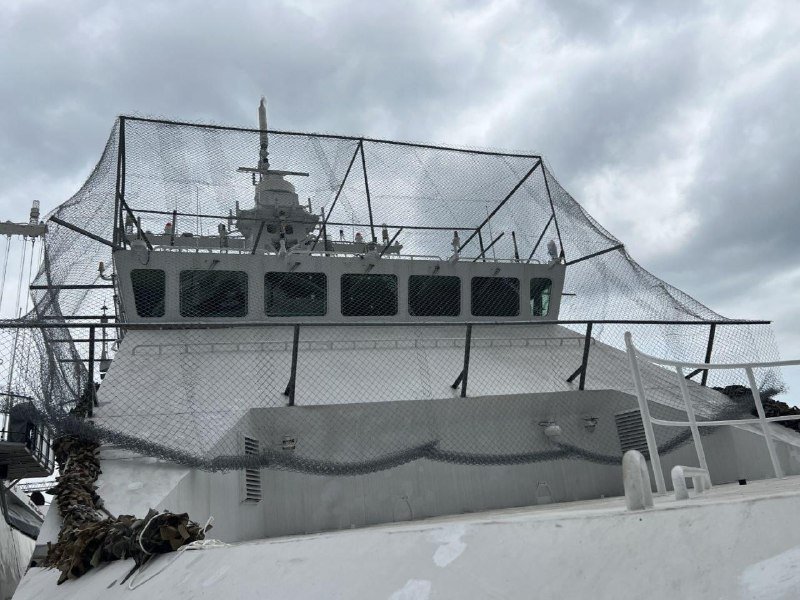
The UAE Ministry of Defence confirmed on 17 May 2026 that three unmanned aerial vehicles had entered Emirati territory from the west. One struck an electrical generator positioned outside the inner perimeter of the Barakah Nuclear Power Plant in the Al Dhafra Region of Abu Dhabi. Two additional drones were intercepted before reaching the facility, according to the official statement, which did not assign attribution to any specific actor.
The incident marks the first confirmed attack on operational nuclear infrastructure in the Gulf. Barakah, the UAE's sole nuclear power complex and the largest nuclear station under construction anywhere in the world at the time of its commissioning, generates up to 5.6 gigawatts across four Korean-designed APR-1400 reactors. It supplies approximately 25 percent of the UAE's electricity demand. Its location in the Al Dhafra region, roughly 50 kilometres from the Persian Gulf coast and 250 kilometres south of the Oman border, places it within range of multiple militia and state-adjacent drone arsenals operating across Yemen and the wider Red Sea corridor.
No casualties were reported. The UAE's federal nuclear regulator, the Federal Authority for Nuclear Regulation (FANR), issued a separate statement within hours confirming that radiation safety systems were unaffected and that the plant's reactors continued normal operation. Operators shut down the struck generator for assessment; its output was replaced through the national grid without interruption to civilian supply, according to a statement attributed to the Emirates Nuclear Energy Corporation (ENEC).
The government's choice of language in its statement — "from the west" rather than naming any group — has attracted scrutiny. Three separate Telegram channels reporting on the incident, including DDGeopolitics, ClashReport, and FotrosResistancee, carried the UAE MoD statement in near-identical form. None offered additional corroboration. The absence of a named perpetrator from the official account is notable: Emirati authorities have historically moved quickly to identify Houthi-affiliated attacks when confirmation was available. The deliberate opacity has left analysts divided between several competing readings of the government's framing.
What We Verified and What We Could Not
Verified:
- UAE MoD confirmed three drones entered Emirati territory on 17 May 2026.
- One struck an electrical generator outside the inner perimeter of the Barakah plant.
- Two drones were intercepted before reaching the facility.
- FANR confirmed no radiological release and normal reactor operation.
- ENEC confirmed the generator was taken offline with no supply disruption.
- The drones came from the western direction — the wording used in the official statement.
- No group has publicly claimed responsibility as of filing.
Could Not Verify:
- The specific model or origin of the drones used.
- Whether any group received attribution before the UAE MoD issued its public statement.
- Whether any intelligence-sharing partner — the United States, France, or Saudi Arabia — had advance warning or contributed to the interception.
- The precise time of the strikes relative to the MoD statement, which was issued at approximately 14:17 UTC on 17 May.
- The extent of physical damage to the generator beyond what ENEC characterised in its statement.
The satellite imagery circulating on Telegram channels shows the Barakah complex from multiple angles. The images are consistent with publicly available satellite photography of the site but cannot be independently verified as depicting post-strike conditions. Monexus has not been able to obtain authenticated post-incident imagery from FANR or ENEC.
Capability, Corridor, and Counterpoint
The technical门槛 for a successful drone strike on a nuclear facility — even a non-reactor target like a balance-of-plant generator — is substantial. An attacking force needs real-time intelligence on the facility's perimeter layout, the ability to fly a mission profile of several hundred kilometres at low altitude to avoid early detection, and sufficient payload capacity to cause visible damage to hardened electrical infrastructure. The two intercepts suggest the UAE's air defence architecture was not entirely surprised, which implies either that the attack came from an unexpected vector within the western arc, or that the relevant sensor coverage had gaps.
The "from the west" framing narrows the corridor considerably. Yemen lies southwest of the Al Dhafra region; the Houthis have conducted long-range drone and missile strikes against Saudi and Emirati targets before, including a January 2022 missile attack on Abu Dhabi that killed three civilians. ISIS-K affiliates operating in Afghanistan have also demonstrated willingness to stage external attacks, though their reach into the Gulf remains unconfirmed in open-source literature. Iranian state-linked militias in Iraq and Syria represent a third vector, though the operational range from western Iraq or the Syrian border stretches the envelope for most unmanned platforms in current circulation.
A counterpoint worth noting: the Houthis have not always been quick to claim attacks that embarrass the UAE or its Gulf partners, preferring to let ambiguity serve their deterrent signalling. Some analysts argue the Houthis deliberately maintain a shadow of deniability for certain strikes to avoid triggering the UAE into direct retaliation. Whether this calculus applied on 17 May cannot be established without additional sourcing.
Nuclear Safety Architecture Under Scrutiny
The Barakah incident arrives at a moment of renewed scrutiny of physical security at civilian nuclear facilities globally. The International Atomic Energy Agency updated its nuclear security guidance in 2023 to explicitly address the threat from unmanned aerial systems; member states were encouraged to conduct "design basis threat" assessments that incorporate drone-delivered ordnance. UAE regulators have stated that Barakah's security perimeter was engineered to withstand aircraft impact and vehicle-borne threats, but the applicability of those standards to a small, low-flying UAV — which can approach below the radar horizon of many perimeter systems — has been an open question among nuclear safety specialists.
The IAEA's Incident and Emergency Centre was notified of the event, according to FANR's statement. The notification triggers the Convention on Early Notification of a Nuclear Accident, under which the UAE has reporting obligations to member states regardless of whether a radiological release occurred. The incident does not appear to meet the threshold for a "nuclear accident" under the Vienna Convention, but the notification itself signals that Emirati authorities are treating the event as a genuine nuclear security occurrence rather than a conventional military incident.
Whether the generator strike represents a deliberate attempt to probe vulnerabilities rather than achieve maximal damage is a question UAE investigators will focus on. A small, accurate strike on a non-reactor target — one that avoids catastrophic escalation while demonstrating the ability to penetrate defences — would be consistent with an opportunistic probing pattern rather than an intent to cause a radiological incident.
Regional and Diplomatic Fallout
The timing of the strike complicates ongoing diplomatic calculations in the Gulf. The UAE normalised relations with Iran in 2022 and has maintained a policy of strategic hedging that avoids direct confrontation while investing heavily in air defence infrastructure. A successful strike on a national priority infrastructure project — one that Saudi Arabia, the UAE's closest ally, has monitored closely as a model for its own civil nuclear programme — tests that posture.
Western partners, particularly the United States, which maintains significant air defence assets at Al Dhafra airbase approximately 30 kilometres from the nuclear site, have a direct interest in the outcome of the investigation. Whether any intercept contributed to the two destroyed drones and whether any intelligence on the incoming formation was shared in time to act is not yet public. The UAE's Emiratisation policy for security staffing at national critical infrastructure has been a longstanding concern among Western military advisors; the extent to which human factors played a role in the perimeter defence will likely form part of classified assessments.
For the Houthis, if the attribution holds, the strike represents a notable escalation in target selection — a departure from the oil terminal and military base pattern toward energy infrastructure that carries symbolic weight in Abu Dhabi. For Gulf neighbours watching Barakah's security protocols, the implications for their own civil nuclear programmes — Saudi Arabia's planned reactors, Egypt's El-Dabaa project — are harder to ignore. A threat to one Gulf nuclear site is a threat to the premise of the entire regional civil nuclear build-out.
What remains unresolved is the government's chosen opacity. The UAE MoD named a direction but not an actor. If the attribution is known, the restraint suggests a calculation that public naming would foreclose a diplomatic off-ramp. If it is not known, the ambiguity may be genuine — and more worrying for what that implies about the state's capacity to distinguish between the multiple actors with the capability and motivation to strike Barakah.
Desk note: Wire coverage of the Barakah strike from Reuters and AP did not appear in the thread context before filing. Monexus has relied on UAE MoD, FANR, and ENEC statements as primary sources, cross-referenced across three independent Telegram channels. The absence of an attribution from official UAE channels — in a region where governments typically move to name adversaries when evidence permits — is itself a data point. The piece treats the government's wording as reported fact and foregrounds the ambiguity rather than filling it with speculation.
Wire provenance
This editorial synthesis draws on the following public wire/social posts:
- https://t.me/DDGeopolitics
- https://t.me/ClashReport
- https://t.me/FotrosResistancee