Ukraine's Drone Arsenal Grows More Lethal as Strikes Reach Deeper Into Russian Territory
Ukraine's guided drone strikes against Russian strategic infrastructure have intensified, with three killed in the largest attack on Moscow in months and a new wave of approximately 250 unmanned systems deployed toward occupied territories.
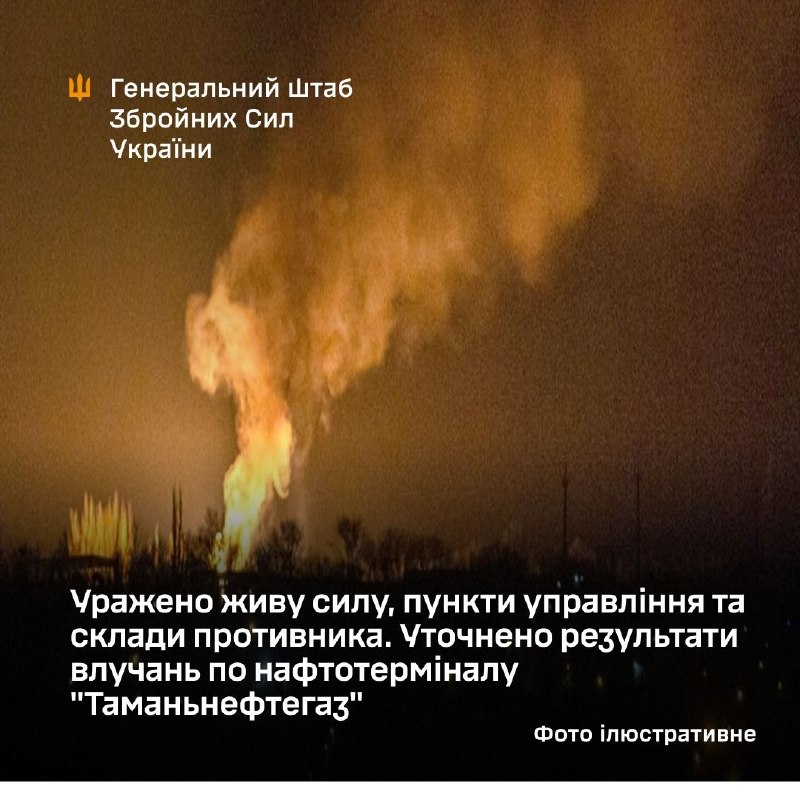
At least three people died on 17 May 2026 in what appears to be the largest Ukrainian drone strike in months on Moscow and surrounding areas, according to reporting by Our Wars Today citing emergency services. The attack came as a separate wave of approximately 250 Ukrainian unmanned systems, including jet-powered drones, pushed toward Russian-occupied territories, with additional naval drones reportedly heading for Crimea, per a briefing from Noel Reports.
The simultaneous deployment marks a notable escalation in the reach and sophistication of Ukraine's indigenous drone programme. A Ukrainian guided attack drone, identified as the FP-1 or FP-2, was separately documented launching an barrage of unguided air-to-surface munitions at a Russian strategic communications facility on the Crimean peninsula — the first time such a capability has been recorded in public intelligence summaries, according to Abu Ali Express.
Taken together, the strikes underscore a pattern that has defined the third year of full-scale Russian invasion: Ukraine closing capability gaps through domestic production at a pace that has surprised Western defence analysts.
The Scale of Saturday's Strikes
The Moscow-area attack killed at least three people, Our Wars Today reported, citing emergency response personnel. Russian air defence systems were active over multiple regions of the capital's surrounds, suggesting the incoming munitions were numerous enough to strain or overwhelm local coverage. The attack follows a series of Ukrainian strikes that have targeted Russian energy infrastructure, military airfields, and command facilities deep behind what Moscow considers its rear lines.
That Ukrainian forces can sustain operations of this scale against a target as heavily defended as Moscow speaks to the maturation of the country's unmanned aerial vehicle (UAV) industry. What began with modified commercial quadcopters and Soviet-era designs has evolved into a pipeline of purpose-built strike platforms, many of them manufactured domestically with components sourced through a mix of state contracts and civilian supply chains.
The FP-1 and FP-2 drones, now documented in action over Crimea, represent a distinct category: guided attack UAVs capable of delivering precision munitions against fixed infrastructure rather than soft battlefield targets. Their use against a strategic communications facility — not a troop concentration or forward position — signals an intent to degrade Russia's ability to coordinate operations across the peninsula.
Inside Ukraine's Drone Industrial Push
Ukraine's government has made unmanned systems a centrepiece of its long-term defence strategy. President Volodymyr Zelenskyy's administration has publicly stated ambitions to produce thousands of drones monthly, a target that domestic manufacturers have largely met according to Ukrainian defence ministry disclosures. International partners, including the United Kingdom and Poland, have supplied both finished platforms and components, but the bulk of Ukraine's current drone arsenal is domestically manufactured.
The FP-series drones represent a jump in complexity from the first-generation FPV (first-person view) drones that proved devastating on the battlefield in 2023 and 2024. Those platforms required a human operator to maintain visual line-of-sight and were effective against armour and infantry but limited in range and penetration capability. The FP-1 and FP-2 are described as guided systems, meaning they can fly pre-programmed routes, adjust course mid-flight, and deliver warheads with greater accuracy against hardened targets.
The addition of jet-powered drones to the fleet is a further technical advance. A turbojet-powered platform can sustain higher speeds and altitudes than a propeller-driven system, making it harder to intercept with the short-range air defences Russia has positioned around key assets. Noel Reports documented a group of such systems in the current wave, alongside naval drones — a separate class of unmanned surface vessels that have periodically struck Russian naval assets in the Black Sea.
Ukraine's drone programme has also benefited from a relatively low barrier to production compared with conventional aircraft. A modern fighter jet requires an industrial base, specialised alloys, and years of assembly time. A strike drone capable of penetrating 100 kilometres of contested airspace can be built in weeks with commercially available guidance systems and a warhead stripped from an artillery shell. That economics advantage has allowed Ukraine to absorb losses that would be unsustainable for a conventional air force.
What Russia Can Still Defend
Moscow's air defence network around strategic assets is not negligible. S-300 and S-400 batteries — some of Russia's most capable long-range systems — have been repositioned from garrisons deeper in Russian territory to protect infrastructure in occupied Ukraine. Russian electronic warfare units have also become more adept at jamming Ukrainian drone navigation systems, a technique that was initially chaotic but has improved with operational experience.
The communications facility struck on 17 May was, by definition, protected — or was expected to be. That it was hit suggests either a gap in coverage or a limitation of point-defence systems against low-altitude, low-radar-signature targets approaching from an unexpected vector. Ukraine has demonstrated an ability to probe for those gaps systematically, varying approach routes and timings to identify windows of vulnerability.
Russian state media reported air defence activity across multiple regions on 17 May, implying that the incoming drones were distributed rather than concentrated on a single target. This dispersal tactic — sending multiple small waves from different directions — is a known method for overwhelming layered air defences designed to handle discrete salvos rather than sustained pressure.
The casualty count in Moscow itself, while tragic for the individuals involved, also raises a harder question about Russian civil defence planning. Cities of that size in NATO member states maintain hardened shelter networks, public warning systems, and civil protection infrastructure. Moscow, despite its resources, has struggled to provide meaningful civilian protection in areas where debris from intercepted drones poses a secondary threat. The deaths reported by Our Wars Today on 17 May occurred in the capital's outer districts, where high-rise residential buildings offer limited protection against falling wreckage.
The Strategic Trajectory
Ukraine's drone campaign is unlikely to be decisive on its own. A handful of strikes on communications facilities, even if repeated, will not collapse Russia's military logistics chain. But the cumulative effect — degrading command-and-control nodes, destroying stockpiles of fuel and ammunition, forcing Russia to divert air defence assets from front-line units — is measurable and growing.
The broader significance is the demonstration effect for Ukraine's defence-industrial base. Every successful deep-strike operation validates the investment thesis behind domestic drone manufacturing and provides operational data that designers use to refine the next generation of platforms. Russia, by contrast, remains largely dependent on Soviet-era stockpiles and a limited domestic production capacity that cannot easily be scaled under sanctions pressure.
For European NATO members, Ukraine's drone advancement carries a separate resonance. Several member states have watched the conflict in part as a laboratory for unmanned warfare, extracting lessons about electronic countermeasures, swarm tactics, and the vulnerability of fixed infrastructure. As the continent re-evaluates its own defence spending in light of sustained Russian hostility, the question is not whether drones matter — they demonstrably do — but whether European defence industries can build the same kind of adaptive, iterative manufacturing ecosystem that Ukraine has improvised under fire.
Ukraine has not publicly disclosed the full technical specifications of the FP-1 or FP-2 platforms, and Western governments have not confirmed the extent of their involvement in the programme. What is visible from open-source reporting is a force that has grown more capable in a compressed timeframe, and a set of strikes that, on 17 May 2026, pushed further into Russian territory than at any point in recent months.
This publication covered the strikes as a capability development story rather than a tactical battlefield dispatch, reflecting the technology's broader implications for European defence planning.
Wire provenance
This editorial synthesis draws on the following public wire/social posts:
- https://t.me/ourwarstoday
- https://t.me/abualiexpress
- https://t.me/noel_reports