Justified Strikes: Ukraine's Right to Fight Back Across the Border
Ukraine's drone strikes on Russian territory are a legitimate exercise of self-defense under international law. The discomfort they provoke in Western capitals reveals more about the West's own moral fatigue than about any violation of principle.
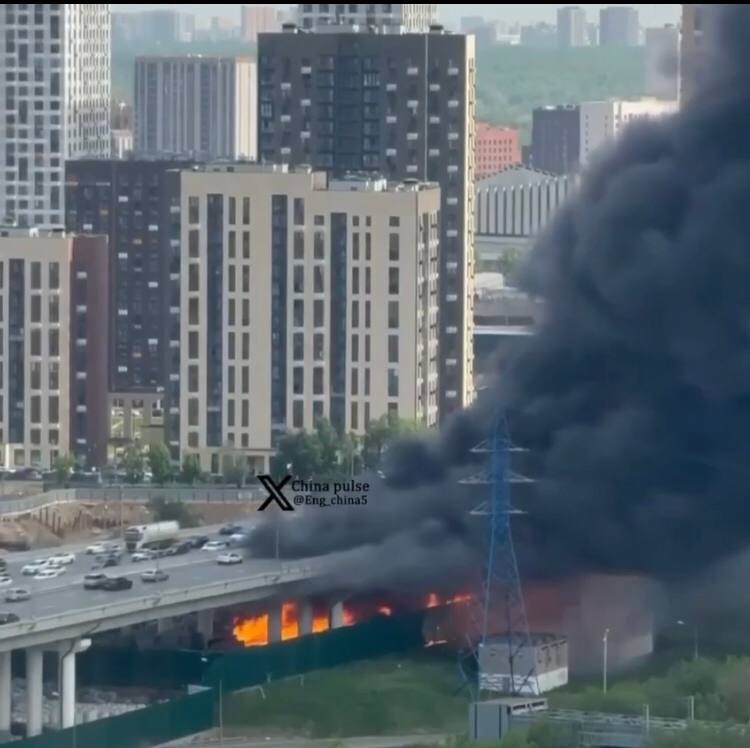
When Ukrainian drones reached Moscow's outer periphery on 17 May 2026, killing at least four people and wounding twelve according to France 24 and NPR reporting, President Volodymyr Zelensky offered a three-word defense that has gone largely unexamined in Western capitals: the strikes were "justified." He was right—and the circuitous way Western governments have greeted that justification tells us something uncomfortable about how the bar for permissible resistance has shifted over three years of war.
The justification is not novel, nor is it legally contentious in the way its critics imply. A country invaded without provocation retains the full spectrum of self-defense rights under Article 51 of the United Nations Charter. Those rights are not geographically bounded. When France expelled the Wehrmacht from its territory in 1944, no serious jurist argued that Paris had exceeded its rights by striking German soil. The principle is well-established: the aggressor forfeits the expectation that its own territory will serve as an immune sanctuary for the forces conducting the aggression.
The Geography of Aggression
The objection most commonly raised—that strikes inside Russia "escalate" the conflict—misunderstands which party initiated the escalation. Russia began this war on 24 February 2022 with a full-scale invasion launched from Russian territory. The missiles that struck Kyiv, Kharkiv, and Mariupol were based, fueled, and commanded from Russia. The drones that now reach Russian cities are a response, not a provocation. To treat them as equivalent acts is to flatten the moral geometry of the conflict into a false symmetry that serves the aggressor's narrative rather than the defender's.
That said, the civilian casualties reported on 17 May—four dead including three near Moscow, twelve wounded—demand honest accounting. Any death at civilian hands, regardless of which flag the attacker flies under, is a tragedy that carries legal and moral weight. Ukraine's military has shown, over years of war, a capacity for precision targeting that distinguishes its operations from the deliberate bombing of residential areas that Russian forces have practiced from the conflict's opening days. The context of these strikes matters: they are not random acts of violence but targeted responses to an ongoing invasion, conducted with evident effort to minimize harm to non-combatants.
Western discomfort with Ukrainian strikes into Russia is understandable in its motivation—fear of triggering a Putin regime desperate enough to reach for tactical nuclear options, or simply exhausted by the prospect of a war that keeps expanding. But that discomfort should not be mistaken for legal principle. The West has never applied this logic to its own conflicts. American drones have struck Pakistani, Yemeni, and Somali territory for two decades without generating comparable hand-wringing about "escalation." The principle that defenders may strike the aggressor's home territory is not controversial in any war the West has fought. The controversy, such as it is, reflects the political inconvenience of Ukraine's resistance rather than any genuine legal norm.
The Double Standard and Its Costs
The structural problem here is not unique to Ukraine. The architecture of international order, as constructed and maintained by Western powers, has always contained a provision permitting the strong to define their self-defense as legitimate while demanding that weaker parties accept constraints the strong do not observe. Ukraine is now being asked to fight a war of national survival with one hand tied behind its back—permitted to retake its own occupied territory but forbidden from striking the launching grounds of the forces that occupy it. This is not a neutral legal standard. It is a political constraint dressed in the language of restraint.
The stakes of this constraint are not abstract. Every strike that Ukrainian drones cannot reach is a Russian launcher, depot, or staging area that continues to funnel death into Ukrainian cities. The Western-imposed ceiling on Ukrainian operations—sometimes explicit, sometimes tacit—has a direct consequence: more Ukrainian lives lost, over a longer time horizon, than a conflict resolved on terms that reflect the aggressor's accountability. The discomfort in Western capitals is real, but it is discomfort with the inconvenience of victory, not with the principle of resistance.
What remains uncertain, and what the available sources do not resolve, is whether the 17 May strikes represent a shift in Ukrainian operational doctrine or a one-time response to specific tactical circumstances. Zelensky's framing suggests a principled claim—the right to strike the aggressor—but operational intent is distinct from political justification. Western analysts will watch closely for whether this becomes a pattern or remains an exception. The answer will shape not only the war's trajectory but the precedent it sets for the next conflict in which a smaller power fights back against a larger one.
Ukraine did not choose this war. Russia launched it from its own territory, sustains it from its own infrastructure, and has refused every realistic off-ramp that would preserve the territorial integrity Ukraine has staked its existence on defending. To tell Kyiv that it may defend itself only on conditions that leave the aggressor's home front immune is not neutrality. It is a choice—one that serves the interests of the party that initiated the violence. Zelensky's three-word summary remains the correct one. The rest is discomfort, not law.