Ukraine's Strategic Calculus: When Defense Goes Beyond the Border
Ukraine's deepening strikes on Russian energy infrastructure mark a calculated pivot from territorial defense to economic attrition—a strategy that raises the conflict's stakes while testing the limits of Western support.
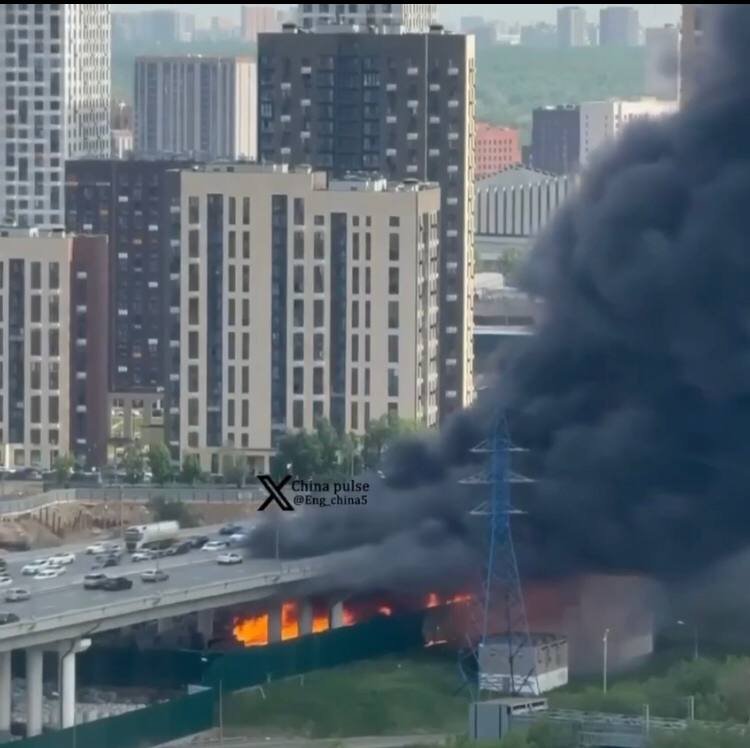
On May 17, 2026, President Volodymyr Zelensky announced that Ukrainian Defense Forces, working alongside the Security Service and intelligence services, had carried out "a very large scale" wave of strikes deep inside Russia's Moscow region. The targets included oil refineries—a strategic pivot that Zelensky framed plainly: "You shouldn't mess with Ukraine." The strikes were not isolated. They represent a deliberate escalation in means and geography, one that shifts the conflict's character in ways that neither Kyiv's Western partners nor Moscow had fully anticipated.
The framing from Ukrainian official channels was unambiguous. According to Armed Forces of Ukraine StratCom, the operations constituted a signal—a demonstration that waging "an unjust war of aggression" carries consequences that return to the aggressor's doorstep. UNIAN reported the language in similar terms: the war was "returning to its home harbor." This is not the vocabulary of a defense force husbanding limited resources. It is the language of a power that has decided offense, at least at tactical remove, serves its strategic purpose.
What the Refinery Strikes Actually Target
Energy infrastructure is not a random choice. Russian oil refining capacity, concentrated in facilities along the Volga and in the Moscow region, supplies both the military logistics chain and the domestic economy that funds it. A refinery fire does not win a battle. But a string of damaged processing units—disrupting gasoline, diesel, and aviation fuel output—erodes the financial oxygen that sustains operations in occupied Ukrainian territory. The calculus is economic attrition dressed in the language of deterrence.
Ukrainian long-range drone programs have matured considerably since the first generations of improvised systems. The strikes Zelensky described suggest capabilities that can navigate Russian air defenses at distance, find specific industrial targets, and do so at a scale that overwhelms point-defense systems not designed for mass simultaneous incursions. Whether that scale reflects dozens of assets or a handful of more sophisticated platforms, the effect on Russian planners is the same: no facility within several hundred kilometers of the border is safely beyond reach.
The Escalation Question—And Why It Fails as a Frame
Western commentary has predictably reached for the word "escalation." The logic runs that strikes inside Russia proper cross a threshold that risk drawing NATO deeper into the conflict or provoking Moscow into a response calibrated to drag the alliance in. This framing is not wrong in its mechanics. It is wrong in its assumptions about who escalated first, and what limits Russia's own actions have already shredded.
Russia launched a full-scale invasion. It has attacked Ukrainian energy infrastructure systematically since 2022, targeting grid facilities, district heating systems, and pipelines with the explicit aim of breaking civilian morale through hardship. The argument that Ukraine matching that method—applied now to Russian territory rather than Ukrainian—constitutes a qualitative escalation in kind, rather than a belated application of an established Russian tactic, does not survive scrutiny. The war arrived in Russia's home harbor only after it was first unloaded on someone else's.
The Multipolar Reading Nobody in Brussels Wants to Hear
There is a structural dimension to these strikes that Western diplomatic commentary consistently underweights. The conflict has been, from its opening days, a proxy arena for wider great-power competition. But proxy status has always sat uneasily with Ukraine's own agency and strategic sophistication. What the May 17 strikes demonstrate is that Kyiv is not merely a recipient of Western materiel fighting a defensive war on its own soil. It is developing an independent deterrence posture—one rooted in its own industrial output, its own intelligence networks, and its own theory of how to impose costs on an adversary.
This matters for the post-war settlement that will eventually arrive. A Ukraine that has demonstrated the capacity to strike deep into Russian territory谈判 is not the same Ukraine that enters negotiations from a posture of pure defense. It holds cards that a purely defensive actor would not possess. That does not guarantee a favorable outcome. But it reshapes the leverage calculus in ways that European capitals, still struggling to internalize Ukrainian agency, have been slow to acknowledge.
What Remains Uncertain—and What Doesn't
The sources do not specify the full scope of damage inflicted in the May 17 strikes, nor the full inventory of assets deployed. Russian state-adjacent channels had not issued a comprehensive damage assessment at time of writing. What is clear is the intent. Zelensky's framing—that this constitutes a "good wave" of capability—suggests the operations met or exceeded planning objectives.
What remains genuinely uncertain is whether the strikes represent a one-time demonstration or the opening phase of a sustained campaign. Repeated pressure on Russian refining capacity would compound economic damage; a single wave, however dramatic, leaves Moscow's energy sector functional. The signal matters, but the repetition of the signal—its establishment as a pattern rather than an event—is what will determine whether Ukrainian strategy achieves its stated aim of making aggression unprofitable.
The broader question is whether Kyiv's calculus has shifted in ways that will outlast the current phase of the conflict. If Ukraine has decided that deterrence requires projecting force rather than merely absorbing it, that is a consequential choice—one that will shape the conflict's trajectory, the willingness of Western partners to sustain support, and the terms on which any eventual resolution is negotiated. The war returned to Russia's home harbor on May 17. Whether it stays there is the only question that ultimately matters.
Wire provenance
This editorial synthesis draws on the following public wire/social posts:
- https://t.me/V_Zelenskiy_official/4567
- https://t.me/euronews/8923
- https://t.me/operativnoZSU/11234
- https://t.me/uniannet/15678
- https://t.me/AFUStratCom/7823