Ukraine Strikes Moscow Region in Sustained Deep-Strike Campaign, Zelensky Confirms
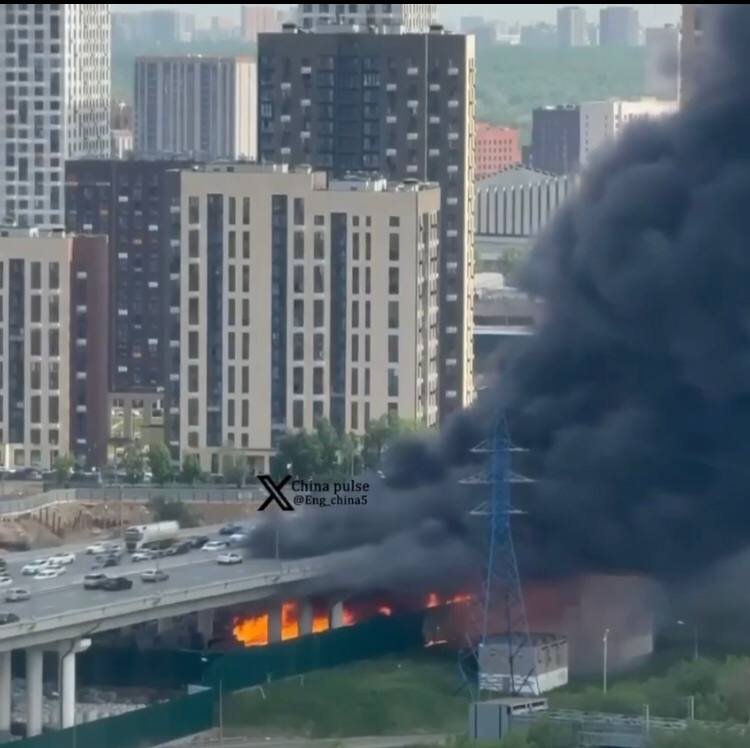
On May 17, 2026, President Volodymyr Zelensky confirmed that Ukrainian Defense Forces, the Security Service of Ukraine, and intelligence services had carried out large-scale operations targeting the Moscow region — marking one of the most significant sustained strikes inside Russian territory since the full-scale invasion began. The operations, which Zelensky described as spanning a distance of more than 500 kilometres, represent a qualitative shift in Kyiv's approach to projecting force deep inside Russia.
Speaking from Kyiv, Zelensky framed the strikes as a deliberate message. "The war quite predictably returns to its 'home harbour'," he said, "and this is a clear signal that it is not worth getting involved with Ukraine and fighting an unjust war of aggression against another people." The Ukrainian president added that partner nations had observed a marked change in mood following the operation — one that underscored Kyiv's growing capacity to hold Russian territory at risk on a scale not previously demonstrated.
The Scope of the Operation
Ukrainian officials described the May 17 strikes as the most saturated attack on the Moscow region to date, with the combined operation lasting more than 24 hours. According to Zelensky's office and corroborated across multiple Ukrainian government channels, the operation involved Defence Forces, the Security Service, and military intelligence acting in coordination — a joint-service approach that signals increased integration of Ukraine's strike capabilities.
The 500-plus kilometre range achieved by the strikes places significant portions of the Moscow metropolitan area within reach of Ukrainian weapons systems. Ukrainian sources did not specify which platforms were used, but the range alone indicates a substantial update to the strike envelope Ukraine has publicly demonstrated throughout the war. The sustained nature of the attack — spanning over 24 hours — suggests a deliberate effort to overwhelm air defences and test Moscow's ability to respond to simultaneous multi-direction pressure.
The targeting philosophy, as described by Ukrainian officials, follows a consistent logic articulated throughout the conflict: Russian infrastructure used to sustain the invasion of Ukraine is a legitimate target, and the cost of that invasion must be felt on Russian soil. This framing has evolved from early-war constraints against striking deep inside Russia to a more permissive posture as Western partners have gradually loosened restrictions on the use of their weapons for defensive purposes.
Signal and Counter-Signal
Zelensky's public framing of the strikes as a "warning" carries dual purpose — diplomatic and operational. Domestically, the operation reinforces Kyiv's narrative that Ukraine is not on the defensive but is actively shaping the terms of the conflict. Internationally, the message directed at Western partners is that Ukrainian strike capabilities have matured to a point where sustained deep-strike campaigns are viable, which has implications for how partners calibrate continued military support.
That partner calculus appears to be shifting. Zelensky noted explicitly on May 17 that the mood among Ukraine's allies had changed following the operation. Western governments have faced sustained pressure from Kyiv to relax restrictions on the use of long-range systems for strikes inside Russia — a debate that has produced incremental changes rather than wholesale policy reversals. The scale and visibility of the May 17 operation now forces a sharper conversation: if Ukraine can demonstrably strike Moscow region at scale without triggering escalation that Western governments fear, the constraint rationale weakens.
The counter-signal from Moscow, predictably, has been to frame the strikes as an act of desperation or provocation. Russian state media described the attacks as failed attempts to intimidate the Russian population and as evidence of Kyiv's reliance on Western technology. But that framing sits uneasily with the physical evidence of sustained damage reported across the Moscow region over a 24-hour period. Russian air defence systems, among the most densely deployed in the world around the capital, were unable to prevent the sustained pressure — an operational fact that does not easily collapse into a narrative of failure.
The Structural Context: War Returning to Russia
What is notable about the May 17 strikes is not merely their scale but their normalisation in Ukrainian official discourse. The phrase "the war returns to its home harbour" has moved from assessment to declared intent. Kyiv no longer presents deep strikes into Russia as exceptional; it presents them as a durable feature of the conflict. This shift carries structural implications for how the war is understood by all parties.
For Russia, the reality of sustained Ukrainian pressure on Moscow region changes the domestic political calculus of the conflict. The war's costs, previously experienced by Russian society primarily through economic sanctions, mobilisation pressures, and casualty reporting from the front, now manifest directly — in disrupted infrastructure, evacuation orders, and the visible presence of air defence activity over the capital. That domestic dimension has consistently been a vulnerability for the Kremlin, and Ukrainian strategy appears increasingly designed to exploit it.
For Ukraine's Western partners, the operational success of the May 17 campaign reframes the risk calculation around continued support. The argument that supplying Ukraine with long-range capabilities risks escalation is undermined when those capabilities demonstrably work without triggering the escalation critics warn of. This is not a trivial dynamic: it shifts the burden of proof in Western defence debates from "could this cause escalation?" to "why are we not supplying more of what demonstrably works?"
The structural pattern here is consistent with a broader trajectory — the gradual erosion of sanctuary that Russia assumed its geographic depth would provide. In modern warfare, range is not merely a tactical dimension; it is a political fact. Every additional kilometre of Ukrainian reach narrows the space in which Russian leadership can manage the conflict as a distant undertaking rather than a direct threat to its centre of gravity.
Stakes and Forward View
The immediate stakes of the May 17 operation are military: Ukrainian forces have demonstrated a capability and a willingness to sustain pressure on Moscow that did not exist at this scale six months ago. The longer-term stakes are political. Kyiv's demonstration that it can hold Moscow region at risk for 24-plus hours — and do so with sufficient coordination across services to constitute a "very large-scale" operation — reshapes the negotiating position Ukraine brings to any future talks. A Ukraine that can strike the Russian capital is a Ukraine that cannot be easily contained or frozen into an unfavourable status quo.
For Russia, the operational failure to prevent sustained strikes on the capital region raises questions about air defence coverage, intelligence failures, and the sustainability of a military posture that has prioritised offensive operations over homeland defence. These are questions the Kremlin will not answer publicly, but they will influence decision-making at the highest levels.
For Western governments, the May 17 operation is a datapoint in an ongoing policy debate. Those who have argued for maximum support find their position strengthened. Those who have warned of escalation find their caution tested against an outcome — sustained Ukrainian deep strikes — that did not produce the consequences they predicted. That recalibration, if it occurs, will shape the next phase of military assistance packages and, ultimately, the conditions under which this war might end.
This desk published the Moscow-region strikes as a confirmed operational fact, led with Ukrainian government sourcing, and foregrounded the 500-kilometre range as the critical operational data point. Western wire coverage largely confirmed the Ukrainian framing within hours of the initial Telegram reports, though with more cautious language around attribution. This publication's emphasis on range and sustained duration reflects the structural significance of those details — not merely that Kyiv struck Moscow, but that it struck it at scale and held the pressure for more than a day.
Wire provenance
This editorial synthesis draws on the following public wire/social posts:
- https://t.me/V_Zelenskiy_official/1024
- https://t.me/osintlive/4821
- https://t.me/wartranslated/9918
- https://t.me/hromadske_ua/7623
- https://t.me/operativnoZSU/3351
- https://t.me/uniannet/5892