The Ultimatum Economy: Why Economic Pressure Alone Won't Break Tehran
With Israel's economy contracting and Trump's clock-ticking ultimatum, the real question isn't whether sanctions bite — it's whether the administration has a coherent theory of what economic warfare is supposed to deliver.
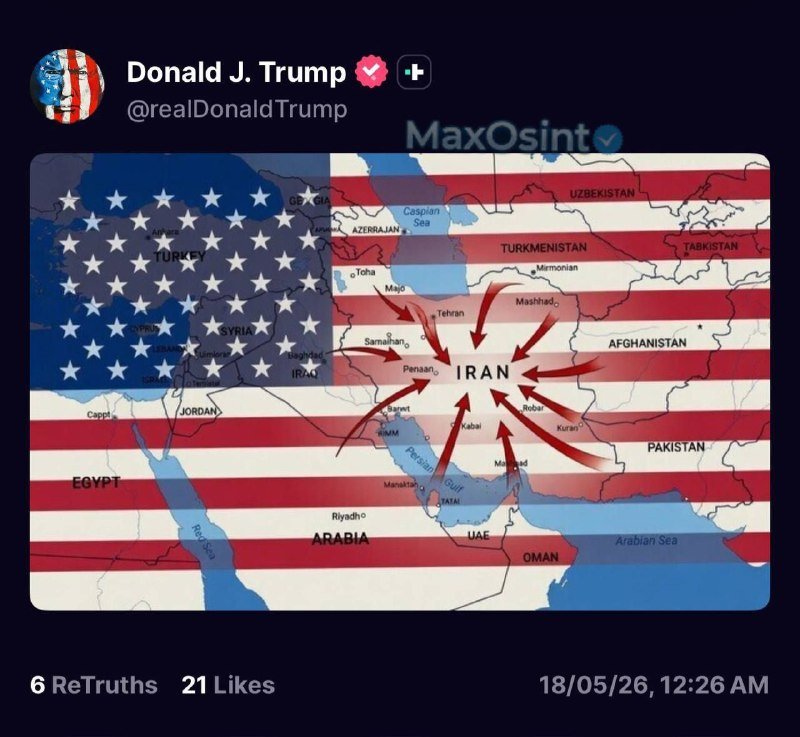
On 17 May 2026, a single sentence from the White House reshaped the week's geopolitical weather: "The clock is ticking, Iran better act quickly — otherwise they will have nothing left of them." The ultimatum landed as Reuters confirmed a hard number: Israel's economy contracted 3.3 percent in the first quarter, battered by the Iran war. The juxtaposition was not accidental. Economic damage, the administration apparently believes, is leverage. The question is leverage toward what.
The answer matters because the strategy, such as it is, has a coherence problem. Washington's posture toward Tehran has oscillated between maximum pressure and conditional talks for seven years. Sanctions have bitten — Iran's oil exports are a fraction of their pre-2018 levels, its currency has lost most of its value, and ordinary citizens have borne the cost of a system designed to make governing impossible. But the regime has not folded. The nuclear programme has not been dismantled. And Iran's regional posture, shaped through proxies and alliances built over decades, has not retreated. An administration now threatening to reduce the country to rubble is the same administration that has watched all of this play out and concluded that the solution is a louder version of the same failed approach.
The Contraction That Wasn't Supposed to Happen
Israel's 3.3 percent first-quarter shrinkage makes the economics of regional conflict concrete. Reuters reported on 17 May 2026 that the Israeli economy contracted year-on-year, with the finance ministry pointing to disruptions from the Iran conflict — supply chain interruptions, reduced consumer confidence, and the direct costs of sustained military operations. The wire also noted that the ministry expects a rebound once hostilities ease. That caveat matters. It signals that the damage is not structural; it is a function of active conflict, not permanent sanctions architecture. The recovery, if it comes, depends on de-escalation — which means the economic pressure on Israel is itself an argument for ending the war the Trump administration is simultaneously escalating.
Iran's economy has absorbed a version of this pressure for years. Sanctions imposed under both the JCPOA period and the maximum-pressure campaign of 2018-2021 reduced Iranian living standards substantially. But the Islamic Republic is not a fragile state in the conventional sense. It has survived through a combination of oil sanctions exemptions obtained through diplomatic back-channels, a resilient domestic fuel sector, and an economic architecture designed to function under isolation. The Revolutionary Guard controls significant portions of the formal and informal economy. That makes the society more brittle in some respects, but it also means the regime has tools to distribute pain before the pain reaches the points of leverage Washington expects it to reach.
Why Coercion Keeps Missing
The intellectual failure here is not that economic pressure exists. It does. It is that the administration appears to have no coherent theory of what the pressure is supposed to produce. Regime change? Sanctions have never successfully collapsed a functioning authoritarian state without military intervention, and the costs of that intervention would dwarf anything in the current calculus. Denuclearisation? That requires a negotiating partner willing to accept verifiable limits in exchange for sanctions relief — which requires the administration to offer something other than an indefinite extension of maximum pressure. Regional de-escalation? The conflicts Iran engages in are partly a function of the strategic space created by American regional posture; reducing that space requires diplomacy, not just financial restriction.
The ultimatum form is particularly counterproductive. When a great power tells a target state "get moving or be wiped out," it is making a credibility claim. The target must believe the threat is real, and must also believe that compliance produces a better outcome than defiance. Iran's leadership has watched the United States issue variations of this threat for years — and has watched the threats fail to materialise into the consequences described. Each iteration of maximum pressure that stops short of military action reduces the credibility of the next iteration. A threat that has been heard before and not executed is a threat that works less well each time it is made.
The Structural Misread
The deeper problem is that Trump's framing treats the Iranian state as a business entity that will rationally maximise under constraint. Tehran is not Tencent. It is a theocratic republic with a domestic legitimacy structure built partly on anti-imperialist rhetoric, partly on social welfare provision, and partly on the personal interests of a security apparatus that will not voluntarily dismantle itself. That apparatus has absorbed enormous punishment across two decades of sanctions and still functions. The people who run it have calculated that survival, even at high cost, is preferable to capitulation that would end their political relevance.
This is not irrational. It is the same calculation every durable authoritarian state makes. The question is whether Washington understands it — and whether its strategy accounts for it. An ultimatum that assumes rational actors will choose capitulation when they have consistently chosen resilience is an ultimatum built on a misread of the counterparty's incentives. The sources do not indicate that the administration has run that analysis publicly. What they show instead is a preference for theatrical escalation — the ticking clock, the "nothing left" framing — over the grinding, unglamorous work of constructing a credible alternative that Tehran would actually find preferable to resistance.
What the Stakes Actually Are
If the ultimatum fails — if Tehran does not capitulate — the administration faces a choice between enforcing the threat and absorbing the loss of credibility, or stepping back and watching the whole structure of coercion it has built collapse into routine. Neither option is comfortable. Military action against Iran would send oil prices into stratosphere and destabilise a European economy already under pressure from trade disruption. But a failed ultimatum that produces no compliance would signal to every state in the region that American threats are performative — and the region's calculations are already shifting in response. Gulf states are investing in post-petroleum diversification. Israel's rebound expectations signal a hope for normalisation, not escalation. The structural forces pushing toward regional accommodation exist independent of whatever the White House says in a Telegram post. A strategy built on overriding those forces is not a strategy — it is noise with a deadline.
This publication covered the economic framing of Trump's ultimatum primarily through regional Telegram wires rather than Western financial outlets, a choice that reflects the sources available at time of writing. Reuters's reporting on the Israeli contraction and expected rebound provides the most direct economic context. The wire picture on Iran's response to the ultimatum remains incomplete as of publication.
Wire provenance
This editorial synthesis draws on the following public wire/social posts:
- http://reut.rs/4uXMTkU