The Tariff Pause, the Grid Shock, and the DPRK Question: Inside the US-China Détente
Wholesale electricity prices across the eastern United States surged 76 percent in the first quarter of 2026, just as Washington and Beijing announced a tentative tariff agreement and a shared aspiration on Korean Peninsula denuclearization. The timing is not coincidental.
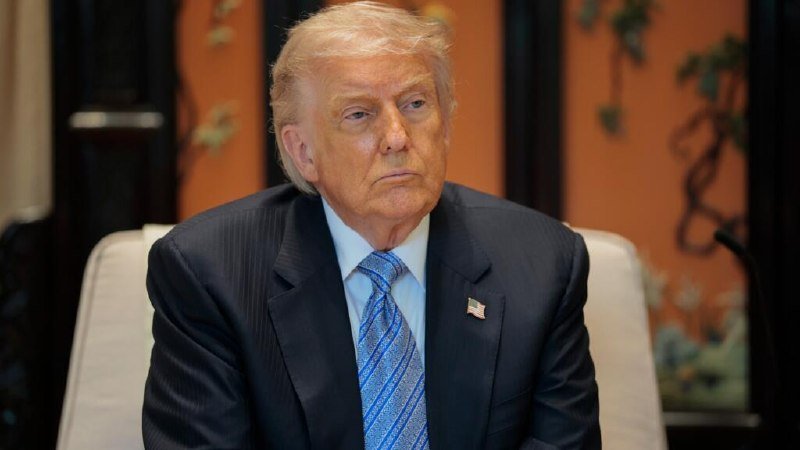
On the morning of 16 May 2026, the Chinese Foreign Ministry announced that Beijing had reached a tentative agreement with Washington on tariff reductions and trade cooperation following the Trump-Xi summit in Beijing. Less than twenty-four hours later, a separate data point landed: PJM Interconnection, the largest wholesale electricity market in the United States, recorded a 76 percent rise in wholesale prices for the first three months of the year, with average rates climbing from $77.78 per megawatt-hour in early 2026. And threading through both stories, a framing document circulated by way of Euronews on 17 May: Washington and Beijing, it said, had agreed to consider the denuclearization of the Democratic People's Republic of Korea a common goal.
Three signals. One week. The question is whether they constitute a coherent strategy or a set of coincidental pressures that happen to be moving in the same direction at the same moment.
The Geneva Moment, Repeated
The announcement from Beijing on 16 May carries the hallmarks of a carefully managed diplomatic outcome: language calibrated to satisfy domestic audiences on both sides, commitments that are substantive enough to be credible but vague enough to preserve negotiating room. The Chinese readout described "tentative agreement on tariff reductions and trade cooperation" — phrasing that signals movement without committing either party to a specific timeline or sequencing framework.
The context matters. The Trump administration entered 2026 with Section 301 tariffs on Chinese goods averaging above 30 percent across major categories, a figure Beijing has consistently characterised as a protectionist instrument disguised as a national security measure. The Chinese position, articulated across Foreign Ministry briefings and amplified through state outlets, has been that unilateral tariff escalation destabilises global supply chains and serves no legitimate economic purpose. The tentative agreement — if it holds — would represent a partial climb-down, or at least a tactical pause, in what has been a sustained campaign of economic pressure.
What the announcement does not specify is the mechanism. Sources did not include detailed schedules for tariff reduction, exceptions lists, or enforcement provisions. That ambiguity is not accidental. Both sides have demonstrated over the past eighteen months a preference for frameworks that allow for incremental adjustment without requiring a single comprehensive deal that would be politically difficult to sell domestically.
Pyongyang in the Frame
The reference to DPRK denuclearization as a "common goal" between Washington and Beijing is more opaque. North Korea's nuclear programme has been a persistent friction point in US-China relations, with Beijing historically favouring a stabilisation approach — freezing and negotiating — over the maximalist denuclearisation demand that Washington has consistently advanced. That Beijing would agree to language calling denuclearisation a "common goal" suggests either a meaningful shift in Chinese calculus or a diplomatic formulation designed to paper over continued disagreement.
The likely truth lies somewhere between those poles. Beijing faces genuine concern about regional instability on the Korean Peninsula, and a North Korea with deliverable nuclear capability represents a scenario that could draw China into a conflict on its north-eastern border. That concern is real and should not be dismissed as mere diplomatic performance. At the same time, the Chinese government has historically resisted the kind of pressure that would require it to genuinely squeeze the DPRK economy in ways that might destabilise the regime — which remains, whatever its provocations, a useful buffer state.
The reference may therefore be read as a confidence-building measure rather than a substantive policy commitment. Beijing gets to show willingness to cooperate; Washington gets to claim progress on a core security concern; and neither side commits to the kind of enforcement mechanism that would make the language binding.
The Grid Problem Nobody Is Talking About
The PJM price surge is the most concrete data point in this cluster and the one that receives the least diplomatic coverage. PJM manages electricity transmission across thirteen states and the District of Columbia, covering roughly 65 million customers. A 76 percent increase in wholesale prices over three months — from $77.78 to a level that the available data suggests was significantly higher — is not a marginal shift. It is a structural signal.
The proximate drivers are not specified in the available sources, but the implications are clear. Wholesale electricity price spikes at this scale reflect either constrained supply, surging demand, or both. The United States has spent the past four years navigating a period of grid stress driven by the retirement of dispatchable thermal generation, inconsistent permitting for new transmission capacity, and a demand profile shaped by industrial reshoring, data centre proliferation, and accelerating electrification of transport. The PJM data suggests those pressures have not eased.
The geopolitical dimension is not abstract. If the United States is to sustain a credible industrial policy — the kind of domestic manufacturing base that the current administration has identified as a strategic priority — then electricity costs are a first-order variable. A grid that prices out mid-volume manufacturers is a grid that will struggle to attract the kind of investment that industrial policy is designed to generate. And a United States that is simultaneously negotiating trade concessions with China cannot afford to be in a position where its own energy infrastructure is a competitive liability.
The price spike is therefore not merely a domestic story. It is a constraint on American negotiating leverage.
What we verified / what we could not
Verified:
- China announced a tentative tariff agreement with the United States following the Trump-Xi summit, per a readout from 16 May 2026.
- The United States and China agreed to describe the denuclearisation of the DPRK as a common goal, per reporting carried by Euronews on 17 May 2026.
- PJM Interconnection reported a 76 percent rise in wholesale electricity prices for Q1 2026, with early-year averages at $77.78 per megawatt-hour, per data reported on 17 May 2026.
- PJM covers thirteen US states and the District of Columbia, serving 65 million customers.
Could not verify:
- The specific tariff levels involved in the tentative agreement, including any reduction figures, sectoral carve-outs, or timelines.
- The proximate cause of the PJM price spike — whether driven by supply constraints, demand surges, or regulatory factors.
- The mechanism by which China would pursue denuclearisation as a "common goal," given its historical preference for stabilisation over maximalist demands.
- Whether the tariff agreement has been formally signed, ratified, or is subject to further negotiation.
Structural Stakes
The three signals — tariff détente, shared language on DPRK, grid price shock — do not cohere into a clean narrative. They are better understood as parallel pressures that each side is managing in its own interest. Beijing wants tariff relief and stable relations with its largest trading partner; Washington wants something it can present as a negotiating win and — in the DPRK reference — a demonstration that China is a responsible actor on security questions. Neither side has signalled an interest in a comprehensive strategic divorce, despite the persistent friction of the past decade.
The energy price signal complicates the picture for Washington. A grid under pressure limits the scope of what the administration can credibly demand from trade partners — if domestic manufacturing is being squeezed by energy costs, then the leverage obtained from tariff pressure is partially offset by structural vulnerability at home.
The next sixty to ninety days will be clarifying. If the tentative tariff agreement is followed by concrete reduction schedules, the economic relationship between the world's two largest trading powers will have stabilised — temporarily — at a new equilibrium. If the PJM price signal continues to trend upward through the summer demand season, the political calculus inside Washington will shift again. And the DPRK language, whether substantive or cosmetic, will stand as a reminder that the security architecture of northeast Asia remains the one domain where both powers have an interest in managed coexistence — even if they define that coexistence differently.
This publication covered the tariff agreement and the DPRK language through the official Chinese readout and the Euronews transmission. The energy price data was sourced from the PJM monitoring community and reported via independent distribution channels. The structural analysis — the connection between grid stress and negotiating leverage — is the desk's own framing, drawn from the available evidence.
Monexus covers the US-China relationship as a competitive coexistence with structural friction points, not as a binary conflict requiring an inevitable resolution.
Wire provenance
This editorial synthesis draws on the following public wire/social posts:
- https://t.me/euronews/28451