US Tabled Five Conditions for Iran Nuclear Talks, Fars News Reports
Iranian state media reports Washington set out a series of demands including uranium transfer, compensation refusal, and asset freezes as preconditions for continued negotiations — a posture critics call maximalist, and defenders call realistic leverage.
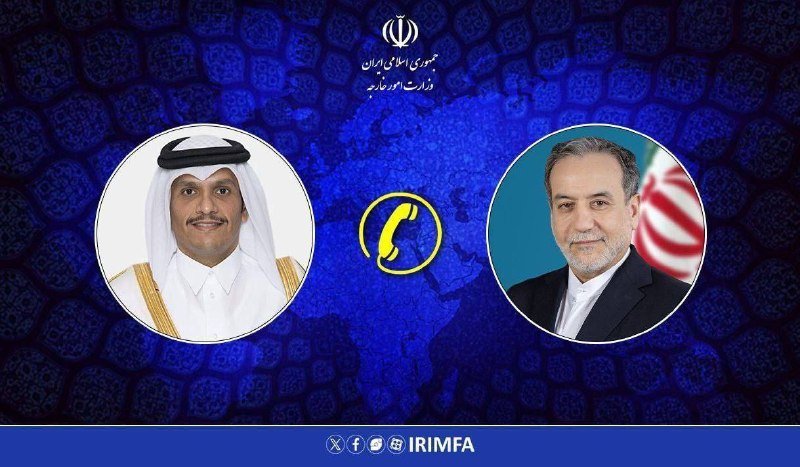
On 17 May 2026, the Iranian news agency Fars published what it described as the full text of Washington's response to Tehran's latest nuclear proposals. The report, picked up by multiple regional and open-source intelligence channels within hours of publication, listed five conditions the United States is demanding before it will continue the settlement process — a set of demands that diplomats familiar with the file are likely to read as either a genuine framework for progress or a diplomatic trap designed to collapse the talks on Iranian terms.
The conditions, as reported by Fars and independently cited by channels including GeoPWatch, IntelSlava, and The Cradle Media, include: no compensation or damages paid to Iran for the bombings of Iranian territory in recent months; the transfer of approximately 400 kilograms of enriched uranium to the United States; a restriction to a single active nuclear facility; continued freezing of Iranian sovereign assets; and what appears to be a fifth condition that the sources do not fully specify, reportedly relating to verification and monitoring mechanisms.
The publication of these conditions — if accurate — represents the most detailed public articulation of the Trump administration's posture toward Iran since nuclear talks resumed earlier this year. It is also, by any measure, an unusual act of diplomatic exposure: the United States has not publicly confirmed the contents of its counter-proposal, and the sourcing originates from an Iranian state-adjacent outlet whose editorial interests are not aligned with Washington's.
What Fars Published and Why It Matters
Fars News Agency is a semi-official Iranian news service with documented ties to the Islamic Revolutionary Guard Corps. Its reporting does not carry the same evidentiary weight as a State Department press release or a confirmed White House statement. That said, the agency has a record of publishing accurate — if strategically framed — material at moments of diplomatic sensitivity. The fact that multiple independent Telegram channels, including ClashReport and English Abu Ali, carried the same story within minutes of each other on the morning of 17 May suggests either coordinated Iranian messaging or rapid OSINT verification of a genuine document.
What is not in dispute is that the five conditions, as listed, constitute a maximalist opening position. The demand that Iran transfer 400 kilograms of enriched uranium — material that took years to accumulate under tight international monitoring — is not a negotiation point. It is a precondition that, if met, would effectively hollow out Iran's breakout capacity for a significant period. Combined with the restriction to a single active nuclear facility, the conditions effectively ask Iran to dismantle the programme it has spent a decade rebuilding since the 2015 JCPOA began unravelling.
The compensation demand carries its own weight. Iran has publicly maintained that Western airstrikes on its territory in early 2026 caused material damage and civilian casualties, and has insisted that any comprehensive deal must address reparations. Washington's refusal to entertain that conversation — reported by Fars as an absolute condition — removes one of Tehran's stated redlines from the table before talks have properly begun.
The Counter-Narrative: Leverage or Exit Strategy?
Not all analysts read the reported conditions as a negotiating position. Some observers in the regional security community argue that the list is not intended to produce agreement but to produce a clean Iranian refusal — one the Trump administration can then point to as evidence that diplomacy with Tehran is unworkable, clearing the path for a harder policy course that includes increased sanctions pressure, continued covert operations, or sustained military deterrence in the Gulf.
This reading has a structural basis. The original JCPOA was achieved only after years of bilateral back-channel work, a period in which the United States was under significant international pressure to engage seriously. The current configuration — a second Trump administration with a declared preference for maximum pressure, and a Tehran under both economic stress and political pressure from its own hardliners — is not the same. Iran needs a deal more than it did in 2015, but not so desperately that it will accept terms that amount to programme capitulation.
A second counter-narrative holds that the reported conditions are a deliberate signal to domestic audiences on both sides. The Trump administration, facing criticism from hawkish Republicans who view any Iran deal as appeasement, can demonstrate toughness by publishing maximum demands. Tehran, for its part, can show its own hardliners that it entered talks from a position of principled resistance rather than capitulation. Neither side has strong incentives to close a deal in the current political environment.
The Structural Context: Why This Moment Is Different
The nuclear talks between the United States and Iran are not happening in a vacuum. They are taking place against a backdrop of broader regional realignment that includes the ongoing war in Ukraine, continued US-China strategic competition, and the incremental restructuring of Middle Eastern security architectures that has followed the Abraham Accords. Each of these variables shapes what a viable Iran agreement must look like — and who inside each government has the political space to accept one.
The 2015 JCPOA was the product of a specific moment: a US president willing to override significant domestic opposition for a diplomatic legacy, and a Iranian president who faced down hardliners to take an economic lifeline. The current US administration has signalled consistently that it does not consider an Iran deal a priority, and that its preference is to manage rather than resolve the nuclear file through sanctions enforcement and strategic deterrence. Iran's current leadership, having survived maximum pressure once and concluded it survived, is not primed to make concessions under a repeat of the same approach.
What the reported conditions reveal, if accurate, is that Washington is not treating the current round of talks as a genuine negotiation. It is treating them as a pressure exercise — a structured demand for surrender that the Iranian side can only accept at the cost of its own domestic political survival. That is not diplomacy in any conventional sense.
Stakes and Forward View
The immediate stakes are straightforward. If the conditions reported by Fars are genuine and Iran formally rejects them, the nuclear talks will effectively collapse — leaving the international community with a situation in which Iran continues to enrich uranium at levels that progressively narrow the timeline to weapons capability, the United States continues maximum pressure, and the International Atomic Energy Agency continues to document but not resolve the violations.
If, alternatively, the conditions are a negotiating fiction — a starting position designed to be walked back under the cover of further talks — then the path to a deal remains technically open. But that path requires a level of mutual political cover that neither side currently appears willing to provide. Iran's hardliners will interpret any softening of the conditions as evidence of Western bad faith; American hawks will interpret any Iranian acceptance as proof the pressure is working and should be intensified.
The European parties to the original JCPOA — France, Germany, and the United Kingdom — have publicly maintained that diplomacy remains the preferred option. Their leverage, however, is limited. They cannot compel the United States to moderate its conditions, and they cannot compel Iran to accept them. What they can do is sustain the diplomatic architecture enough to keep a back-channel open — and that may be the only realistic outcome available for now.
What remains genuinely unclear is whether the five conditions as reported by Fars represent the full and final US position, a negotiating draft, or a deliberate leak designed to shape the news cycle. The State Department has not confirmed the document. Until it does, the international community is reading a text whose provenance is partially obscured and whose intent remains disputed. That ambiguity is, in itself, the story.
Wire provenance
This editorial synthesis draws on the following public wire/social posts:
- https://t.me/thecradlemedia/5843
- https://t.me/GeoPWatch/12458
- https://t.me/intelslava/9981
- https://t.me/ClashReport/8921
- https://t.me/englishabuali/5589