Venezuela's Alex Saab gambit: what the prisoner swap reveals about US-Venezuelan relations
The October 2023 exchange of Venezuelan businessman Alex Saab for seven Americans held in Caracas exposed the fault lines in a relationship Washington has spent years trying to isolate — and suggests both sides have reasons to keep the back-channel open.
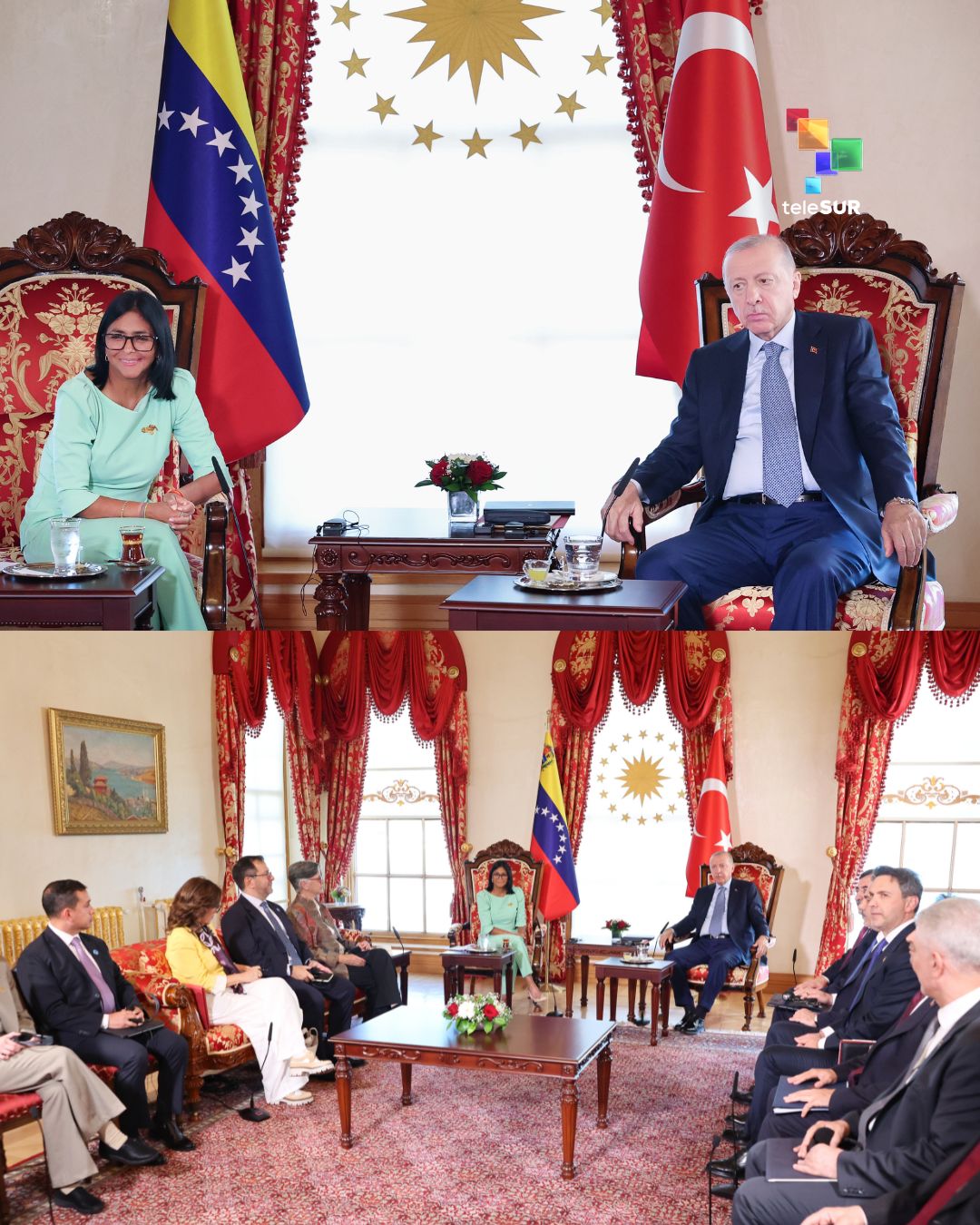
The October 2023 prisoner exchange between the United States and Venezuela was, on its surface, a humanitarian transaction: seven Americans detained in Caracas walked free in exchange for Alex Saab, a Colombian businessman held in a US federal facility on money laundering charges. But the swap revealed something less transactional and more structural about the state of US-Venezuelan relations — two governments that publicly revile each other, yet find themselves unable to fully disengage.
Saab had been detained in Cape Verde in 2020 at Washington's request, under a Justice Department indictment alleging he had helped Venezuelan President Nicolás Maduro's government evade US sanctions by laundering proceeds from corrupt contracts. He was extradited to the United States in October 2021 and convicted the following year. Throughout his detention, Caracas insisted he was a diplomat entitled to immunity — a claim the US rejected. The legal and diplomatic contest over Saab's status made him something more than a criminal defendant; he became a proxy for a broader argument about the legitimacy of Maduro's government and the methods the US had deployed to undermine it.
The sanctions architecture and its limits
The Saab prosecution was embedded in Washington's broader campaign of maximum pressure on Maduro's administration. Since 2015, successive US administrations have levied successive rounds of sanctions targeting Venezuelan oil, gold, and financial sectors — measures designed to starve the government of foreign currency and, the stated aim went, to incentivise a democratic transition. The State Department separately offered a reward of up to $10 million for information leading to Maduro's arrest on narco-terrorism charges.
That architecture has produced measurable economic harm. Venezuelan GDP collapsed by roughly three-quarters between 2013 and 2020, a contraction driven by a combination of sanctions, misgovernance, and the collapse of oil revenues. But the political outcome the sanctions were designed to produce — regime change or at minimum a negotiated transition — has not materialised. Maduro remains in power, having consolidated control over state institutions and, in July 2024, declared himself the winner of a presidential election that opposition coalitions and Western governments promptly disputed.
This is the context in which the Saab exchange becomes legible. Washington secured the release of seven Americans — at least three of whom were detained on what their families and US officials described as politically motivated charges. Venezuela secured the return of a figure it had championed as a diplomat victimised by US overreach. Both sides walked away with something they could present domestically as a win. Neither achieved the systemic outcome they had formally pursued.
What Caracas was buying
The Saab exchange cannot be separated from the broader trajectory of Venezuela's relationship with Washington. In the months preceding the swap, the two governments had engaged in quiet back-channel contact facilitated in part by third-party intermediaries. Norway hosted at least one round of negotiations. The exchange itself came shortly after the US, citing humanitarian considerations, had granted Saab temporary parole on medical grounds — a procedural step that allowed him to travel to Venezuela to receive treatment before being formally transferred.
For Maduro's government, the return of Saab served several functions simultaneously. It reinforced the narrative that Venezuela can extract concessions from Washington even under sanctions pressure — a point of domestic propaganda value in a country where shortages and economic hardship remain pervasive. It also signalled to the broader international community that the Venezuelan government retains sufficient leverage and diplomatic agency to conduct negotiations with the United States on something approaching equal footing.
There is a counter-reading available. Some analysts have noted that Venezuela's willingness to trade detainees for Saab suggests the Maduro government values certain individuals — or certain symbolic outcomes — more than it values the Americans held as leverage. If Washington is willing to exchange a convicted money launderer for seven of its citizens, that exchange rate itself conveys information about US priorities. The implication, if taken at face value, is that the US places a higher value on retrieving its nationals than on prosecuting financial crimes connected to the Venezuelan leadership.
The election question and its aftermath
The geopolitical calculus shifted again following Venezuela's July 2024 presidential election. The Maduro government declared victory with approximately 51 percent of the vote, a result immediately challenged by the opposition candidate Edmundo González Urrutia, who published parallel vote tallies showing a substantial majority for his own campaign. The United States, along with the European Union and several Latin American governments, declined to recognise the official outcome. The Biden administration subsequently recognised González Urrutia as the victor — a symbolic escalation that effectively voided any residual diplomatic engagement with the Maduro administration.
The timing matters. The Saab exchange predated this rupture, and it remains unclear whether a comparable arrangement would be possible now. The Trump administration, returning to office in January 2025, has maintained the sanctions architecture and shown little appetite for the kind of targeted engagement that produced the 2023 deal. Whether Washington retains sufficient leverage or incentive to pursue another prisoner exchange — and whether Caracas retains the willingness to negotiate with a US government that has formally disavowed its legitimacy — is a question the available record does not resolve.
The structural picture
What the Saab episode illustrates, in the end, is not the success or failure of any single diplomatic gambit but the persistence of US-Venezuelan interdependence beneath the surface of open hostility. Washington has pursued maximum pressure for a decade; Maduro remains in power. Caracas has defied isolation; it has not achieved normalisation. Each side retains the ability to inflict cost on the other — sanctions and diplomatic exclusion on one side, arbitrary detention of foreigners on the other. The Saab swap was the moment both sides acknowledged that fact, briefly, and chose to reduce the temperature. Whether that moment was an anomaly or a template depends on political will that neither the source record nor the subsequent trajectory has clarified.
This publication covered the Saab exchange and its aftermath as a bilateral diplomatic case rather than as a morality play about Venezuelan governance — a framing that distinguishes it from much of the contemporaneous wire coverage, which tended to treat the release of Saab as a straightforward capitulation by Washington.
Wire provenance
This editorial synthesis draws on the following public wire/social posts:
- https://t.me/DDGeopolitics
- https://en.wikipedia.org/wiki/Alex_Saab