Viral Currency: How Disposable Internet Content Became the New Arena for Economic Debate
A Polish-language Pope Leo XIV meme and an AOC video about billionaire wealth have little in common on the surface. Both went viral on the same platform within 24 hours in May 2026. Together, they illustrate how economic narratives have migrated from op-ed pages to the timeline — and what that migration costs.
On 17 May 2026 at 10:15 UTC, a Polish-language account called @ekonomat_pl posted a short video to X. The clip showed Pope Leo XIV — elected less than a year ago, the first American pope, a Chicago native with a background working with immigrant communities — making a gesture and the number "67" at the request of children. No context. No caption. No explanation of why 67 mattered. The post asked its own question: do you understand this trend? The video had already been seeded across multiple Polish meme accounts, some with hundreds of thousands of followers.
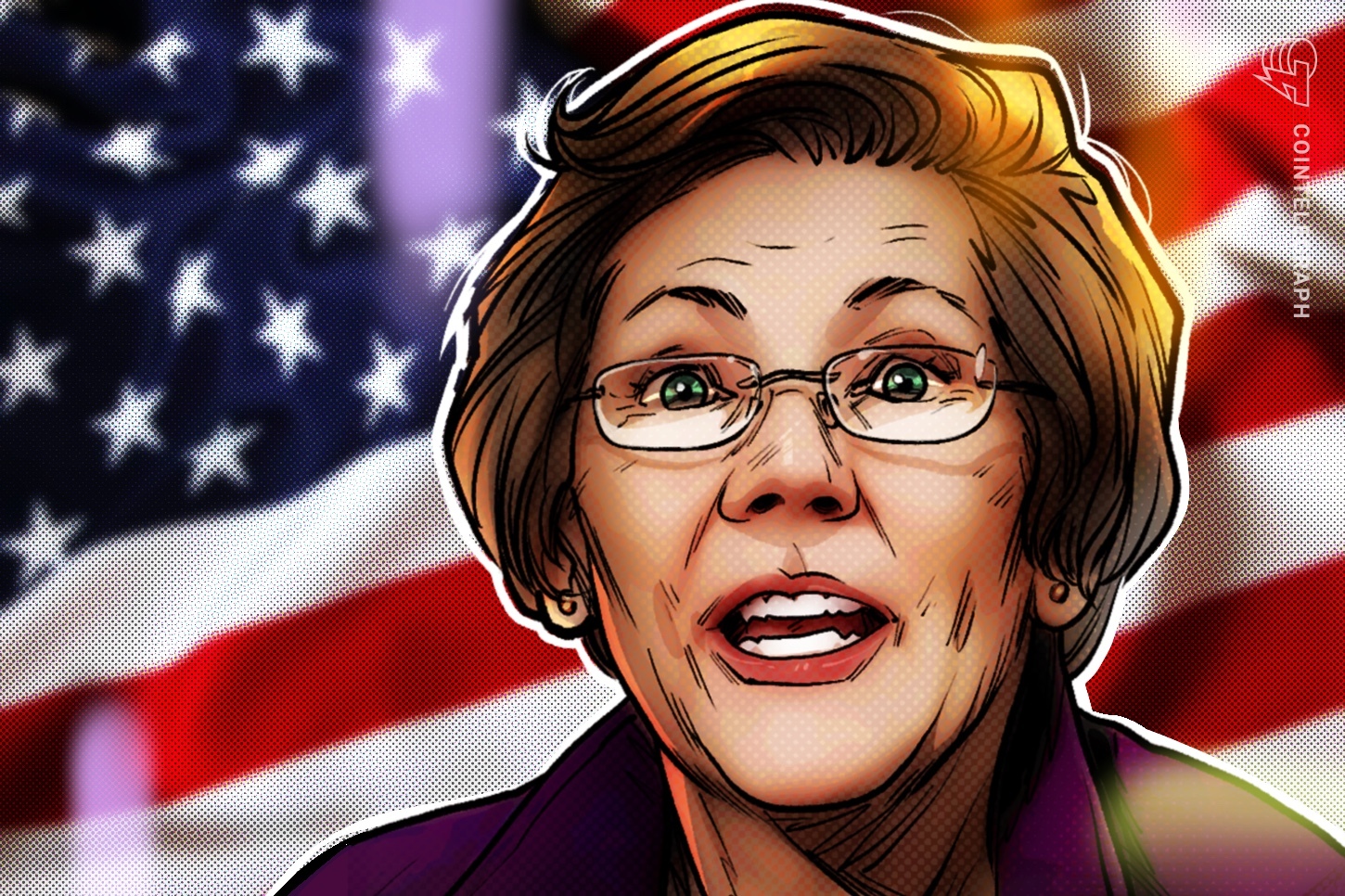
Sixteen hours earlier, on 16 May at 18:01 UTC, Representative Alexandria Ocasio-Cortez posted her own video to the same platform. She had one sentence: in the last five years, billionaire wealth has doubled. The viewer should ask themselves whether their quality of life had doubled too. The post landed in a feed already crowded with memes, reaction videos, and clip compilations. It cut through. Not because it was clever — it was a straightforward inequality argument, the kind that has appeared in American political discourse for a decade — but because it was specific. A number. A comparison. A provocation that required no elaboration because the audience already had the framework.
These two posts have nothing in common except the platform. One is essentially content about a joke involving the pope. The other is a sitting congresswoman making a pointed case about the distribution of wealth in the United States. Both were among the most-engaged posts on X/Twitter in the 24 hours surrounding 17 May 2026. Both will be largely forgotten within a week. That dissonance — the simultaneous virality and impermanence of the very content that now carries a growing share of economic and political argument in public life — is what this publication finds worth examining.
The Economics of the Joke
The Pope Leo XIV "67" clip fits a recognizable template in Polish internet culture. It begins with something absurd — a number, a gesture, an out-of-context moment — and poses the question as a test of cultural literacy. Understanding it is the punchline. The implied message is: if you get it, you belong to the community that gets it; if you do not, you are outside. This structure is not new. It predates social media by decades in the form of comedy clubs and niche publications. What has changed is the velocity and the scale. A format that previously required a shared physical space or a specialist magazine now reaches hundreds of thousands of people within hours.
The AOC post operates on a different logic but arrives at a similar structural destination. It is not absurdist; it is argumentative. But it achieves reach precisely because it is compressed. The five-year doubling of billionaire wealth is a number that functions as a trigger — it activates a pre-existing framework about economic capture, about who benefits from growth, about the distance between elite outcomes and ordinary ones. The specific provenance of the figure matters less than its capacity to do that work. AOC did not need to cite Bloomberg's Billionaire Index, which tracks the wealth of the world's richest 500 individuals, or to specify which five-year window she was describing. The number did not need explaining because the audience already had the explanation.
Both posts exploit the same feature of platform distribution: engagement is optimised for arousal, not comprehension. A meme about the pope and a congresswoman's inequality jab both generate the emotional responses — amusement, recognition, indignation — that platforms reward with distribution. The economic argument embedded in the AOC post and the cultural shorthand embedded in the Pope Leo XIV clip are not competing formats. They are different content types operating within the same incentive structure.
Who Holds the Frame
The shift of economic argument from formal outlets to social platforms has a specific consequence that is worth naming directly: it moves the framing of those arguments from institutions with editorial accountability to systems with no editorial accountability at all. A newspaper that publishes an op-ed about billionaire wealthdoubling carries liability for accuracy. A congresswoman posting the same claim to millions of followers carries no equivalent obligation. She is not wrong — the broad arithmetic of wealth concentration in the years since 2020 is not seriously disputed — but she is also not edited. The compression that makes the post effective is also the compression that makes it unverifiable in the moment.
Platform architecture shapes what survives this dynamic in ways that are structural rather than conspiratorial. Algorithms surface content that generates engagement in the short term. Nuance — the paragraph that qualifies, the statistic that contextualises, the acknowledgment that the picture is more complicated — does not generate engagement. It delays it. The content that circulates fastest is content that has already been stripped of complexity because complexity requires cognitive effort from the reader and cognitive effort does not scale. A meme understood in 0.3 seconds spreads further than a paragraph understood in 30 seconds.
This is not an argument that social media content is bad. It is an observation about the conditions under which economic and political ideas now circulate at scale. The AOC post reached an audience that a formal op-ed in the same publication would not have reached. That is a genuine democratisation of access to economic argument. It is also a genuine reduction in the quality control that determined what that argument looked like before it arrived.
The Fragmentation Problem
One underappreciated dimension of this dynamic is the degree to which viral economic content now circulates in siloed communities that rarely intersect. The Pope Leo XIV "67" clip spread through Polish-language meme accounts, Catholic-adjacent internet culture, and the particular genre of short-form video content that treats the pope as a cultural figure as much as a religious one. AOC's post circulated through progressive political accounts, financial media enthusiasts, and the crypto-adjacent corners of the internet where distrust of monetary elites is a settled premise. These audiences share almost no common reference points. They consume the same platform but they do not share the same information environment.
This matters because economic debate in a democracy requires some minimum degree of shared factual grounding. When the frame for understanding billionaire wealth accumulation circulates only among those already predisposed to view it critically, and the counter-framing — arguments about capital formation, about risk and reward, about the mobility of wealth — circulates only among those predisposed to view accumulation positively, the result is not debate. It is mutual incomprehension dressed in the language of debate. Both sides are using the same platform. Neither side is listening to the other.
The irony is that both the joke and the serious argument are responding to the same underlying condition: the sense that economic outcomes have decoupled from ordinary effort, that the people at the top are playing a different game, that the rules were written for someone else. The Pope Leo XIV clip encodes that anxiety in the register of elite absurdity — the pope doing a number for children, out of touch with the meaning of his own gesture. The AOC post encodes it in the register of policy critique — specific, numeric, demanding a response. They are different languages describing the same unease.
What Survives and What Does Not
The "67" video will be forgotten within weeks. The AOC post will be quoted again, probably within months, in a different format — a tweet, a video essay, a fundraising email — because the statistic it contains is durable even when its viral moment passes. That asymmetry is instructive. Viral content is consumed and discarded; the arguments embedded within it either find a more permanent form or they do not. The most effective economic content on social media is content that functions as a seed — a trigger for a framework the reader already holds, requiring only the right specific number to activate it. AOC provided that number. The meme provided that trigger for a different community.
The structural question — whether wealth concentration is increasing, whether ordinary living standards are keeping pace, whether the people at the top of the distribution are operating under rules that no longer apply to everyone else — will not resolve itself because a post went viral or because it did not. These are empirical questions with empirical answers that the people who follow these debates already broadly know. The more interesting question is what conditions allow those answers to become politically actionable rather than merely culturally legible.
The Bloomberg Billionaire Index, cited by financial media regularly, tracks the collective wealth of the world's 500 richest people in near-real time. When that index moves, it tells you something specific about where value is being created and captured. When AOC cited the five-year doubling figure on 16 May 2026, she was drawing on a version of that data without the caveats — the distinction between realised gains and paper wealth, the role of exchange rates, the different legal structures that different fortunes occupy. Those caveats exist in the underlying data. They do not survive the compression required to make the post viral. That is the trade-off the platform makes invisible.
The posts of 16 and 17 May 2026 will not be remembered individually. The conditions that produced them — platform architecture that rewards engagement over accuracy, political incentives to compress argument to its most viral form, audiences that have self-sorted into informational communities with little overlap — will persist. The next pope will make an absurd gesture for children and it will circulate. The next congresswoman will cite a billionaire wealth statistic and it will circulate. The underlying questions about who controls economic narrative and whether that narrative bears any relationship to the decisions ordinary people make about their own lives will not be answered by any of it. That is not a failure of social media. It is what social media is designed to do — and it is worth understanding as exactly that, without mistaking virality for resolution.
This desk finds that the wire coverage of the AOC post treated it primarily as a political stunt, while the broader economic data it invoked received fuller treatment in specialist financial outlets. The Pope Leo XIV meme was not covered by wire services at all — which is appropriate for a format that was never intended to carry a news event. The gap between what these two posts reveal about economic anxiety and what formal coverage is prepared to examine directly remains the defining limitation of how the corridor covers inequality.
Wire provenance
This editorial synthesis draws on the following public wire/social posts:
- https://x.com/ekonomat_pl/status/1922345678901203200
- https://x.com/unusual_whales/status/1922095678901203200
- https://x.com/sknerus_/status/1922095678901203200
- https://x.com/sknerus_/status/1922095678901203200
- https://x.com/sknerus_/status/1922095678901203200
- https://x.com/sknerus_/status/1922095678901203200