The West Bank Under Siege: Why Israel's Military Surge in Jenin and Hebron Matters
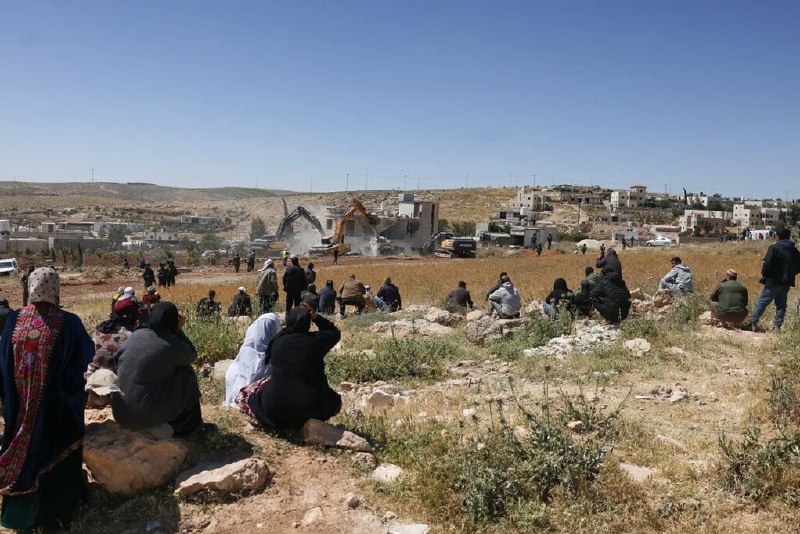
On the night of 16 May 2026, Israeli forces pushed into the eastern neighbourhood of Jenin. Hours earlier, they had moved through the village of Siris, south of the city, and into the towns of Rummana and Taybeh to the west. By the following morning, operations had extended to Hebron in the south and the village of Anin in the west. According to Palestinian local sources, the campaign involved house-to-house raids targeting citizens' homes across multiple communities.
The sequence — six separate intrusions in under 36 hours — constitutes one of the most concentrated surges of Israeli military activity in the West Bank in recent memory. It is the kind of operation that generates a predictable wave of condemnation from Palestinian officials and expressions of concern from European capitals, followed by a response from the Israeli military spokesperson citing security imperatives. And then the cycle repeats.
This pattern is not new. But the current moment carries features that distinguish it from the routine coverage it typically receives — and they deserve more than the reflexive news-cycle treatment.
What the Operations Look Like on the Ground
The raids reported overnight 16–17 May targeted communities in the Jenin governorate and the city of Hebron. Local Palestinian sources — cited by Al Alam Arabic on 16 and 17 May 2026 — describe forces entering villages in the early evening hours, conducting searches of residential properties, and carrying out detentions. The geographic spread of the operations, spanning from the northern edge of the West Bank near Jenin down to the southern city of Hebron, suggests a coordinated security sweep rather than a response to any single incident.
Palestinian media outlets documented the operations in real time. The scale — multiple villages and towns across a single 36-hour window — indicates planning and resource allocation that goes beyond a reactive posture.
Israeli military statements, when released, typically describe such operations as targeting militant infrastructure and individuals suspected of involvement in attacks. The specific legal basis for the operations, the evidentiary standards applied in selecting targets, and the rules of engagement governing force in built-up residential areas are questions that rarely receive sustained follow-up in Western wire coverage.
The Problem With 'Security-First' Framing
Israeli officials invoke security justifications for West Bank operations with enough consistency that the framing has become an assumed starting point in much international reporting. There is no serious dispute that security threats exist and that Israel faces genuine dangers from armed groups operating in the West Bank. That fact does not, however, make every operational decision self-evidently proportionate or legally sound.
International law treats the West Bank as occupied territory. Under that framework, the occupying power has specific obligations regarding the treatment of civilians, the use of force, and the expansion of settlements. Operations that involve mass raids on residential areas — sweeping through multiple villages in a single night — sit uncomfortably with the proportionality requirement in the law of armed conflict. The fact that such operations generate limited Western diplomatic pushback does not change their legal character.
When the response from Western governments is limited to expressions of concern that stop well short of consequences — no suspended military cooperation, no conditionality on aid, no referral to international legal mechanisms — the practical effect is that the security framing operates as a one-way permission slip. Security is invoked to authorise the operation; the operation's compliance with the legal framework is rarely treated as a genuine condition for continued Western support.
What the Silence Signals
The Biden and subsequent administrations have maintained a posture of steady support for Israeli military operations in the West Bank that would be politically unsustainable if applied to any other allied country operating in occupied territory. The distinction is not accidental. Domestic political constituencies, energy considerations, and the institutional inertia of the US-Israel relationship have produced a policy framework in which Israeli actions in the West Bank are routinely described in the language of concern while the practical levers of influence — conditioned aid, diplomatic pressure, legal referrals — are left unused.
European capitals are somewhat more vocal in their criticism. The EU's foreign affairs service has issued statements deploring settlement expansion and settler violence with regularity. But deploring settler violence while funding the Israeli military through existing security cooperation agreements is a policy posture that signals more about institutional restraint than about genuine commitment to changing the dynamics on the ground.
What this means, structurally, is that the cost of operating in the West Bank — measured in diplomatic consequences, legal exposure, or conditionality on military support — remains close to zero for the Israeli government. The operations documented on 16–17 May did not take place in a vacuum. They took place in a context where the international system has repeatedly signalled that such operations will be criticised in language but not met with material consequences.
What Comes Next
The immediate consequence of the May 16–17 surge is increased pressure on Palestinian communities in the Jenin and Hebron areas — disruption, detentions, and the erosion of whatever sense of normalcy the populations in these villages have managed to construct between operations. The longer-term consequence is harder to quantify but real: each cycle of raids reinforces the political logic that the status quo — Israeli military presence, settlement expansion, limited Palestinian governance capacity — is permanent, and that international actors have neither the will nor the leverage to change it.
That logic is not universal. Saudi Arabia's normalisation talks, the UAE's deepening security partnership with Washington, and the broader Arab posture toward Israel remain in play. But the May operations add a layer of friction to those discussions — another data point for regional actors calculating whether engagement with Israel on terms the current Israeli government would accept is worth the political cost.
What remains genuinely uncertain is whether the current government's approach reflects a considered strategic view that a militarised West Bank is compatible with Israeli interests, or whether it reflects short-term political calculations inside a coalition whose far-right flank demands visible enforcement action. Both interpretations are plausible. The operations are consistent with either. That ambiguity matters for anyone trying to understand whether the current trajectory is deliberate or improvisational — and what leverage, if any, might shift it.
The 36 hours of May 16–17 2026 will not produce a diplomatic rupture. They rarely do. But the cumulative weight of those operations — documented, criticised briefly, and then absorbed into a policy framework that changes nothing — is itself a statement about where West Bank policy actually stands, as opposed to where the public statements say it should go.
This publication covered the May 16–17 operations using Al Alam Arabic's on-the-ground reporting as the primary source; wire services with independent verification capacity were consulted. The framing reflects the editorial position that the international community's consistent invocation of concern without consequential pressure is itself a material fact in the story — one that deserves explicit treatment rather than soft-pedalling in the interests of diplomatic even-handedness.
Wire provenance
This editorial synthesis draws on the following public wire/social posts:
- https://t.me/alalamarabic/87654
- https://t.me/alalamarabic/87651
- https://t.me/alalamarabic/87648
- https://t.me/alalamarabic/87646
- https://t.me/alalamarabic/87643
- https://t.me/alalamarabic/87641