WHO Sounds Alarm on Ebola-Bundibugyo Strain as Outbreak Spreads to Uganda
The World Health Organization has declared the Ebola-Bundibugyo outbreak sweeping across eastern Democratic Republic of Congo and into Uganda a public health emergency of international concern, activating a legal and funding mechanism that global health officials hope will accelerate an under-resourced response.
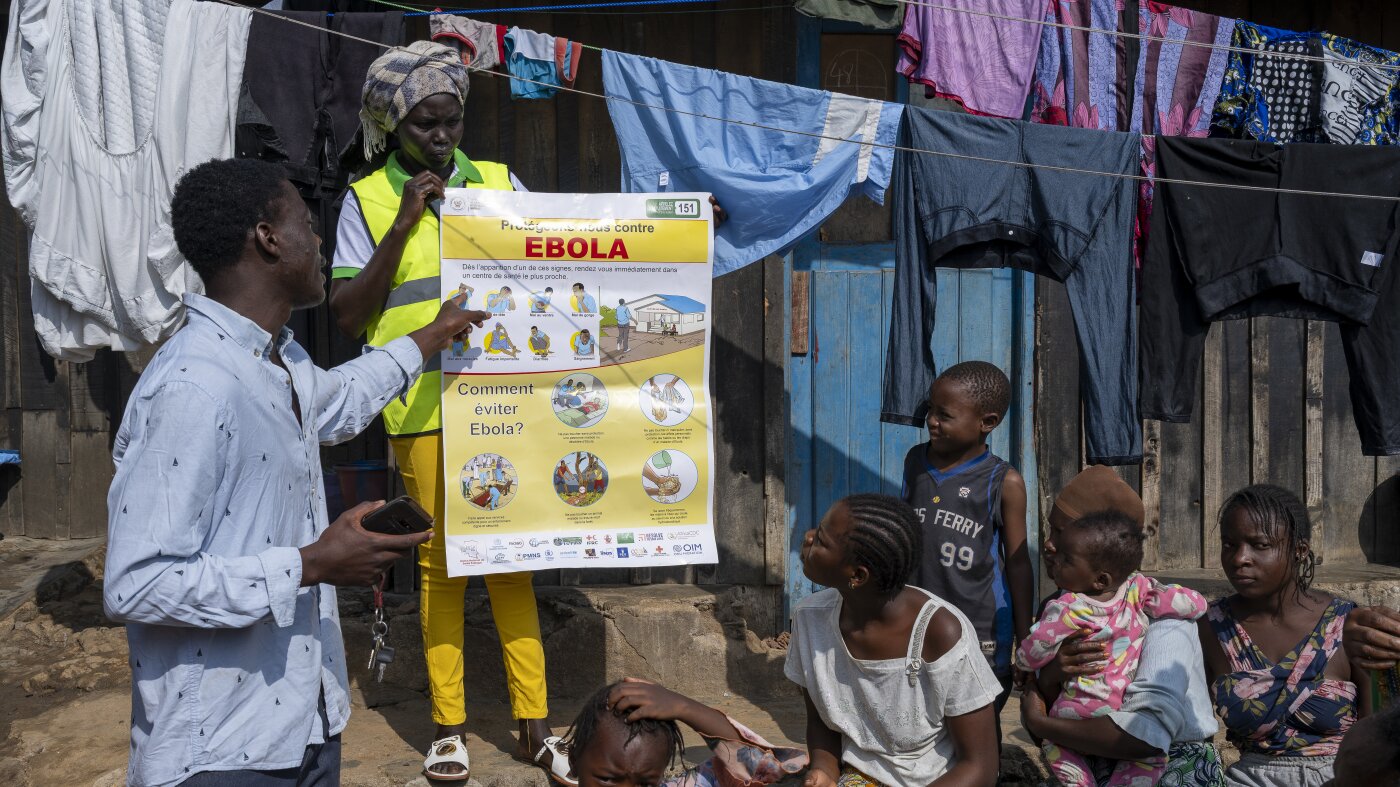
The World Health Organization declared the Ebola-Bundibugyo outbreak spreading across eastern Democratic Republic of Congo and into Uganda a Public Health Emergency of International Concern on 17 May 2026, triggering an international response mechanism that health officials say was overdue. The rare Bundibugyo strain — distinct from the Zaire strain that devastated West Africa in 2014–2016 and killed thousands in the DRC's North Kivu province a decade later — has now been linked to dozens of deaths across both countries, according to WHO's assessment as reported by Al Jazeera.
The PHEIC designation is the highest alarm the Geneva-based agency can raise under the International Health Regulations, a 2005 legal framework designed to coordinate border controls, diagnostic protocols, and funding flows without disrupting trade or travel unnecessarily. In practice, the declaration obligates member states to report cases promptly, allows the WHO Director-General to issue temporary travel recommendations, and unlocks emergency financing from mechanisms like the Pandemic Fund administered by the World Bank. Whether those mechanisms deliver quickly enough to contain a haemorrhagic fever with a case-fatality rate that can reach 50 percent is a question the agency's own officials have struggled to answer in past outbreaks.
The Strain and Its Geography
The Bundibugyo strain has been a known threat since it first emerged in western Uganda in 2007, when an outbreak killed 39 people out of 116 confirmed cases. Unlike the Zaire strain, which has been the focus of two widely deployed vaccines — Merck's rVSV-ZEBOV and Johnson & Johnson's Ad26.ZEBOV/MVA-BN-Filo — Bundibugyo has no licenced vaccine of its own. The experimental rVSV-ZEBOV shot, manufactured in Darmstadt, has shown cross-protective activity against multiple Ebola strains in animal models, and the DRC's health ministry deployed it during the North Kivu outbreak under compassionate-use protocols. Whether it is being used in the current outbreak, and at what scale, remains unclear from the available reporting.
The geographical footprint complicates containment. Eastern DRC is a patchwork of armed groups, mining economies, and populations that have historically mistrusted outside health workers following years of violent conflict. Uganda, sharing a porous border with the DRC, has managed Ebola outbreaks before — including the 2022 Sudan strain outbreak that killed 55 people — but the Bundibugyo strain presents different immunological and logistical challenges. Cross-border movement for trade, family visits, and displacement driven by conflict in North Kivu means that any case-count published on any given day is almost certainly an undercount.
Containment Capacity in Question
The DRC has weathered fourteen confirmed Ebola outbreaks since the virus was first identified near the Ebola River in 1976. Institutional memory from those responses is considerable — Congolese epidemiologists, lab technicians, and contact-tracing teams have been trained and redeployed across multiple crises. But the infrastructure that sustained those responses depended heavily on donor funding channelled through the WHO, the US Centers for Disease Control and Prevention, and bilateral partners like France's Institut Pasteur and the UK Health Security Agency. That funding has never been consistent, and health officials in the region have warned repeatedly that the architecture is fragile: pull the external support and the response collapses within weeks.
Uganda's experience is different but not reassuring. The country's Ministry of Health, working with the WHO Country Office in Kampala and the Africa CDC in Addis Ababa, managed the 2022 Sudan strain outbreak to apparent extinction through aggressive isolation, contact monitoring, and a rings of vaccination strategy using a candidate vaccine from the University of Oxford's Jenner Institute. That outcome — unusual for Ebola — was credited in part to the Sudan strain's lower transmissibility relative to Zaire. Bundibugyo sits somewhere in the middle on transmissibility, but the absence of a targeted vaccine means Uganda cannot simply replicate the 2022 playbook.
The PHEIC Mechanism: Alarm, Not Solution
Declaring a Public Health Emergency of International Concern has never been a cure for anything. The 2009 H1N1 pandemic declaration was criticised for triggering unnecessary panic and vaccine hoarding. The 2014–2016 West Africa Ebola PHEIC — the first ever issued for Ebola — came eight months after the first case was confirmed in Guinea, by which time the outbreak had already spread to Sierra Leone, Liberia, and seven other countries. The emergency designation in that instance eventually catalysed massive international funding and the deployment of the British Army's medical research unit to Sierra Leone, but the damage in human lives — more than 11,000 dead — was done before the mechanism functioned as designed.
The WHO's own independent advisory group on pandemic preparedness has noted that the PHEIC's legal trigger — a public health event of "serious public health impact" that poses "significant risk of international spread" — is often met too late, because member states delay notifying Geneva until cases are already crossing borders. Whether the Bundibugyo declaration represents a genuine acceleration of the international response or merely a retroactive acknowledgment of what was already happening is a distinction that will become clear only in the coming weeks.
What the declaration does immediately is political. It puts health ministers in donor countries on record. It creates an obligation for the WHO Director-General to reconvene an emergency committee within three months to reassess whether the emergency persists. And it signals to pharmaceutical companies that the market conditions for accelerated vaccine development may now exist, even if the Bundibugyo-specific candidate pipeline is thin.
Who Bears the Cost
If the outbreak is not contained within the next two to three months — a timeline that experienced Ebola responders consider optimistic given the border dynamics and the absence of a licenced Bundibugyo vaccine — the costs escalate rapidly. Direct mortality from Ebola is only the first layer. Healthcare systems in both countries, already stretched by concurrent outbreaks of cholera, measles, and malaria, would face system-wide disruption as treatment centres absorb cases. Economic activity in border regions would contract as trade routes are scrutinised. And the political pressure on President Félix Tshisekedi's government in Kinshasa, already navigating a complex transition in the east following the M23 insurgency, would intensify.
For the international community, the stakes are framed by a decade of pandemic-preparation rhetoric that has repeatedly failed to translate into sustained financing for exactly the kind of laboratory capacity, community engagement work, and cold-chain logistics that contain Haemorrhagic fever outbreaks in remote settings. The Pandemic Fund, established in 2022 with $1.6 billion in initial commitments from the G20, has disbursed hundreds of millions to lower-income countries — but the process is slow, bureaucratic, and heavily weighted toward middle-income countries with the administrative infrastructure to submit competitive proposals.
The Bundibugyo outbreak is, in one sense, a test of whether the post-Covid architecture for global health emergencies functions any faster than its predecessor. The evidence from the first hours after the declaration is mixed. Whether the declaration itself was timely — or arrived precisely when it should have been ignored as an overreaction — is a question that will be answered by the curve of the outbreak, not by the press release that started it.
This publication covered the WHO declaration as breaking news, noting the PHEIC mechanism without editorialising on the agency's prior response speed. Several wire services led with case counts; we chose to foreground the strain's immunological distinctiveness as the structural variable that makes this outbreak different from the North Kivu episodes that dominated Ebola coverage in recent years.