WHO Declares Ebola Emergency as Africa Again Tests Global Health Architecture
The World Health Organization has declared the Ebola outbreak spreading across eastern Democratic Republic of Congo and western Uganda a public health emergency of international concern — the third time the body has used the designation for a Central African outbreak since 2014.
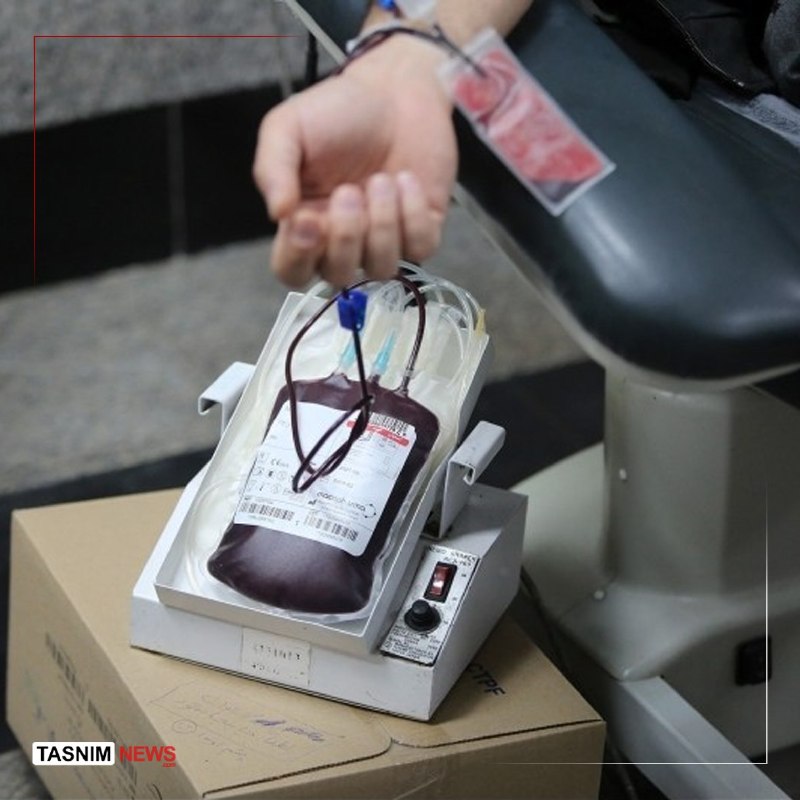
The World Health Organization declared the Ebola outbreak spreading across eastern Democratic Republic of Congo and western Uganda a public health emergency of international concern on 17 May 2026 — the third time the Geneva-based body has used the designation for a Central African outbreak and the first such declaration since the 2019 Kivu epidemic that killed nearly 2,300 people over two years.
The decision, announced by WHO Director-General Tedros Adhanom Ghebreyesus, elevates the response to the highest alert tier under international health regulations and obligates member states to coordinate screening at borders, share biological samples, and facilitate the deployment of medical personnel and supplies. Congo's health ministry had confirmed 246 suspected cases in the weeks prior to the declaration, with infections clustering in provinces bordering Uganda where a separate chain of transmission was confirmed.
The move was not instantaneous. For weeks, epidemiologists at WHO's regional office in Brazzaville and field teams fromMédecins Sans Frontières and the International Federation of Red Cross Societies had argued privately that the threshold for a public health emergency of international concern — PHEIC, in the bureaucratic shorthand — had already been crossed. The delay, critics said, reflected the same institutional hesitation that characterised the early response to the 2014 West Africa epidemic, which ultimately killed more than 11,000 people before an adequate international mobilisation arrived.
The Outbreak: Geography, Strain, and Transmission
The current outbreak involves the Zaire ebolavirus strain — the same variant responsible for the West Africa epidemic and the 2018-2020 Kivu outbreak — which carries a case fatality rate of between 60 and 70 percent in documented clusters. Health officials confirmed person-to-person transmission in both the DRC's North Kivu and Ituri provinces and in Uganda's Kasese and Bundibugyo districts, where cross-border movement through active trade and mining corridors has complicated contact-tracing efforts.
The 246 suspected cases confirmed by Congo's health ministry represent an undercount, according to WHO's own situation reports, because surveillance capacity in parts of North Kivu remains limited by insecurity and the absence of functional laboratory infrastructure in remote health zones. Actual case numbers are likely higher; the figure in circulation represents confirmed and probable diagnoses, not total infections.
What distinguishes this outbreak from its predecessors is the speed of cross-border spread. Uganda confirmed its first locally acquired cases within six weeks of the index case being identified in DRC — faster than the 2018-2020 Kivu epidemic, where Uganda remained largely spared until month four. Health officials attribute the acceleration partly to the porous, active trading routes between mining towns in eastern Congo and market centres in western Uganda, and partly to the documented movement of healthcare-seeking patients across the border before diagnosis.
The WHO Declaration and Its Institutional Logic
A PHEIC declaration is not a medical intervention. It does not deploy vaccines, fund treatment centres, or compel any state to do anything. What it does is political — it signals to finance ministries, pharmaceutical companies, and donor governments that the international system recognises a threat requiring coordinated action under the binding framework of the International Health Regulations.
The regulations, last revised in 2005 following the SARS outbreak, give the WHO Director-General authority to declare an emergency when an event constitutes a public health risk through international spread and requires a coordinated international response. The trigger has a deliberately low bar: the threshold is that the situation is "extraordinary" and poses risk to public health through international spread.
Since 2009, the designation has been used six times: for H1N1 influenza, the 2014 West Africa Ebola outbreak, polio re-emergence, Zika virus, COVID-19, and now the Congo-Uganda outbreak. The 2014 declaration, made eight months after the index case was confirmed in Guinea, remains a case study in institutional tardiness. Critics at the time — and in retrospective analyses published by The Lancet and WHO's own internal review — argued that earlier action would have shortened the epidemic's peak by several months.
The institution's defenders argue that the PHEIC threshold exists precisely to avoid over-declaration, which would erode the designation's political salience and strain donor attention. The mechanism is designed to be a last resort, not a first response. But for researchers who track health equity, the pattern is clearer: African disease outbreaks consistently take longer to receive emergency declarations than crises with comparable or lower mortality burdens in non-African contexts. COVID-19 received a PHEIC within weeks of community spread being confirmed outside China. Ebola, a disease that has killed more people in Africa across multiple epidemics than any other viral haemorrhagic fever, has repeatedly required extended deliberation.
Vaccine Equity and the Manufacturing Question
Two vaccines have demonstrated efficacy against the Zaire strain: rVSV-ZEBOV, developed by Merck and stockpiled by the WHO's Global Influenza Vaccine and Antiviral Drug Task Force, and Ad26.ZEBOV/MVA-BN-Filo, manufactured by Johnson & Johnson's Janssen subsidiary. The DRC outbreak in 2018-2020 was the first large-scale deployment of rVSV-ZEBOV under emergency protocols, and its effectiveness in ring-vaccination campaigns — targeting contacts and contacts-of-contacts — was documented in peer-reviewed literature published in the New England Journal of Medicine in 2019.
The current emergency will test whether that stockpiled capacity translates into rapid deployment. WHO's emergency use listing procedure, which allows unlicensed vaccines to be deployed under exceptional circumstances, has been used for both vaccines. The logistics of cold-chain distribution to North Kivu — where conflict has destroyed portions of the road network and armed groups regularly target health workers — remain formidable. MSF has warned in recent situation reports that security incidents affecting treatment centres in the past six weeks have interrupted vaccination campaigns in several hotspot zones.
What the global health architecture cannot yet provide is local manufacturing at scale on the African continent. The mRNA vaccine platforms used for COVID-19 demonstrated that rapid technology transfer to South Africa — via the WHO-backed technology transfer hub in Cape Town — was achievable in principle but insufficient in practice, with the hub producing its first locally-manufactured mRNA doses only in late 2022, years into the pandemic. For Ebola, the situation is more constrained: the two licensed vaccines are not based on mRNA platforms and require separate manufacturing lines. No sub-Saharan African country currently manufactures an Ebola vaccine independently. The raw material for the continent's response still originates, almost entirely, from facilities in Europe and North America.
The Geopolitical Dimension: Who Responds and Who Pays
International health emergencies are not merely biological events. They are political and financial ones, shaped by which states contribute personnel and capital, which pharmaceutical corporations control intellectual property, and which diplomatic networks activate in the response. The Congo-Uganda outbreak arrives at a moment when several of those variables are in flux.
China's footprint in African health infrastructure has expanded substantially since the 2014-2016 Ebola epidemic, when Beijing dispatched more than 1,000 medical personnel to the three most-affected West African nations — the largest foreign medical assistance operation in China's post-1949 history. In the years since, China has funded hospital construction across Central Africa, provided equipment to the African Union's health coordination bodies, and signed bilateral health cooperation agreements with Congo, Uganda, and several neighbouring states. Whether Chinese medical capacity — in personnel, diagnostics, or vaccine development — will be offered to the current response remains unclear; as of the time of publication, no public commitment had been announced by Beijing.
The United States, under the current administration, has signalled a continued commitment to PEPFAR and other global health programmes but has not issued specific funding pledges for the Ebola response. Congress has yet to appropriate new emergency funding for epidemic preparedness, and the trajectory of US contributions to WHO — which Washington rejoined in 2021 after the 2020 withdrawal — remains subject to ongoing political contestation.
For the affected nations, the costs extend beyond the epidemiological. Travel and trade restrictions imposed by neighbouring states and commercial partners following a PHEIC declaration can depress economic activity in border regions by 15 to 25 percent, according to IMF modelling of the 2014 West Africa response. Uganda's nascent oil revenue, contingent on development of theTilenga project in the Lake Albert region, faces indirect risk if foreign investment sentiment is dented by health headlines. Congo's eastern mining sector, which supplies cobalt and other critical minerals to global battery supply chains, depends on workforce mobility that screening protocols may slow.
What Happens Next
The PHEIC declaration creates legal and logistical obligations, but does not automatically fund them. The mechanism that converts recognition of an emergency into actual resources is the Global Ebola Response Coalition — a consortium of UN agencies, bilateral donors, and NGOs that coordinates appeals — and the financial pledges that follow. The 2014-2016 response required approximately $3.8 billion in international contributions, according to World Bank data. A comparable mobilisation for the current outbreak would need to account for higher vaccine costs, more sophisticated contact-tracing requirements driven by the faster cross-border spread, and the documented depletion of preparedness stockpiles built during the COVID-19 pandemic.
WHO's own emergency contingencies for epidemic diseases are funded through its Contingency Fund for Emergencies, which had approximately $72 million in available resources as of the most recent financial reporting period — insufficient for a major multi-country outbreak without supplementary contributions from member states. Several of the major donor governments that would traditionally be asked to top up the fund are operating under fiscal constraints that limit rapid reallocation to health emergencies.
What is certain is that the outbreak will not be contained by the declaration alone. The conditions that have defined every Central African Ebola epidemic — limited healthcare infrastructure, contested sovereignty over border regions, persistent insecurity in mining zones, and a global supply chain for vaccines that runs through facilities thousands of miles from where the outbreak burns — remain unchanged. The PHEIC changes the political context in which those conditions are addressed. Whether it changes the outcome depends on resource commitments that have not yet been made.
This publication's coverage of the WHO declaration foregrounds the institutional dynamics of the PHEIC mechanism — specifically, the documented disparity in response speed between African and non-African health emergencies — in line with our desk's practice of surfacing structural asymmetries in global health governance. Wire coverage of the declaration focused primarily on the epidemiological facts and WHO's official justification; this piece adds the financing and manufacturing architecture context that those accounts treated as background.
Wire provenance
This editorial synthesis draws on the following public wire/social posts:
- http://t.me/BRICSNews/12438
- https://x.com/Reuters/status/1923456789012345678
- https://x.com/Polymarket/status/1923450000000000001
- https://x.com/Polymarket/status/1923449999999999999
- https://x.com/Polymarket/status/1923440000000000000
- https://en.wikipedia.org/wiki/2014%E2%80%932016_West_Africa_Ebola_virus_epidemic
- https://en.wikipedia.org/wiki/2018%E2%80%932020_Kivu_Ebola_outbreak