WHO Declares Ebola Outbreak in DRC and Uganda a Public Health Emergency of International Concern
The World Health Organization declared the Bundibugyo Ebola strain spreading across eastern Democratic Republic of Congo and Uganda an international health emergency on Sunday, as the death toll in Ituri province alone reached at least 80.
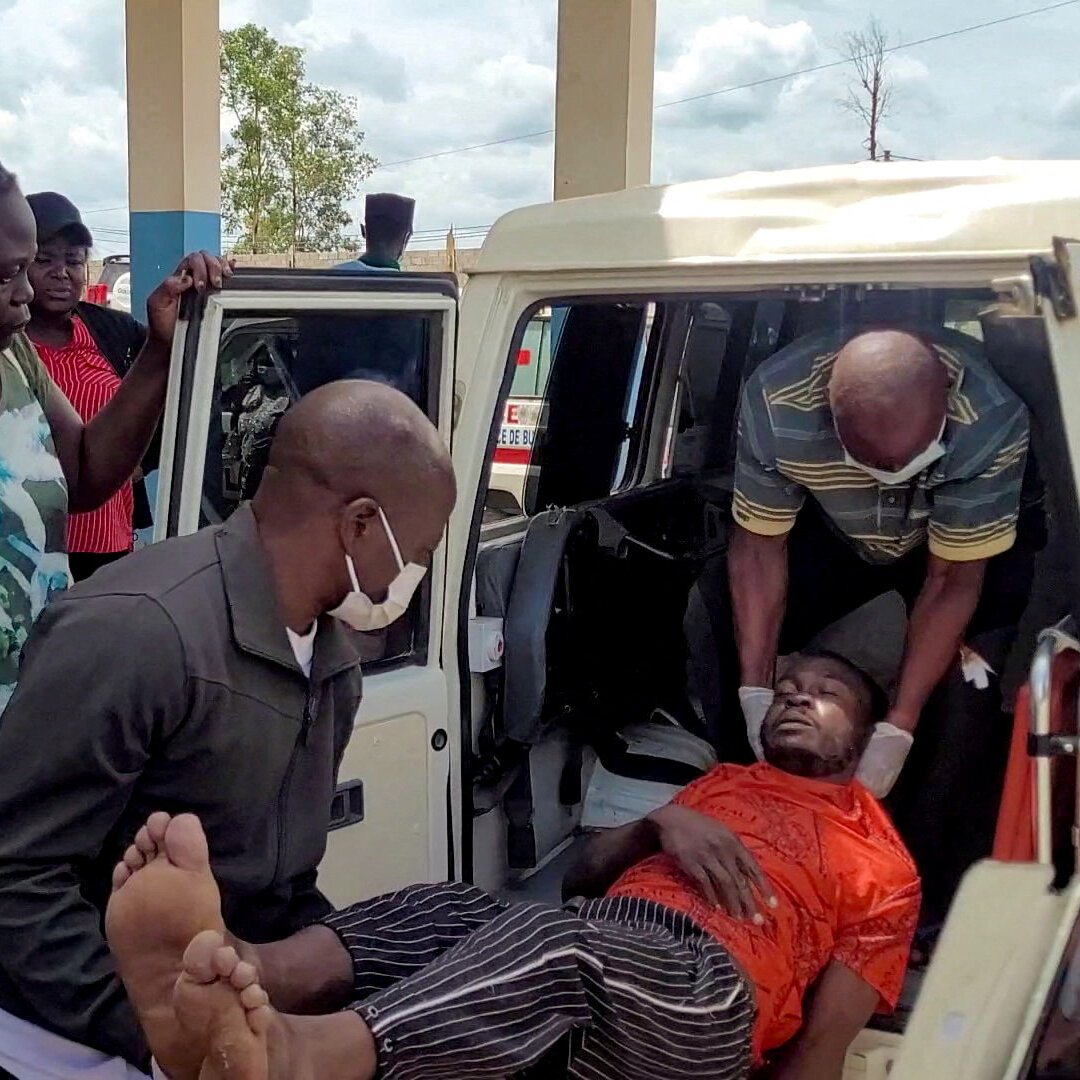
The World Health Organization declared the Bundibugyo Ebola strain spreading across eastern Democratic Republic of Congo and Uganda a public health emergency of international concern on Sunday, 16 May 2026, triggering renewed urgency across global health institutions already stretched by concurrent disease threats.
The designation, the highest alert level the WHO can issue under international health regulations, came after at least 80 deaths were confirmed in Ituri province alone, according to the DRC's health ministry. The rare Bundibugyo strain—distinct from the more widely known Zaire variant that devastated West Africa between 2014 and 2016—has now been detected in cross-border populations between the Democratic Republic of Congo and Uganda, prompting coordinated alarm from both national governments and multilateral bodies.
The emergency declaration carries immediate practical consequences. It unlocks emergency funding mechanisms, obligates member states to report cases promptly, and creates a framework for coordinated border health measures. It also, conspicuously, elevates the crisis into the political consciousness of donor governments and international financial institutions in ways that routine outbreak reporting rarely achieves.
The Immediate Picture: Scale, Geography, and Transmission
The outbreak's epicenter lies in Ituri province, a region that has endured persistent instability and humanitarian strain for years. Eastern DRC has been the site of multiple Ebola outbreaks—the 2018–2020 Kivu epidemic claimed more than 2,200 lives—but the current incursion of the Bundibugyo strain represents something qualitatively different in terms of cross-border diffusion.
The Bundibugyo strain, first identified in a 2007 outbreak in Uganda, carries a case fatality rate that, while lower than Zaire Ebola, remains lethally high—generally estimated between 25 and 50 percent depending on clinical care access. What distinguishes the current transmission pattern is its documented presence in both DRC and Uganda, meaning containment efforts must operate across one of Africa's most porous and politically complex border regions.
Neither the WHO nor the affected governments have published detailed transmission chain data as of publication. The sources consulted do not include genomic sequencing results or confirmed patient-zero attribution. What is established is the death toll—minimum 80 in Ituri—and the WHO's formal determination that the outbreak poses a risk of international spread.
Regional Capacity and the Limits of the Old Playbook
The instinct in Western coverage of African health emergencies is often to frame the story as a race against time before external intervention arrives. That framing, while not entirely inaccurate, obscures a more complicated operational reality.
Uganda has managed Ebola outbreaks before. Its health ministry, drawing on experience with the 2012 Bundibugyo outbreak and subsequent incursions of the Zaire strain, has developed institutional muscle memory for contact tracing, isolation protocols, and community engagement that surpasses most low-income country health systems. DRC's national response infrastructure, despite chronic resource constraints, has accumulated two decades of outbreak management expertise precisely because the country has faced Ebola as a recurring feature of the epidemiological landscape.
The question is not whether regional actors are capable. It is whether the international financial architecture surrounding health emergencies treats African-led responses as the primary solution or as a preliminary phase before externally-directed intervention takes over. Historical patterns suggest the latter is more common than the former, and that pattern has costs—not merely to institutional dignity, but to operational efficacy. Locally-embedded response tends to be faster, more trusted by affected communities, and better calibrated to local transmission dynamics than centrally-directed international campaigns.
The WHO's emergency declaration, whatever its intentions, recalibrates the political economy of the response. It invites large-scale bilateral funding commitments, UN agency coordination, and—inevitably—the involvement of outside actors whose interests and timelines do not always align with those of the most affected communities.
The Structural Context: Health Emergencies in an Era of Competing Crises
Global health security architecture has been under structural strain for years. The COVID-19 pandemic exposed fundamental weaknesses in both early warning systems and equitable access to medical countermeasures. The post-pandemic period has seen donor fatigue, competing geopolitical priorities, and a retreat from multilateral engagement by key Western governments—all of which create a less favorable environment for sustained Ebola response.
This is not abstract. The DRC and Uganda are operating in a funding landscape where climate-linked humanitarian crises, ongoing conflicts in the Sahel and Horn of Africa, and the lingering infrastructure deficits from COVID-19 response have collectively exhausted donor attention and purse strings. An Ebola emergency, even one formally designated by the WHO, must compete for resources against multiple simultaneous claims.
The structural irony is acute. The same global health governance architecture that exists to coordinate responses to precisely this kind of outbreak has been progressively weakened by the political choices of its most capable members. The United States, historically the largest contributor to WHO funding, has spent the past several years restructuring its global health engagement around bilateral rather than multilateral channels. European contributors have expanded their commitments in certain areas while contracting them in others. The result is a system nominally capable of mounting an effective response, but politically fragmented in ways that complicate rapid deployment.
Stakes and What Comes Next
The stakes are measurable in lives, but also in institutional credibility. If the Bundibugyo outbreak is contained quickly—within weeks rather than months—the WHO's emergency mechanism will be vindicated as an effective early warning and mobilization tool. If transmission persists and spreads to new populations, the declaration will be retrospectively assessed as either insufficiently aggressive or as having failed to catalyze the response it was designed to trigger.
For the DRC and Uganda, the immediate priority is contact tracing and isolation in the affected provinces. Both governments have requested international support and, as of this reporting, are coordinating with WHO regional offices on deployment of expertise and medical supplies. The trajectory of the outbreak over the next four to six weeks will determine whether the emergency declaration was sufficient to alter its course, or whether additional escalation is warranted.
The underlying question—of whether the world's systems for responding to infectious disease threats are adequate to the moment—is not new, and it is not answered by any single outbreak. The Bundibugyo strain's appearance in a cross-border context, in a region with limited vaccine coverage against that specific variant, simply poses it again with fresh urgency.
This publication's reporting on the DRC-Uganda Ebola outbreak prioritizes regional health ministry data and WHO institutional communications. Western wire framing of the story has tended to emphasize international response mechanisms over local capacity—a tilt this article attempts to correct.
Wire provenance
This editorial synthesis draws on the following public wire/social posts:
- https://t.me/wfwitness/
- https://t.me/osintlive
- https://t.me/alalamarabic
- https://t.me/rnintel
- https://t.me/alalamarabic