The 'All In' Doctrine: Anonymous Sources and the Logic of Inevitable War
Leaked snippets from Israel Hayom suggest Washington is preparing another strike on Iran. But the framing of inevitability deserves more scrutiny than it typically receives.
It has become one of the most reliable mechanisms in modern conflict coverage: an anonymous official, a friendly outlet, and a headline that frames military action as a foregone conclusion. On 18 May 2026, Israel Hayom published exactly that. A source familiar with American planning told the newspaper that another U.S. strike on Iran was "not a question of if, but when." Israeli security officials, the report added, confirmed that preparations were complete.
The machinery of inevitability grinds forward. And yet, somewhere between the anonymous source and the published story, important questions tend to disappear.
The claim itself warrants examination before it is taken as a baseline for analysis. Anonymous sourcing in national security reporting serves a specific institutional function: it allows officials to float policy options, signal resolve to adversaries, and gauge public reaction — all without accountability. The technique is not uniquely American, but Washington has refined it to a degree that makes it a genuine instrument of state communication rather than mere journalism. When an unnamed figure "familiar with planning" tells a newspaper that military action is inevitable, the statement operates simultaneously as news, as pressure, and as trial balloon.
The Problem With 'Complete Preparations'
Israeli security officials are quoted as confirming that preparations are complete. This is a stronger claim than it appears. It suggests logistics — forces repositioned, munitions allocated, command-and-control timelines activated. If accurate, it represents a significant escalation from the rhetorical posturing that typically precedes military action. If inaccurate, it represents a deliberate signal designed to change Iranian behavior through the appearance of imminent force.
The distinction matters enormously for anyone trying to assess actual risk. An Israeli official speaking to Israel Hayom — a newspaper with documented proximity to the current government — has institutional reasons to emphasize the credibility of military threats. A government that wants to avoid war uses the same language as one preparing for it. The observable surface is identical. Only the intent differs.
A separate Israeli official offered a more nuanced assessment, one that the initial coverage has largely buried. That official said that given Iran's current posture, a limited military strike was unlikely to change anything. The implication, according to the same reporting, is that President Trump may have no choice but to go "all in." Here the logic gets interesting — and considerably more troubling.
The Logic of Escalation
The "all in" framing deserves particular attention because it represents a specific theory of coercive diplomacy: that limited pressure produces limited results, and that only total commitment compels behavioral change. This theory has an impressive track record of failure when applied to territorial disputes, insurgencies, or nuclear programs conducted below the threshold of explicit weapons testing. It has occasionally succeeded when the target state's core interests are directly threatened and a face-saving off-ramp exists.
Iran's nuclear program does not obviously fit that profile. The Islamic Republic has spent four decades building its deterrence posture precisely to survive exactly this kind of pressure. It has absorbed sanctions, cyber operations, targeted killings of scientists, and at least one significant kinetic strike — the 2020 Soleimani operation — without abandoning its strategic architecture. The structural incentives pushing Iran toward nuclear hedging have, if anything, increased under sustained American pressure.
The "all in" doctrine, applied to this context, suggests that limited strikes are pointless and comprehensive strikes are necessary. That logic ends in a place that responsible policy analysis should be reluctant to normalize. The anonymous sourcing around escalation is not describing a military plan — it is constructing an argument for one.
The Media's Role in Normalization
Coverage of this story has followed a predictable template. The Israel Hayom report circulates as fact. Other outlets treat the anonymous sourcing as credible because other outlets are treating it as credible. The inevitable framing accumulates weight through repetition rather than evidence. Before long, the question shifts from "should the U.S. strike Iran?" to "when will the U.S. strike Iran?" — and the most important question, whether the action serves any defensible strategic purpose, has quietly exited the conversation.
This is not a new problem. The run-up to previous military operations has consistently featured anonymous sourcing that later proved either exaggerated or fabricated. The intelligence on Iraqi weapons of mass destruction was presented with far more confidence than the evidence warranted, in part because the framing of inevitability had already taken hold. The media ecosystem of 2026 is faster and more fragmented, but the underlying dynamic remains recognizable.
Anonymous sourcing is sometimes necessary. Official classification creates real constraints on what journalists can report. But the reader deserves to understand what anonymous sourcing is not: it is not verification. It is a named official making a claim without being willing to stand behind it in public. That practice has value in specific circumstances, but it should not become a shortcut around the harder work of establishing what is actually known.
What Remains Unknown
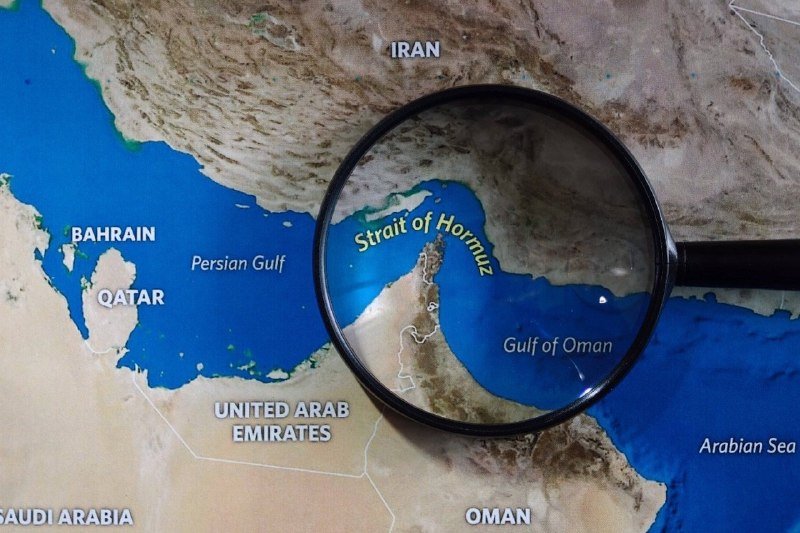
The sources examined here do not specify what triggering event, if any, would initiate strikes. They do not indicate whether the "all in" scenario has been formally debated within the National Security Council or presented to allied governments. They do not address what Iranian retaliation would look like or how the U.S. would manage escalation across the Strait of Hormuz, through which a significant portion of global oil shipments pass.
These are not peripheral concerns. They are the core of any serious assessment. The anonymous officials quoted in Israel Hayom may have access to that information; they have not shared it. What they have shared is a narrative — one in which military action is inevitable, limited action is inadequate, and therefore comprehensive action is required. That narrative serves certain interests. Whether it serves American, Israeli, or broader regional security is a question the sources examined here do not answer.
Readers encountering these reports would do well to treat the framing of inevitability as what it is: a claim made by interested parties without full public accountability. The gap between "a source says action is inevitable" and "action is necessary and justified" is substantial. The most important question in any conflict coverage is rarely the one the sources want you to ask.
Wire provenance
This editorial synthesis draws on the following public wire/social posts:
- https://t.me/osintlive/2847
- https://t.me/wfwitness/11092
- https://t.me/osintlive/2845