The Arithmetic of Terror: What Russia's Dnipro Strike Reveals About the War's Trajectory
Nine civilians wounded in Dnipro, including a child, in another Russian cruise-missile strike. The repetition is not accidental — it is the strategy.
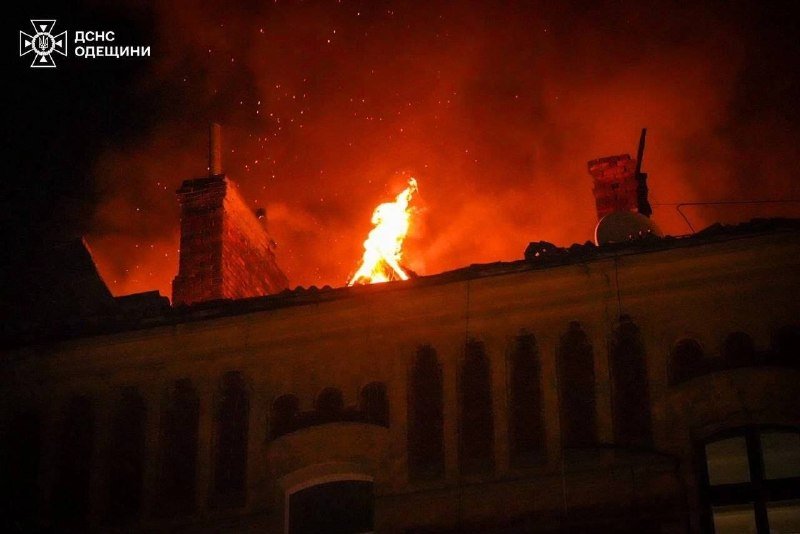
A ten-year-old boy was among nine people wounded when Russian cruise missiles struck residential areas of Dnipro in the early hours of 18 May 2026. Emergency services responded to multiple explosion sites across the city. At least two more inbound missiles were tracked by Ukrainian air defence as the initial response was still underway. The attack followed a pattern that has become, paradoxically, routine: a night strike, civilian casualties, and a city that has learned to measure its suffering in increments.
The repetition demands analysis. Russia's use of cruise and ballistic missiles against Ukrainian cities far from the front line is not a sign of military efficiency. It is a deliberate communication — to the Ukrainian population, to Kyiv's Western partners, and to domestic Russian audiences. The message is arithmetic: no city is safe, no night is guaranteed, and the cost of resisting accrues daily in broken bodies and sleepless families.
The Logic of Secondary Targeting
Russian strike doctrine, as observable across five major campaigns against Ukrainian urban centres since 2022, follows a consistent escalation ladder. Initial strikes probe air-defence coverage and civilian warning systems. Subsequent waves exploit observed response patterns — the arrival of emergency services, the clustering of civilians near damaged infrastructure. The strikes tracked in the 18 May Telegram dispatches from TSN_ua and AMK_Mapping follow this template precisely: multiple missiles in sequence, timed to maximize secondary casualties among first responders and onlookers.
This is not imprecision. It is a feature. Western military analysts who have studied Russian strike patterns note that the Russian Aerospace Forces have consistently demonstrated the ability to execute time-staggered attacks with greater accuracy than the initial, often mass-dispatched waves suggest. The chaos of the second and third strikes is a designed outcome, not a byproduct of weapons limitations.
Ukrainian officials have repeatedly characterized these patterns as violations of the laws of armed conflict, which distinguish between military objectives and civilian objects and prohibit attacks whose incidental civilian harm would be excessive in relation to the anticipated military advantage. That legal framing is correct. But the legal determination does not explain the strategic logic — and understanding that logic is essential to understanding why these strikes continue.
The Attention Economy of Atrocity
Every Russian strike against a Ukrainian city enters a global information environment that has, over four years of conflict, undergone measurable fatigue. Major Western outlets covered the first Russian strikes on Ukrainian cities in 2022 extensively. By 2024, the threshold for sustained coverage had risen. By 2026, a strike that wounds nine people — as tragic as each individual case is — competes for attention against a dozen other global crises, domestic political contests, and economic anxieties in the reader's home country.
The Telegram channels that tracked the Dnipro strikes — AMK_Mapping and TSN_ua — serve a vital documentation function. But their dispatches reach an audience that is self-selecting: people already invested in the conflict, already monitoring its daily rhythm. The broader Western media ecosystem, which shapes the political space where decisions about weapons shipments and sanctions are made, has quietly recalibrated its threshold for what constitutes a story worth lead placement.
This is not a criticism of individual journalists or outlets. It is a structural observation about how information volume produces desensitization. When a ten-year-old boy wounded in a Russian missile strike is the fourth such incident a reader has encountered this month, the neurological and emotional response flattens. The escalation from horror to concern to mild awareness to barely-registered noise is predictable. Russia's targeting planners, whatever their moral limitations, are not fools. They understand media dynamics. The strikes are calibrated not merely to cause physical harm but to operate within — and exploit — the rhythms of global attention.
What Western Policy Has Gotten Wrong
The dominant Western framework for understanding Russia's urban-strike campaign has been to treat it as a pressure tactic aimed at breaking Ukrainian morale or forcing concessions at a negotiating table. Under this reading, the strikes are means to an end: they will continue until Kyiv or its Western backers blink.
There is an alternative reading, and the evidence increasingly supports it. Russia's strike campaign is also an end in itself. It serves a defensive function within the broader conflict architecture: every missile fired at Dnipro, Odesa, or Kyiv is a missile not fired at Ukrainian military logistics or front-line positions. The strikes impose costs on Ukraine's civilian infrastructure, which consumes resources — Western-supplied resources — that might otherwise flow to the battlefield. The terror is not merely psychological; it is budgetary. Every hryvnia spent rebuilding a residential block is a hryvnia not spent on ammunition.
This interpretation has implications for Western policy that the current approach has not fully processed. Supplying Ukraine with air-defence systems that can intercept Russian missiles over cities is necessary but insufficient if the volume of strikes exceeds the capacity of those systems to respond. The arithmetic of Ukrainian air defence — the number of interceptors available, the density of coverage, the command-and-control latency between detection and engagement — remains a constraint that Russian planners factor into their targeting decisions.
Western governments that have pledged continued support must grapple with a structural mismatch: Russia can produce missiles at a rate that outpaces Western production of interceptors, and the cost differential per unit heavily favours the attacker. A cruise missile costs a fraction of the interceptor needed to bring it down. In a pure economic contest, the maths favour attrition of the defender's inventory.
The Human Scale
Nine people wounded. One of them ten years old. His name, if he is lucky enough to survive without permanent injury, will not appear in most Western coverage. His photograph, if released, will circulate for a day or two among those who follow the conflict closely, and then recede. He will become, in the language of conflict studies, a statistic — a data point in a body count that analysts use to calibrate severity models.
He is not a statistic. He is a child who will carry whatever happened to his body and his mind through whatever remains of his childhood. The Telegram dispatches that reported his wounding did not editorialize. They recorded. That restraint is appropriate to journalism. But restraint should not be mistaken for perspective. The perspective here is that Russia's strike on Dnipro was not an accident of war. It was a deliberate act in a campaign designed to make Ukrainian civilian life ungovernable. Every night that passes without a decisive Western response — not a statement, not a reaffirmation of commitment, but a material shift in the air-defence and strike-capacity balance — is a night Russia's planners have won.
The ten-year-old boy in Dnipro is the argument. Not a metaphor for something larger. Not a symbol. The argument itself.
Wire provenance
This editorial synthesis draws on the following public wire/social posts:
- https://t.me/TSN_ua/18234
- https://t.me/TSN_ua/18233
- https://t.me/TSN_ua/18232
- https://t.me/AMK_Mapping/8945
- https://t.me/AMK_Mapping/8943