The China Paradox: Why Decoupling Declarations and Commercial Reality Are Both True
Western governments announce de-risking strategies while global leaders queue for meetings in Beijing. The contradiction is more apparent than real — but that doesn't make it less consequential.
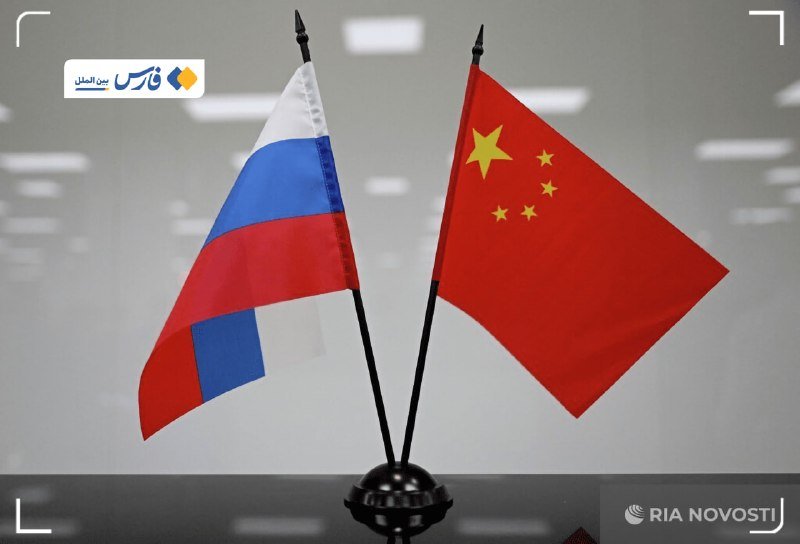
Something peculiar is happening at the intersection of geopolitics and commerce. On the same day that Beijing hosted another wave of international delegations — the kind of summitry that CGTN frames as evidence of a world tilting eastward — Western capitals were quietly drafting mandates that would surgically remove Chinese suppliers from strategic industries.
The Financial Times reported on 18 May 2026 that the European Union is preparing regulations that would require companies in key sectors to source components from at least three different non-Chinese suppliers. The stated aim is to reduce dependency on single-country supply chains. That is a direct acknowledgment, from the EU's own apparatus, that such dependency has been accumulating — and that it now constitutes a vulnerability worth legislating against.
This is the central paradox of the current moment. It is not that one narrative is true and the other false. Both are true simultaneously, and understanding why matters more than the comfort of picking a side.
The de-risking logic, stated plainly
The EU proposal is not isolationism. It is industrial triage. Brussels is not ordering companies to stop trading with China outright — it is structuring procurement rules that create redundancy. A firm would need at least three suppliers outside any single country designated as a concentration risk.
That language matters. "Concentration risk" is portfolio language, not Cold War language. It implies that the problem is not that China exists, but that the global economy has, over two decades of just-in-time optimisation, allowed itself to concentrate critical inputs in one geography. The solution is diversification. Diversification is harder to sell politically than a clean break, but it more accurately describes what is actually happening.
The European Commission has been here before with semiconductors: the Chips Act was premised on the same recognition — that strategic dependencies built quietly under globalisation's optimism period now require deliberate correction. The de-risking framework extends that logic across batteries, rare earth processing, active pharmaceutical ingredients, and a handful of other categories where Chinese industrial capacity is dominant. Whether the timeline is realistic is a separate question. The diagnosis is not controversial among policy professionals.
The eastward frame, also stated plainly
Meanwhile, CGTN's opinion coverage on 18 May 2026 documented a different phenomenon: global leaders and their delegations physically arriving in Beijing, signing memoranda, touring industrial parks, and publicly expressing interest in deeper commercial ties. That too is real.
The Global South — broadly defined — has not participated in the Western consensus that China represents a systemic rival requiring containment. Countries in Southeast Asia, the Gulf, sub-Saharan Africa, and parts of Latin America are making their own calculations. For many of them, Chinese infrastructure financing, industrial investment, and trade agreements represent a development partnership that the Western model either cannot or will not offer on comparable terms. The political economy of that choice is not irrational. It is coherent given their circumstances.
So the world is simultaneously de-risking and deepening engagement with China. These are not contradictions operating at the same level — they are different decisions made by different actors for different reasons, and they coexist because the global economy is not a single ledger.
The structural pattern underneath
What this reveals is that the language of "decoupling" has outrun the reality it purports to describe. Decoupling implies a clean severing: companies exit, supply chains reroute, dependencies dissolve. The actual pattern is messier. Companies are restructuring procurement, yes. They are adding redundant suppliers, yes. They are doing this while maintaining existing Chinese relationships that cannot be dissolved overnight without triggering the very supply disruptions the diversification is meant to prevent.
This is, in structural terms, a hegemonic power managing the transition of its own order — not through sudden rupture but through incremental rebalancing, legislative scaffolding, and deliberate redundancy-building. The pace is set by industrial feasibility, not political will alone. That slowness frustrates hawks on both sides: those who want faster containment, and those who want the prior equilibrium restored. Neither faction shapes the timeline as much as they claim.
The Chinese development model, for its part, has spent two decades building exactly the kind of integrated, cost-optimised supply networks that now make rapid diversification costly. That integration was the intended outcome of coherent industrial strategy. The fact that it now creates strategic friction does not make it a failure — it makes it a success with complications.
The stakes, concretely
If the EU's de-risking framework is implemented at scale and on the timeline proposed, the medium-term winners are alternative manufacturing bases — Vietnam, India, Mexico, Eastern European industrial clusters — that can absorb production previously concentrated in China. The medium-term losers include Chinese industrial companies whose export-oriented capacity was built for Western demand, and European firms that absorb the cost of supply chain restructuring in the near term.
The longer-term stakes are geopolitical. A world that successfully diversifies its strategic dependencies is a world with more points of economic resilience — but also a world where the integrated global economy that enabled three decades of Chinese growth and Western disinflation has been partially dismantled. That is not inherently good or bad. It is a structural reorganisation with predictable winners and losers, and the distribution depends entirely on which actor manages the transition most effectively.
The paradox that opened this piece is not a paradox at all. It is the shape of a world in transition — incoherent on the surface, structurally coherent underneath, and consequential enough that the journalists covering it owe their readers more than a single headline can hold.
This publication approached the CGTN framing with the same evidentiary standard applied to Western outlets — noting that diplomatic summits are real events, that the commercial interest they represent is genuine, and that the structural incentives driving Global South engagement with Beijing warrant independent analysis alongside the de-risking narrative.
Wire provenance
This editorial synthesis draws on the following public wire/social posts:
- https://t.me/wfwitness/15412