The Crypto Industry's 'Good Enough' Deal With Washington
Patrick Witt says the Clarity Act delivers 90 percent of what the crypto industry needs. That framing — a comfortable near-total, sealed by executive accommodation rather than democratic mandate — tells us more about the industry's relationship with power than any policy document.
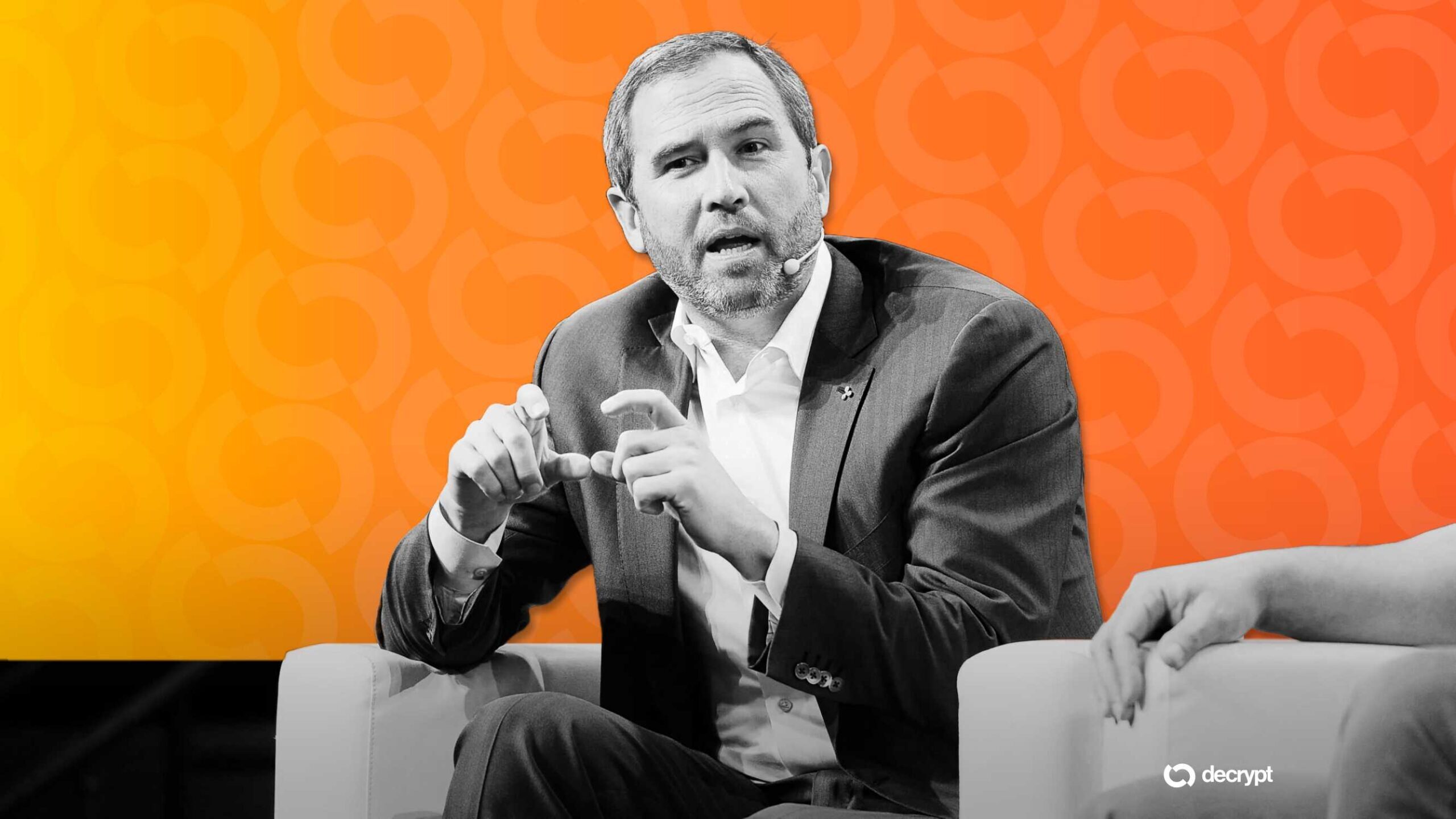
Patrick Witt, the White House's designated crypto advisor, told reporters on 18 May 2026 that passing the Clarity Act would deliver the industry "roughly 90 percent" of what it needs. The number landed cleanly in the headlines. It also, deliberately or not, sidesteps the more important question: 90 percent of what, exactly — and who gets to define the other ten?
The framing matters. "Good enough" is not a regulatory philosophy; it is a political arrangement. And the arrangement currently taking shape in Washington looks less like a transparent rule-of-law conversation and more like a negotiation between a White House that wants a sympathetic industry on its side and an industry that wants the imprimatur of state recognition without the scrutiny that usually accompanies it. The Clarity Act, as currently drafted, does not resolve the underlying tension between a technology premised on decentralisation and a capital market structure premised on institutional certainty. It surfaces that tension and then papered over it with a number that sounds generous.
A deal struck in the right room
The crypto industry's preferred path to legitimacy has never run through Congress in the conventional sense. For most of the past decade, the legislative route looked blocked — too many committees, too many competing interests, too much institutional skepticism from banking-state regulators who had watched the 2017-2022 cycle of speculative volatility and drawn firm conclusions. The executive branch was always the more tractable partner. A sympathetic administration, a designated advisor with direct access, a bill that can be presented as technical rather than political — this is the legislative equivalent of a fast-track approval process.
Witt's framing of 90 percent is significant precisely because it is not 100. A 90-percent solution suggests the industry is getting most of what it asked for while leaving enough ambiguity that neither side has to fully own the outcome. The remaining ten percent — whatever it is — becomes a reserve currency of future leverage: something the industry can credibly threaten to push through a more hostile future Congress if the current arrangement disappoints. That is not how legislation normally works. It is how political underwriting works.
There are obvious beneficiaries in this structure. Stablecoin issuers, whose business model depends on regulatory predictability, get a clearer legal footing. The larger exchanges — Coinbase, Kraken, the institutional custody layer — get a framework that makes compliance a competitive moat rather than a burden, since the cost of meeting the standard falls disproportionately on smaller operators. The Clarity Act, in practice, may consolidate the industry rather than open it. This is not a fringe concern. Several advocacy groups representing non-custodial and decentralized finance operators have argued quietly that the bill's definitional clarity on "digital asset" and "qualified custodian" maps uneasily onto protocols that have no single entity in charge.
The Grok variable
The timing is not incidental. Two days before Witt's 90-percent estimate, xAI announced it had integrated Grok directly into Hermes Agent, granting the model instant distribution to over 130,000 active users without building an independent agent platform. The two developments belong to different industries, but they share a structural logic: both represent a moment where the infrastructure of an emerging technology sector is being decided not in the open market or through public deliberation, but through bilateral deals between large incumbents and receptive parts of the state or platform apparatus.
The Hermes integration is a useful reminder that the crypto story does not exist in isolation. The AI sector has been navigating exactly the same tension — regulatory clarity versus capture, standard-setting versus incumbency — with the added complication that AI deployment implicates national security concerns in a way that crypto, however volatile, historically has not. The lesson from the Grok-Hermes arrangement is straightforward: the companies that get distribution first tend to set the terms. xAI did not need to build a consumer agent product because it could ride an existing distribution channel. The same logic applies to crypto: the firms that get regulatory clarity first will shape what the remaining ten percent eventually looks like.
What the 90 percent conceals
The honest version of Witt's argument is that the Clarity Act gives the industry enough legal certainty to operate without constant enforcement risk, and that certainty is worth the trade-offs embedded in the legislation. That is a defensible position. The less honest version — and it is not clear which Witt intended — is that 90 percent is a ceiling, not a floor, and that the ceiling was set in a room where the industry's own representatives had significant input on the agenda.
The counter-argument is real and deserves attention. Crypto advocates will note that the absence of regulatory clarity has not protected consumers — it has simply shifted risk onto actors who lack the legal architecture to seek redress. A clear framework, even an imperfect one, allows institutional capital to enter without the constant legal exposure that has kept traditional finance at arm's length. On this view, the Clarity Act is less a handout than a belated recognition that the technology already exists and the regulatory vacuum was always going to be filled — better by a statute than by enforcement discretion.
That argument is not wrong. But it does not resolve the structural problem, which is that the legislation is being written while its primary beneficiaries are at the table. The 90-percent framing is comfortable precisely because it signals that the industry is not fighting for more. The remaining ten percent — consumer protection carve-outs, the treatment of decentralized protocols, the question of whether algorithmic stablecoins require the same reserves as their fiat-pegged equivalents — does not disappear because Witt chose not to talk about it on a Monday morning.
What we are watching, in both the crypto and AI lanes, is the same underlying dynamic: industries that understand the value of getting in early, using regulatory familiarity as a competitive tool, and framing accommodation as the best available option rather than a compromise. The Clarity Act may well be the right move. But a 90-percent solution, secured by executive proximity and presented with confident imprecision, is not the same thing as a democratic mandate. That distinction tends to matter, mostly when the ten percent comes due.
Wire provenance
This editorial synthesis draws on the following public wire/social posts:
- https://t.me/Cointelegraph/24947
- https://t.me/Cointelegraph/24948